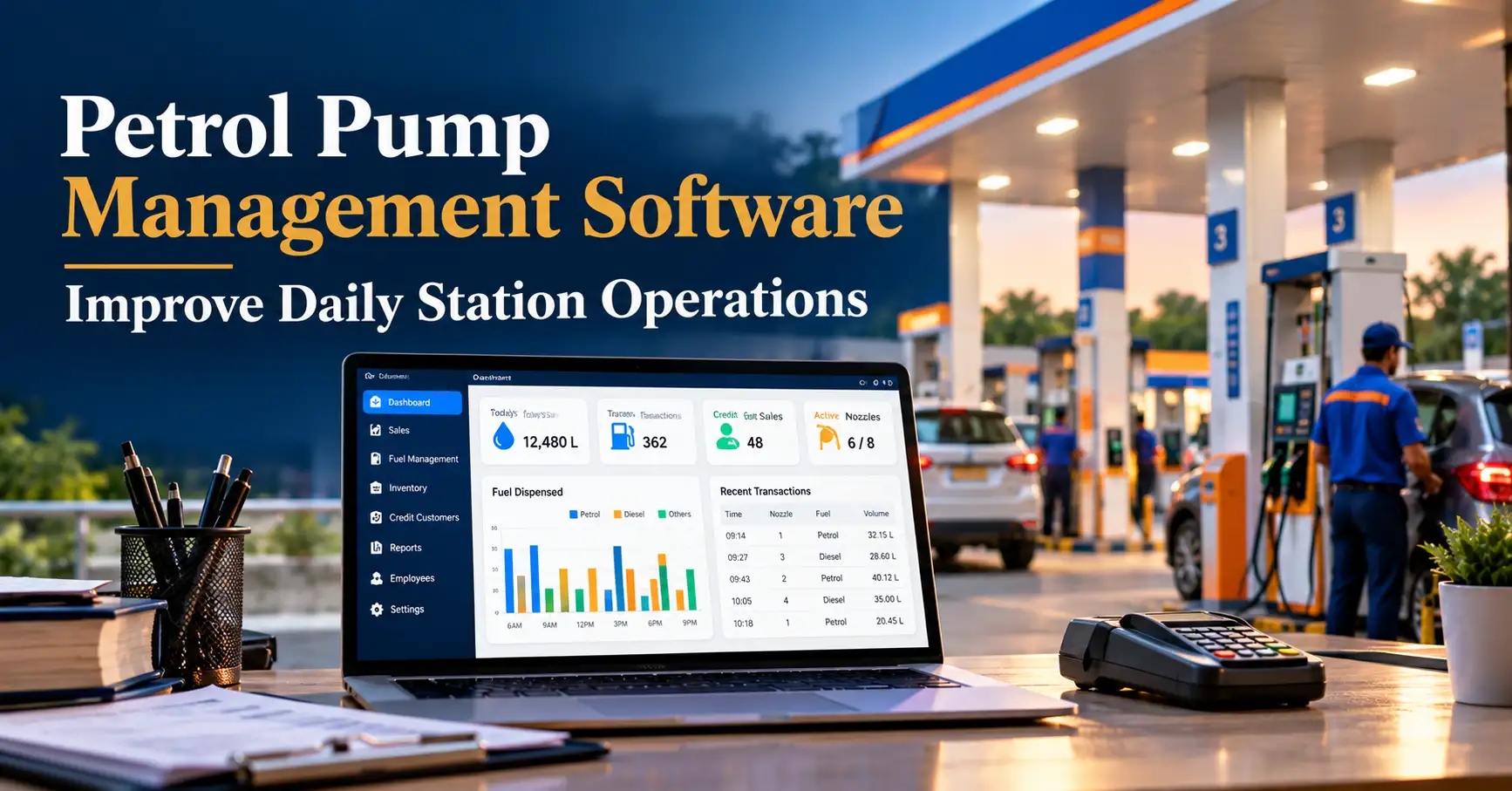
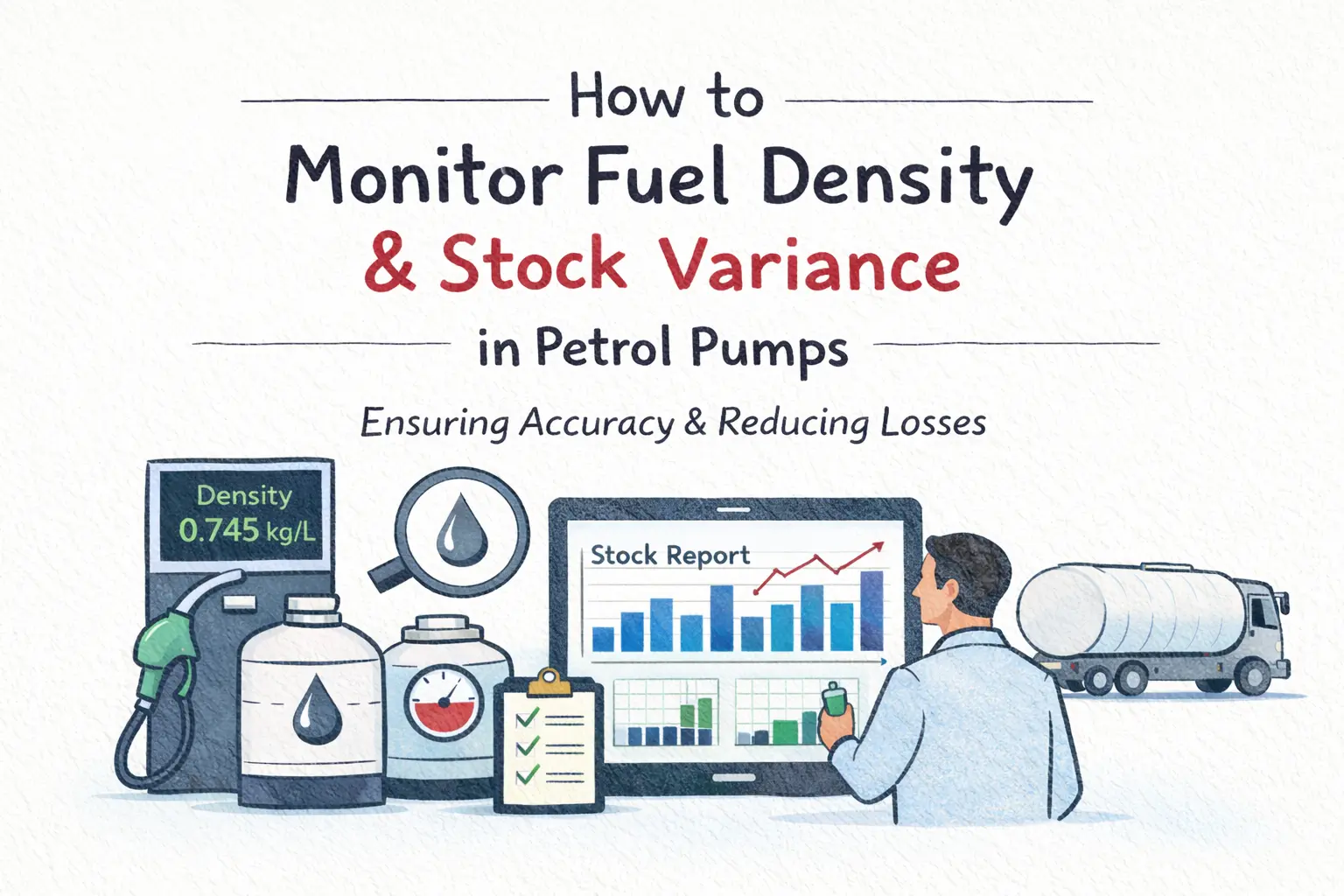
Effective fuel management is critical for maintaining profitability and operational transparency in petrol pumps. One of the most common challenges faced by fuel station owners is stock mismatch and unexplained fuel loss. These issues often arise due to improper monitoring of fuel density and stock variance.
Understanding how to monitor fuel density and variance is essential to prevent losses, ensure compliance, and maintain accurate inventory records. Implementing a reliable petrol pump management system can significantly reduce manual errors and improve stock accuracy.
Understanding Fuel Density in Petrol Pumps
Fuel density refers to the mass of fuel per unit volume, usually measured in kilograms per cubic meter (kg/m³). Petrol and diesel have standard density ranges defined by oil marketing companies. However, density changes with temperature fluctuations, which directly impacts volume calculations.
If fuel density is not properly recorded and corrected for temperature variations, stock calculations may become inaccurate. This can result in apparent stock shortages or mismatched inventory figures.
Regular fuel density monitoring helps ensure:
- Accurate stock valuation
- Proper delivery verification
- Compliance during oil company inspections
- Reduction of financial discrepancies
What is Stock Variance?
Stock variance in petrol pumps refers to the difference between the book stock (system-calculated stock) and the physical stock measured in underground tanks.
For example:
Opening Stock + Deliveries – Sales = Expected Closing Stock
If the physical tank dip reading does not match the expected closing stock, the difference is termed as stock variance.
Variance can occur due to:
- Measurement errors
- Temperature impact
- Evaporation loss
- Leakages
- Incorrect delivery entries
- Staff pilferage
Monitoring variance daily is necessary to prevent recurring fuel loss problems.
Daily Stock Checking Process
A structured daily stock checking process is the foundation of variance control. Petrol pump operators should follow a disciplined approach:
1. Record Opening Stock
Start the day by recording tank dip readings for each product.
2. Add Fuel Deliveries
Verify delivery challans and measure density at the time of receipt. Cross-check the delivered quantity with the invoice.
3. Record Total Sales
Collect nozzle-wise sales data from dispensing units.
4. Perform Closing Tank Dip
Measure the physical stock at the end of the day using a calibrated dip rod.
5. Reconcile Data
Compare system stock with physical stock to identify variance.
Following this daily checking method minimizes the risk of accumulating stock mismatch problems.
Tank Dip Measurement Process
The tank dip process is one of the most important operational activities in a petrol pump.
It involves:
- Measuring fuel level using a dip rod
- Referring to the calibration chart
- Converting dip measurement into litres
- Recording the value accurately
Errors during dip measurement are a major cause of stock variance. Therefore, staff must be properly trained, and dip charts should always be updated and verified.
Consistency in the tank dip measurement process ensures reliable reconciliation results.
Importance of Reconciliation
The reconciliation process connects sales data, delivery records, and physical stock measurement.
A proper petrol pump reconciliation process includes:
- Comparing nozzle readings with billing data
- Matching delivery quantity with stock increase
- Applying temperature correction for density
- Investigating abnormal variance immediately
Daily sales vs stock reconciliation should never be postponed. Delays can make it difficult to trace the root cause of discrepancies.
Regular reconciliation also supports smooth audit procedures and avoids penalties during oil company stock verification.
How to Reduce Fuel Loss in Petrol Pumps
Fuel loss directly impacts profit margins. To reduce fuel loss, petrol pump owners should:
- Implement strict daily stock monitoring
- Maintain accurate fuel density records
- Apply temperature correction where necessary
- Conduct nozzle-wise sales checking
- Monitor shift-wise employee accountability
- Investigate even minor variances
Using advanced accounting and inventory software for petrol pumps strengthens financial control and minimizes discrepancies.
Automation tools and reporting systems simplify variance tracking and generate real-time alerts when discrepancies exceed acceptable limits. Solutions like Petrosoft help streamline reconciliation and density monitoring processes, reducing dependency on manual calculations.
Conclusion
Monitoring fuel density and stock variance is essential for maintaining accuracy, preventing fuel loss, and protecting overall profitability. Consistent tank dip procedures, proper density recording, and disciplined daily reconciliation help eliminate stock mismatches before they turn into serious financial issues.
Take full control of your fuel operations with smart automation solutions like Petrosoft, available through PetrolBunkSoftware.com.
Eliminate fuel variance, prevent losses, and streamline reconciliation with real-time monitoring and automated reports.
Book a Free Demo today and experience smarter, more accurate petrol pump management.