The fuel retail industry is evolving rapidly due to rising vehicle ownership, growing fuel demand, and the expansion of fuel stations across India. Petrol pump owners now face increasing operational challenges such as inventory management, billing accuracy, compliance, and customer service.
In this article, we explore the latest fuel industry statistics and trends and explain why petrol pump management software is becoming essential for modern fuel stations.
Fuel Retail Industry Statistics
The Indian fuel retail industry has experienced significant growth over the last decade.
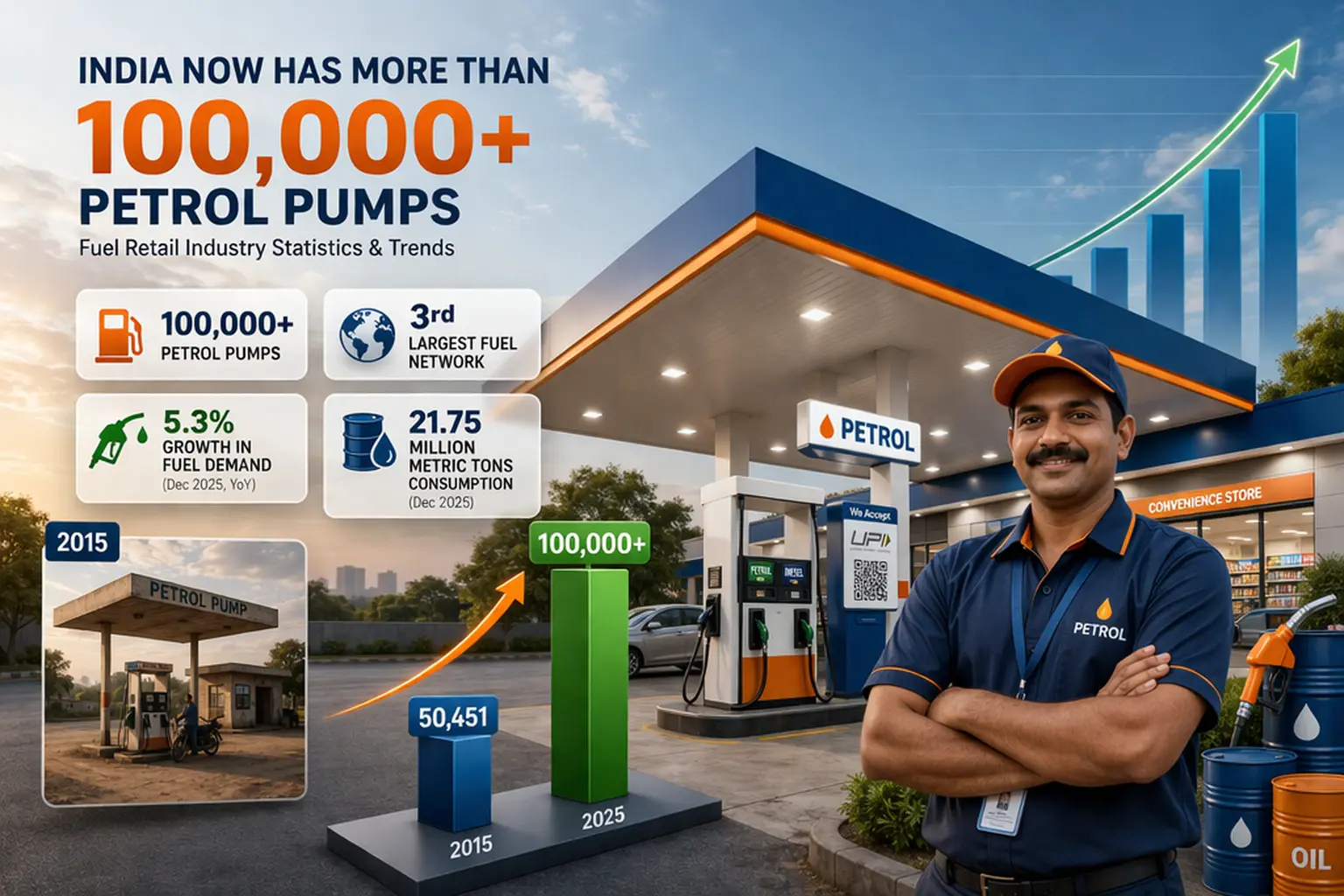
- India now has more than 100,000 petrol pumps, making it the third-largest fuel retail network in the world after the United States and China.
- The number of fuel stations has almost doubled from around 50,451 outlets in 2015.
- Over 90% of petrol pumps are operated by public sector companies such as Indian Oil Corporation, Bharat Petroleum Corporation Limited, and Hindustan Petroleum Corporation Limited.
- Fuel demand in India continues to rise, with consumption reaching 21.75 million metric tons in December 2025, marking a 5.3% year-on-year increase.
These numbers highlight how rapidly the fuel retail sector is expanding.
Key Industry Trends in the Fuel Retail Market
1. Rapid Expansion of Petrol Pumps
Fuel stations are expanding quickly across highways, cities, and rural areas to meet rising vehicle demand. Rural fuel stations now account for about 29% of India’s total network, up significantly from a decade ago.
This growth increases competition among fuel station owners.
2. Multi-Fuel Stations and EV Integration
Modern fuel stations are no longer limited to petrol and diesel.
Many pumps now offer:
- CNG filling
- EV charging stations
- Convenience stores
- Car wash services
Nearly one-third of fuel stations already provide alternative fuel options such as CNG or EV charging.
3. Digital Transformation in Fuel Stations
Technology is playing a major role in the modernization of fuel stations.
Petrol pump owners are adopting systems such as:
- Automated billing systems
- Digital fuel inventory monitoring
- Cloud-based management software
- UPI and digital payments
These solutions improve efficiency and transparency in fuel station operations.
4. Increasing Competition in the Fuel Retail Market
Private players such as Reliance Industries and Nayara Energy are expanding their fuel station networks to capture the growing domestic demand.
This competition pushes fuel stations to improve service quality and operational efficiency.
5. Rising Vehicle Ownership
The increase in personal vehicles and commercial transportation is one of the biggest drivers of fuel demand in India.
As vehicle numbers grow, fuel stations must handle:
- Higher fuel volumes
- Faster billing processes
- Accurate stock management
- Efficient reporting
Why Petrol Pump Management Software is Important
With increasing operational complexity, manual management is no longer efficient.
Petrol pump software helps owners manage:
Key Benefits of Petrol Pump Software
Fuel Inventory Management
Track fuel stock levels in real time.
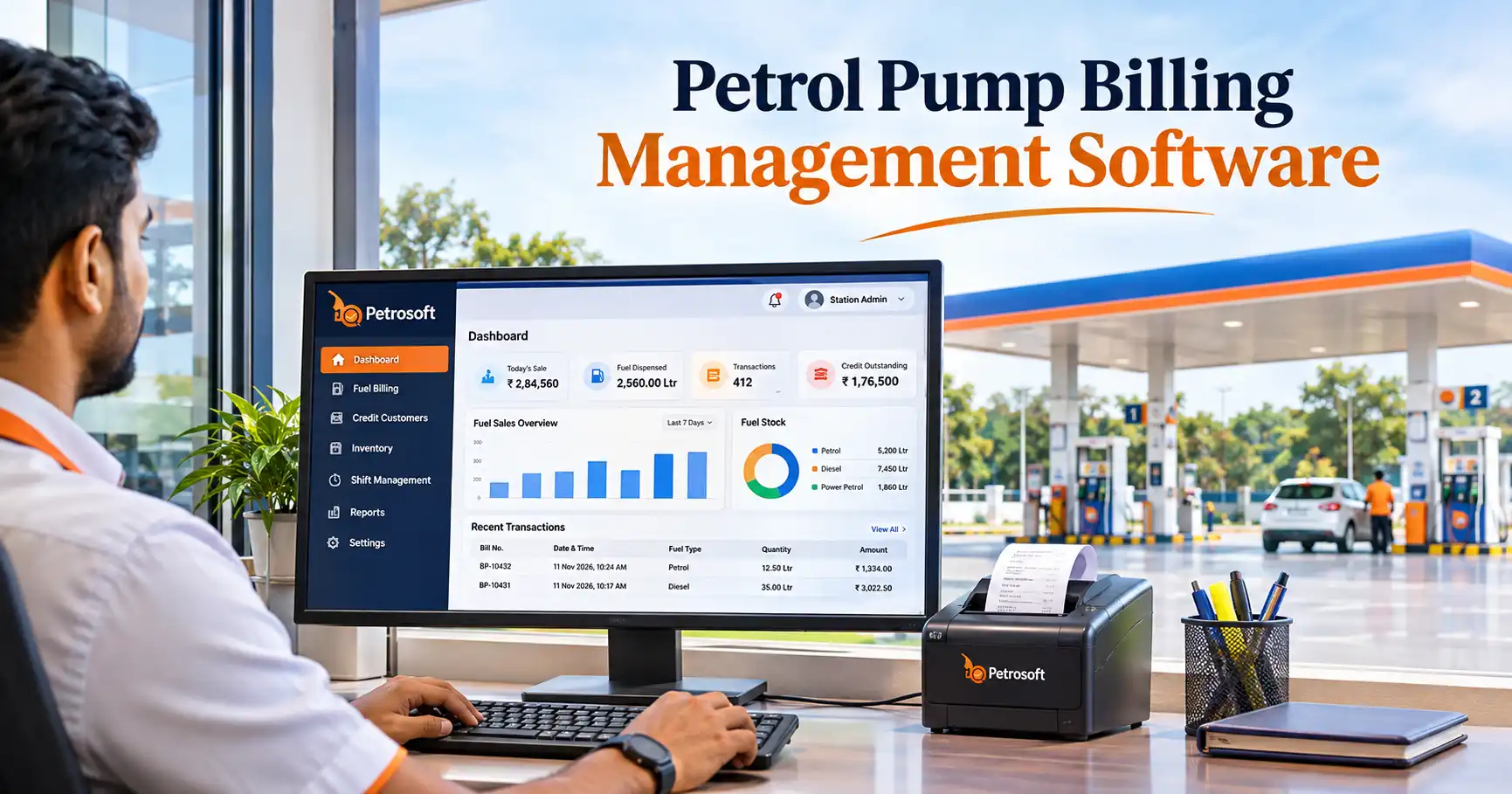
Automated Billing & Sales Reports
Generate daily sales and transaction reports automatically.
Employee & Shift Management
Monitor staff performance and shifts.
Financial and Compliance
Maintain accurate records for audits and regulatory requirements.
Remote Monitoring
Monitor fuel station operations from anywhere through cloud-based dashboards.
The Future of Petrol Pump Operations
The future of fuel retail is technology-driven. As the number of petrol pumps continues to increase and services expand beyond fuel dispensing, digital tools will play a critical role in managing operations efficiently.
Petrol pump owners who adopt advanced management software will benefit from better operational control, improved profitability, and enhanced customer experience.
Conclusion
The fuel retail industry is growing rapidly with expanding fuel stations, rising demand, and increased competition. Industry statistics clearly show that petrol pump operations are becoming more complex.
To stay competitive in this evolving market, adopting petrol pump management software is no longer optional it is a necessity.