The petrol retail industry in India is gradually moving towards more connected and digitally managed operations. From fuel dispensing and inventory tracking to digital payments and business reporting, technology is changing how petrol pumps manage their everyday activities.
As fuel station operations become more complex, petrol pump owners are looking for software solutions that provide better control over sales, fuel stock, employees, customer accounts and financial records.
In 2027, developments such as cloud-based management systems, advanced dispenser integration, AI-powered analytics, mobile applications and connected fuel delivery platforms are expected to influence the future of petrol pump management.
Understanding these developments can help petrol pump owners identify the right technologies, improve operational efficiency and prepare their businesses for changing industry requirements.
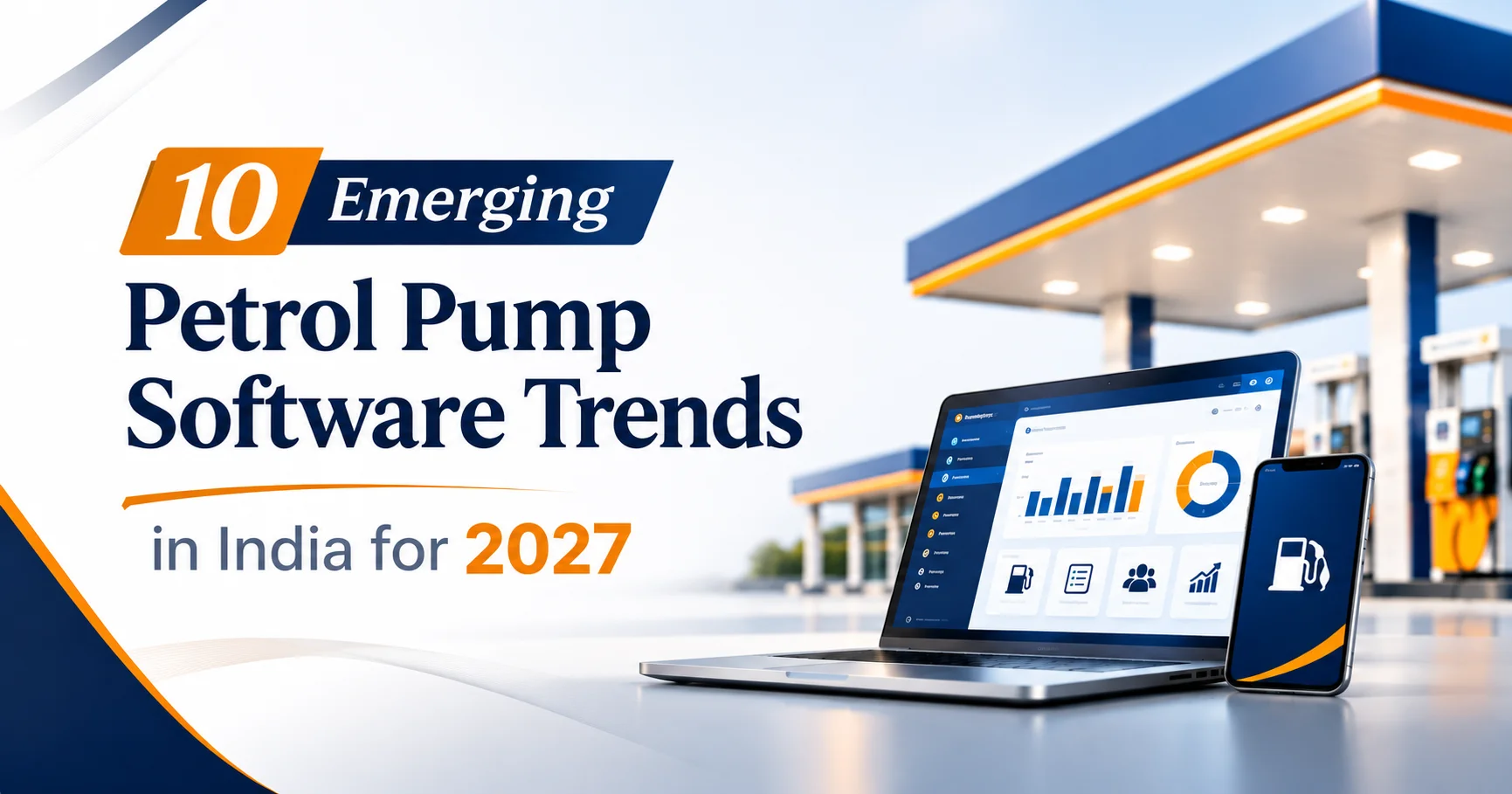
Here are 10 emerging petrol pump software trends that businesses in India should watch in 2027.
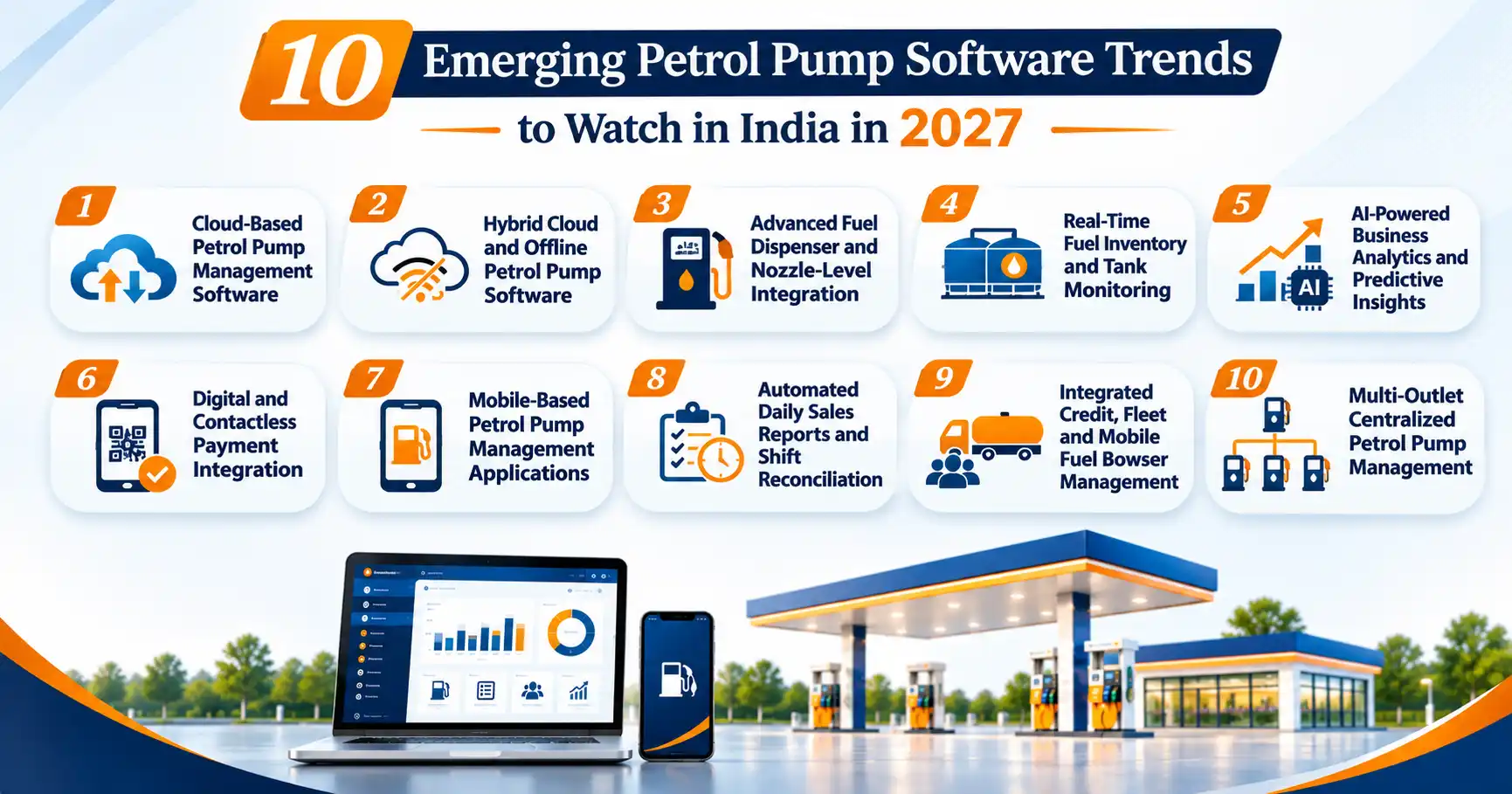
1. Cloud-Based Petrol Pump Management Software
Cloud-based technology is changing how petrol pump owners’ access and manage their business information. Instead of depending entirely on data stored on a single computer, cloud-enabled systems allow authorized users to access business information through connected devices.
This makes it easier for owners to monitor petrol pump operations even when they are away from their locations.
Key developments include:
- Centralized storage of business information.
- Remote access to sales and inventory reports.
- Multi-device accessibility for authorized users.
- Centralized monitoring of business operations.
- Improved data backup and synchronization capabilities.
Why does it matter?
Cloud-based petrol pump management software provides greater visibility into daily operations and helps owners make business decisions using updated information.
2. Hybrid Cloud and Offline Petrol Pump Software
Internet connectivity is not always reliable, particularly in remote areas and highway petrol stations. Depending entirely on an internet connection for billing and transaction recording can interrupt daily operations.
Hybrid cloud and offline software address this challenge by allowing essential operations to continue locally while supporting cloud synchronization when connectivity becomes available.
Key developments include:
- Offline transaction recording.
- Local data storage during connectivity interruptions.
- Synchronization of records after internet restoration.
- Access to essential billing functions without continuous internet.
- Backup and recovery capabilities.
Why does it matter?
Petrol pumps need reliable billing and transaction recording throughout their operating hours. Offline capabilities help minimize interruptions caused by network connectivity problems.
3. Advanced Fuel Dispenser and Nozzle-Level Integration
Fuel dispenser integration is an important development in petrol pump management technology. It connects compatible dispensing equipment with management software to capture fuel transaction information more accurately.
Instead of depending entirely on manual entry, petrol pump operators can receive dispenser-related transaction records directly through compatible integrations.
Key developments include:
- Electronic fuel dispenser connectivity.
- Nozzle-wise sales monitoring.
- Digital meter reading records.
- Shift-wise fuel dispensing reconciliation.
- Transaction recording through compatible dispenser interfaces.
- Identification of differences between recorded sales and dispenser readings.
Why does it matter?
Nozzle-level integration helps petrol pump owners maintain accurate dispensing records, simplify shift reconciliation and reduce manual data entry.
4. Real-Time Fuel Inventory and Tank Monitoring
Fuel inventory management is one of the most important responsibilities at a petrol pump. Operators need to monitor fuel purchases, tank stock, sales, receipts and closing balances to maintain accurate inventory records.
Modern fuel management systems are increasingly focusing on connecting inventory records with dispensing and tank-monitoring information.
Key developments include:
- Digital recording of fuel purchases and tanker receipts.
- Tank-wise petrol and diesel stock management.
- Digital dip reading records.
- Integration with compatible automatic tank gauging systems.
- Monitoring of expected and actual stock variations.
- Fuel purchase and sales reconciliation.
Why does it matter?
Accurate inventory monitoring helps petrol pump owners identify stock discrepancies, maintain better control over fuel availability and improve purchase planning.
5. AI-Powered Business Analytics and Predictive Insights
Artificial intelligence and data analytics are creating new opportunities for understanding petrol pump performance. Instead of reviewing only basic sales reports, future management systems may provide deeper insights into operational patterns.
AI-powered tools can analyse historical business information and help identify patterns that may require attention.
Key developments include:
- Historical fuel sales analysis.
- Daily and seasonal demand forecasting.
- Identification of unusual transaction patterns.
- Business performance comparisons.
- Inventory planning insights.
- Predictive maintenance recommendations for compatible equipment.
Why does it matter?
Data-driven insights can help petrol pump owners understand business performance, identify potential operational issues and make more informed decisions.
6. Digital and Contactless Payment Integration
Digital payments have become an important part of India's retail transaction ecosystem. Petrol pumps increasingly handle payments through UPI, QR codes, cards and other digital payment methods.
The next development is deeper integration between payment systems and petrol pump billing software.
Key developments include:
- UPI and QR code payment integration.
- Debit and credit card transaction recording.
- Digital payment reconciliation.
- Customer-wise payment records.
- Cash and digital collection summaries.
- Integration with compatible payment platforms.
Why does it matter?
Integrated payment records help petrol pump operators maintain accurate transaction information, simplify daily collections and reduce manual reconciliation efforts.
7. Mobile-Based Petrol Pump Management Applications
Mobile applications are making it easier for petrol pump owners and managers to monitor business activities without being physically present at the station.
Instead of depending entirely on desktop systems, authorized users can access important business information through mobile devices.
Key developments include:
- Mobile access to daily sales reports.
- Remote fuel stock monitoring.
- Employee activity and attendance information.
- Credit customer balance tracking.
- Instant business notifications.
- Access to outlet-wise performance information.
Why does it matter?
Mobile-based petrol pump management helps owners stay informed about business operations and respond to important operational updates from different locations.
8. Automated Daily Sales Reports and Shift Reconciliation
Daily Sales Reports (DSR) and shift-wise reconciliation are essential parts of petrol pump operations. Traditionally, these activities may involve collecting information from multiple records and manually preparing summaries.
Modern petrol pump software can bring these records together to simplify daily reporting.
Key developments include:
- Automatic preparation of Daily Sales Reports.
- Shift-wise sales summaries.
- Nozzle-wise fuel transaction reports.
- Cash and digital payment collection summaries.
- Employee-wise sales records.
- Closing stock and transaction reconciliation.
Why does it matter?
Digital reporting helps reduce repetitive calculations, improve record accuracy and provide petrol pump owners with a clearer picture of daily business performance.
9. Integrated Credit, Fleet and Mobile Fuel Bowser Management
Fuel businesses increasingly serve different customer categories, including individual vehicle owners, transport companies, commercial fleets and customers requiring fuel deliveries at specific locations.
Managing these activities through separate manual records can make tracking and reconciliation difficult. Integrated fuel management platforms can bring customer credit, fleet transactions and mobile fuel delivery information together.
Key developments include:
Customer Credit Management
- Customer-wise credit limits and outstanding balances.
- Credit bill generation and payment history.
- Customer transaction records.
Fleet Fuel Management
- Vehicle-wise fuel purchase records.
- Fleet customer billing and expense reports.
- Fuel consumption and transaction history.
Mobile Fuel Bowser Management
- GPS-based fuel bowser vehicle tracking.
- Fuel loading and delivery records.
- Fuel quantity reconciliation.
- Customer-location delivery tracking.
- Driver and vehicle assignment management.
- Mobile fuel delivery scheduling.
Why does it matter?
Combining these capabilities helps fuel businesses manage credit customers, commercial vehicle transactions and mobile fuel distribution through better-connected records. It is particularly relevant to businesses involved in authorized doorstep fuel delivery and commercial fuel distribution.
10. Multi-Outlet Centralized Petrol Pump Management
Petrol pump businesses operating multiple locations need a convenient way to monitor performance across different outlets. Managing each location independently can make it difficult for business owners to compare sales, inventory and operational activities.
Centralized management platforms provide a unified view of multiple petrol pump locations.
Key developments include:
- Centralized monitoring of multiple petrol bunks.
- Branch-wise fuel sales reports.
- Outlet-wise inventory visibility.
- Employee and shift management across locations.
- Comparative business performance reports.
- Centralized owner dashboards.
- Consolidated operational information.
Why does it matter?
Multi-outlet management helps petrol pump owners maintain better visibility and consistency across their businesses while simplifying branch-level monitoring.
How Is Petrosoft Supporting Digital Petrol Pump Management?
As petrol pump operations become increasingly technology-driven, choosing suitable management software is an important step towards improving everyday business processes.
Petrosoft, a petrol pump management software solution, is designed to support fuel station operations through integrated billing, inventory, employee and business management capabilities.
Its features address several important operational requirements discussed in the emerging trends for 2027.
Key Petrosoft Features
1. Fuel Sales and Shift Management
Manage fuel sales, shift-wise transactions and operational records through a centralized software platform.
2. Fuel Inventory Management
Monitor fuel stock and maintain inventory-related records to improve visibility into petrol and diesel availability.
3. Credit Customer Management
Manage credit transactions, generate credit bills and maintain customer-related payment records.
4. Mobile Applications for Different Users
Petrosoft supports different applications for dealers, managers, salesmen and credit customers, helping relevant users access their respective business functions.
5. Employee and Attendance Management
Maintain employee records and monitor attendance as part of regular petrol pump operations.
6. Accounting Integration
Support accounting workflows through Tally integration, helping businesses manage financial records more conveniently.
7. SMS and Email Integration
Support business communication through SMS and email features for relevant operational updates.
Why Consider Petrosoft for Your Petrol Pump?
Managing fuel sales, credit transactions, employees and inventory through disconnected records can make daily operations more difficult.
Petrosoft brings several petrol pump management functions together in one software ecosystem, helping dealers and managers maintain better control over their business activities.
Explore the features at Petrosoft
Prepare Your Petrol Pump Business for 2027 with Petrosoft
Petrol pump software trends in 2027 will focus on better fuel management, accurate reporting, digital payments and connected business operations.
Choose the right technology to improve your daily petrol pump management.
Ready to manage your petrol pump more efficiently?
Explore Petrosoft for integrated fuel sales, inventory, credit and employee management. Contact the Petrosoft team to learn more about the software and its features.