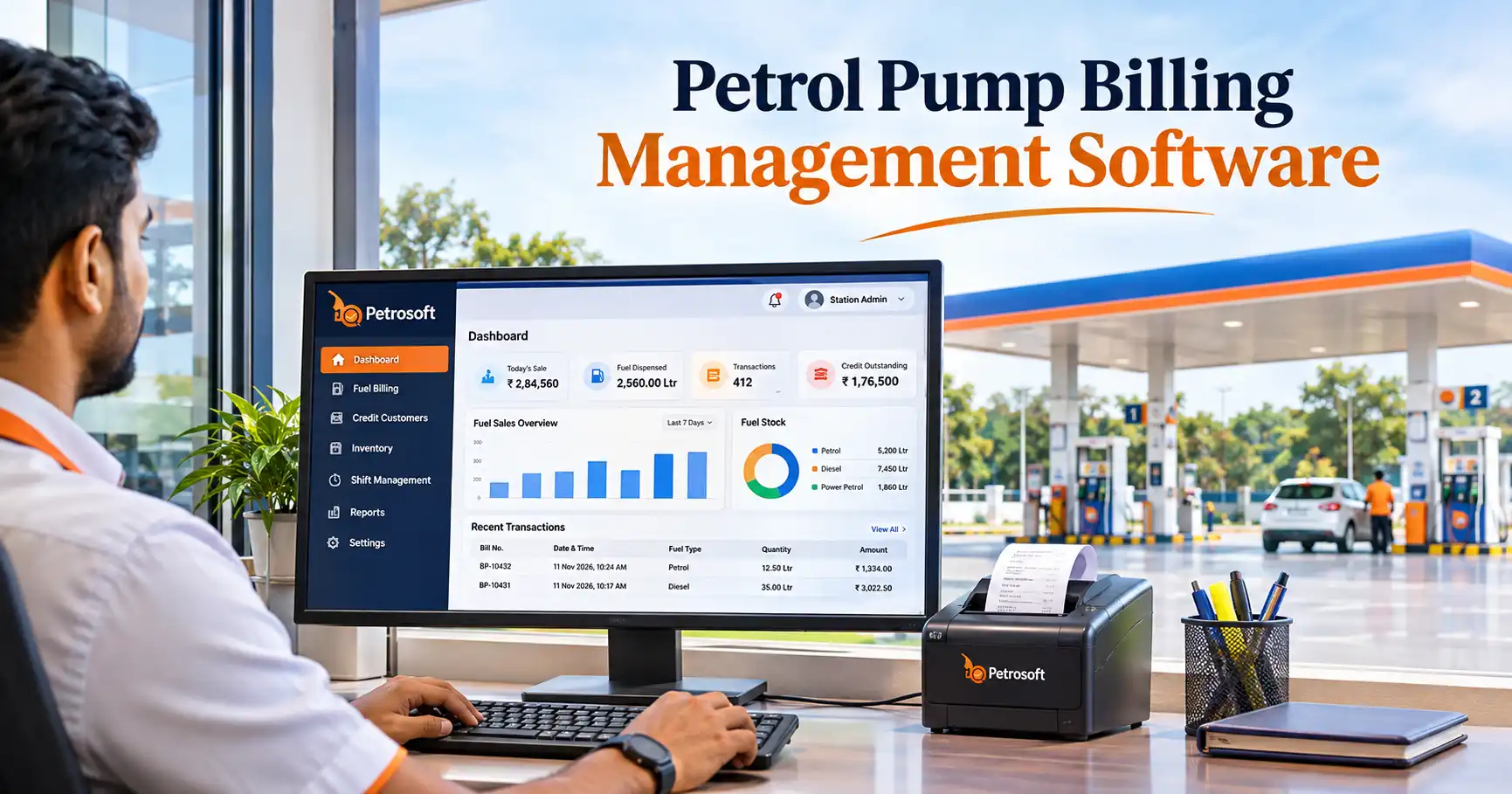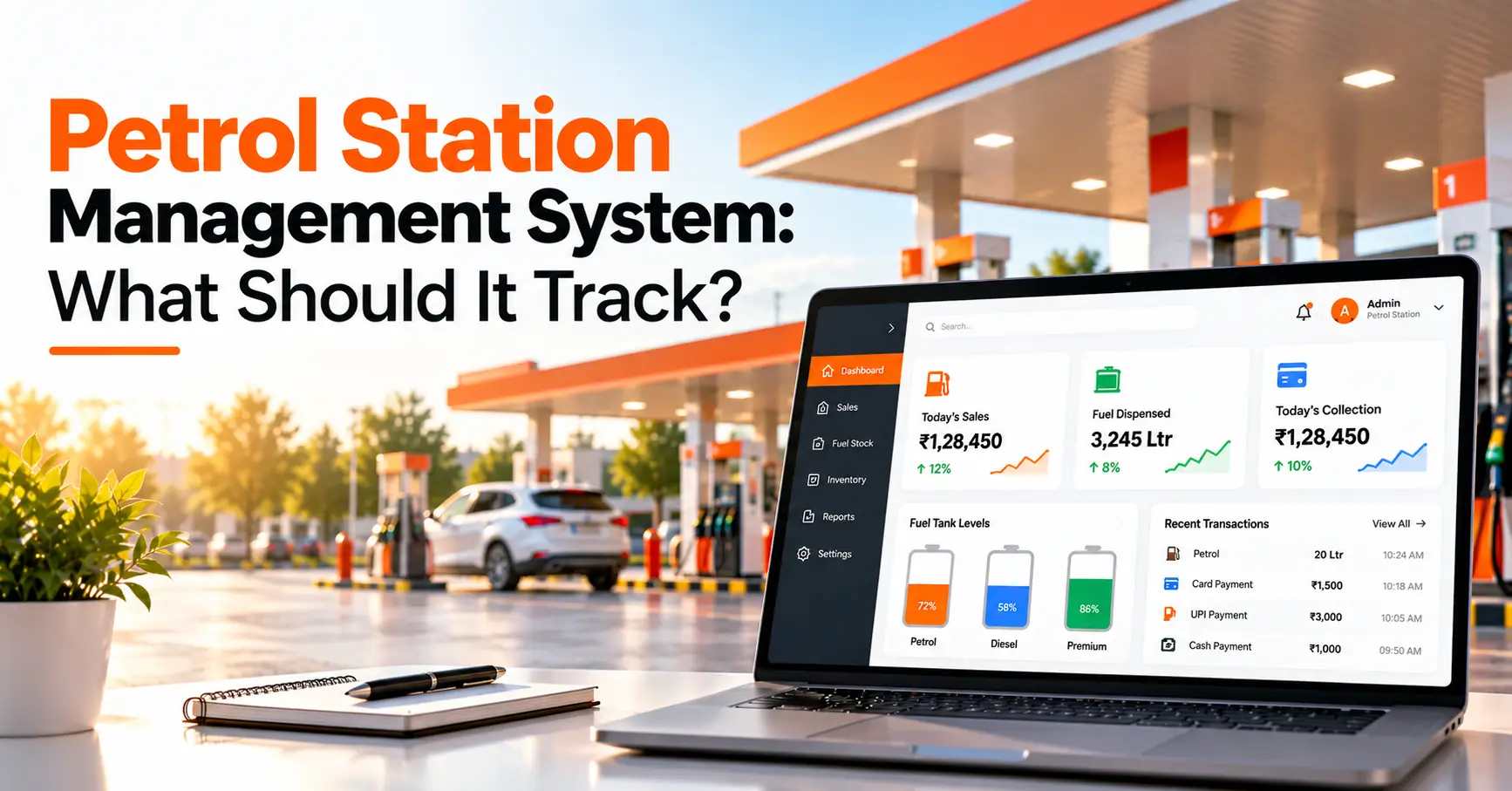
Petrol pump businesses handle multiple daily activities, including fuel sales, inventory tracking, shift operations, customer payments and financial reporting. Maintaining accurate records across these activities is essential for controlling business operations and making informed decisions. However, managing these processes through manual registers or disconnected systems can make it difficult to maintain consistent business information.
Cloud-based petrol pump software provides a technology-driven approach to organizing fuel station operations and accessing business information through supported devices and systems. It helps petrol pump owners evaluate sales, stock, payments and operational records through a centralized software environment.
What Is Cloud-Based Petrol Pump Software?
Cloud-based petrol pump software is a digital business management solution designed to organize petrol station activities and make relevant business information accessible through an internet-connected system.
Instead of depending entirely on records maintained in separate registers or disconnected computers, petrol pump operators can use software to record and monitor important business transactions.
Depending on the provider's infrastructure and configuration, cloud-based systems may support:
- Access to business information from supported locations and devices.
- Centralized storage of operational records.
- Sales and inventory reporting.
- Monitoring of multiple business locations.
- Access to updated transaction information.
For example, a petrol pump owner can use supported remote access facilities to check outlet sales or review business reports without being physically present at the station.
Why Do Petrol Pump Businesses Need Cloud-Based Management Software?
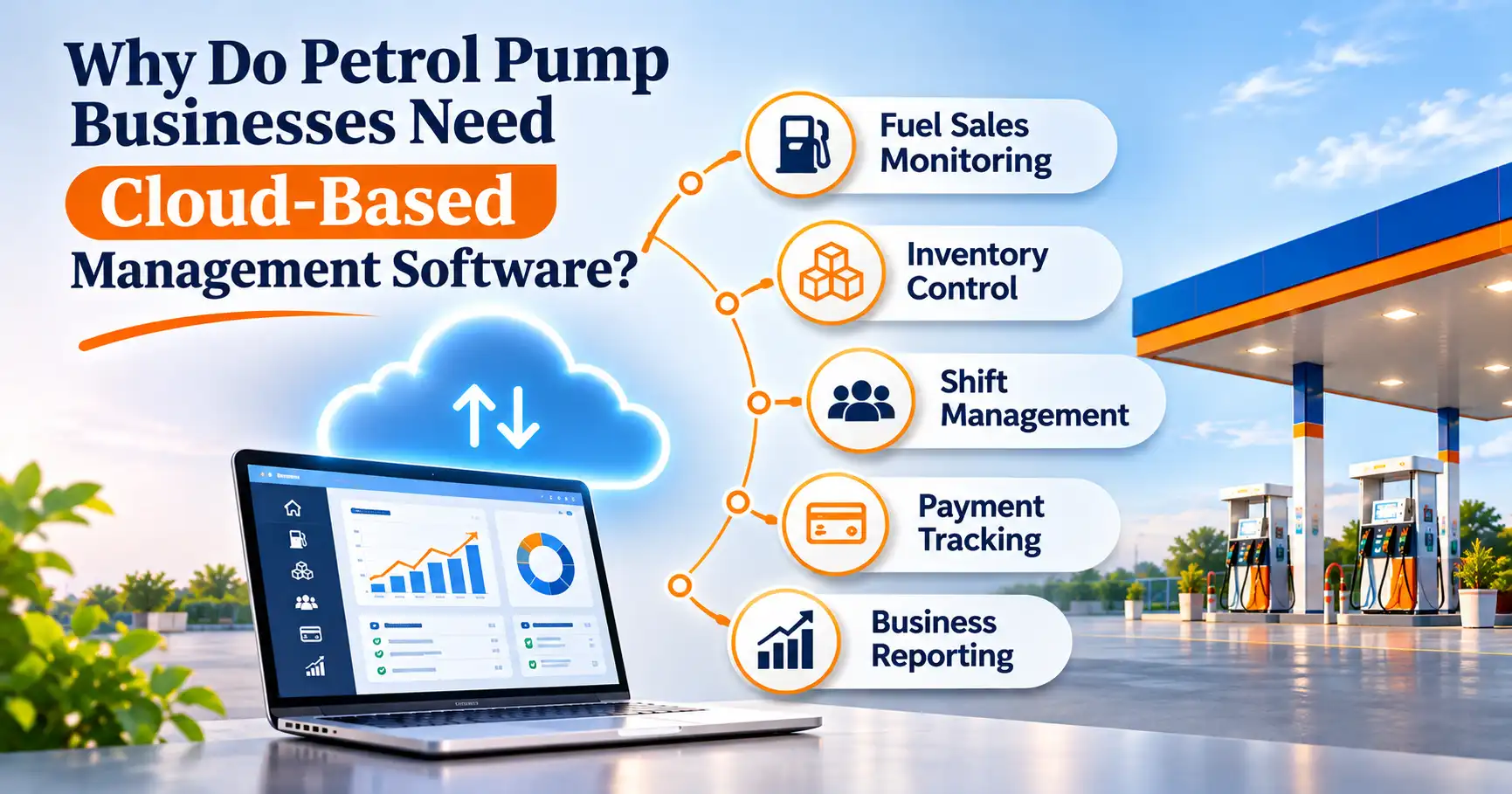
Petrol pump operations involve continuous financial and inventory-related activities. Without a properly organized management system, business owners may experience difficulties identifying discrepancies and monitoring daily performance.
Some common operational challenges include:
1. Fuel Sales Monitoring: Recording sales across different fuel products and dispensing units requires consistent transaction records.
2. Inventory Control: Comparing fuel purchases, sales and available stock is important for identifying stock variations.
3. Shift Management: Different employees handle transactions during different shifts. Maintaining accurate shift-wise records helps with accountability.
4. Payment Tracking: Cash, card, digital payments and credit transactions need proper recording and reconciliation.
5. Business Reporting: Owners need accurate daily, weekly and monthly reports to understand business performance.
Cloud software for petrol pump management can help organize these activities within a structured digital environment, reducing dependence on scattered records.
How Does Cloud-Based Petrol Pump Software Work?
A cloud-based petrol pump management system connects business activities through a software platform and its supported infrastructure.
The general working process involves the following stages:
- Business Setup: Configure the petrol pump's business details, fuel products, users and operational requirements.
- Sales Recording: Record fuel sales and related billing transactions through supported systems.
- Inventory Updates: Maintain fuel purchase, stock and sales records for inventory monitoring.
- Shift Operations: Record employee shifts, sales activities and closing information.
- Payment Management: Maintain customer payment details, collections and outstanding balances.
- Reporting: Generate business reports to evaluate sales, inventory and financial performance.
The availability of remote access, automatic synchronization and other cloud functions depends on the software provider's actual infrastructure and supported features.
Essential Features of Cloud-Based Petrol Pump Software
When selecting petrol pump management software, business owners should evaluate whether the solution supports their essential operational requirements.
1. Fuel Sales and Billing Management
Sales management is one of the most important functions of a petrol pump software system. It helps maintain transaction records and organize daily billing activities.
Important capabilities include:
- Fuel product-wise sales records.
- Daily transaction information.
- Billing and payment records.
- Sales summaries and reports.
These records help business owners understand daily revenue and evaluate sales performance.
2. Fuel Stock and Inventory Management
Fuel inventory requires continuous monitoring because stock records directly influence purchasing decisions and business reconciliation.
A suitable system should support:
- Fuel purchase entries.
- Opening and closing stock records.
- Product-wise inventory information.
- Fuel stock reconciliation.
- Inventory reporting.
Comparing recorded purchases, sales and available stock helps identify differences that require further investigation.

3. Shift Management and Closing Reports
Petrol pumps often operate across multiple employee shifts. Maintaining separate shift records helps business owners understand operational performance and verify collections.
Look for features such as:
- Employee-wise shift records.
- Shift-wise sales summaries.
- Cash collection records.
- Payment reconciliation.
- Daily shift closing reports.
These records support better accountability and organized daily operations.
4. Credit Customer Management
Many petrol pump businesses provide fuel on credit to regular customers, transport companies and commercial accounts.
Credit management features should help maintain:
- Customer account details.
- Credit sales transactions.
- Outstanding balances.
- Payment collection records.
- Customer transaction history.
Accurate customer records help business owners monitor pending payments and maintain financial control.
5. Payment and Financial Management
A petrol pump handles different payment methods throughout the day. Recording each transaction correctly is important for maintaining financial accuracy.
Software should support organized payment records, collection summaries and transaction-wise reporting to assist with daily reconciliation.
6. Multi-Outlet Management and Business Reporting
Businesses operating multiple petrol pumps require clear visibility into individual outlet performance.
Where supported, centralized reporting can help owners compare outlet-wise sales, monitor business activities and review consolidated reports.
Useful reports include daily sales summaries, inventory reports, shift closing statements, credit customer balances and monthly business performance reports.
Benefits of Cloud Software for Petrol Pump Owners
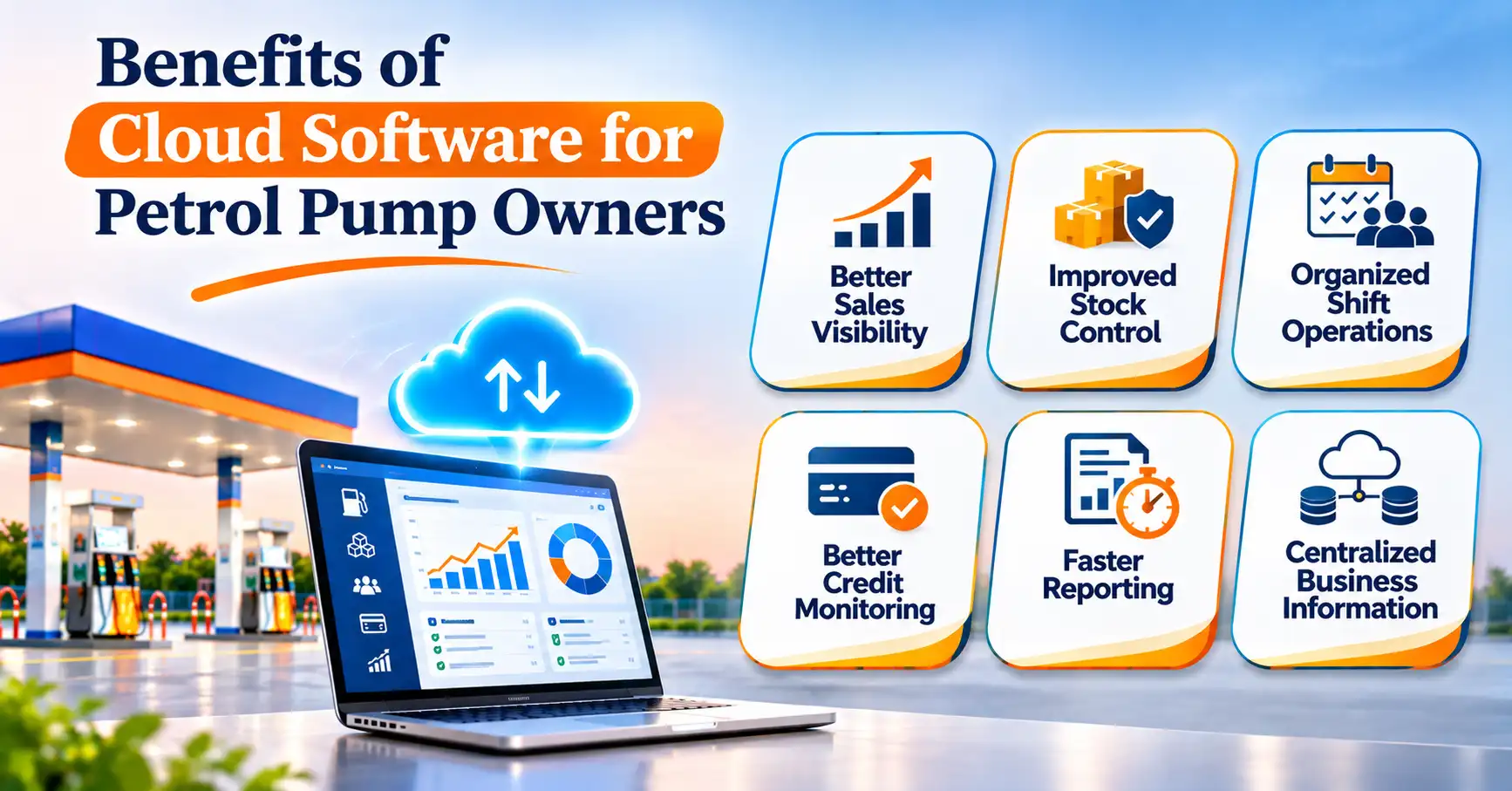
The right petrol pump management system can improve operational visibility and record organization.
Key business benefits include:
- Better Sales Visibility: Access organized sales information and evaluate business performance.
- Improved Stock Control: Compare fuel purchases, sales and available inventory.
- Organized Shift Operations: Maintain employee-wise transaction and closing records.
- Better Credit Monitoring: Track customer balances and payment history.
- Faster Reporting: Generate relevant business reports without depending entirely on manual calculations.
- Centralized Business Information: Review operational records through supported software access facilities.
These benefits depend on correct implementation, accurate transaction entry and the actual capabilities of the selected software.
How Petrosoft Supports Petrol Pump Business Operations
Petrosoft is a petrol pump management software solution designed to support important fuel station business activities through organized digital processes.
It helps petrol pump businesses handle operational requirements such as sales and billing, fuel stock records, shift management, credit customer information and business reporting through its software capabilities.
For petrol pump owners evaluating a management solution, understanding how these functions work together is important when choosing software for daily operations.
Cloud-Based vs Traditional Petrol Pump Software: What Is the Difference?
Both systems can support petrol pump operations, but their infrastructure and access methods may differ.
|
Comparison |
Traditional Software |
Cloud-Based Software |
|
Data storage |
Usually local infrastructure |
Cloud infrastructure |
|
Access |
Depends on local installation |
Depends on internet and access configuration |
|
Remote monitoring |
May require additional setup |
May be available |
|
Updates |
Installation-dependent |
Provider-dependent |
|
Multiple locations |
Depends on system capabilities |
Depends on system capabilities |
|
Data backup |
Depends on local backup arrangements |
Depends on provider backup policies |
Before purchasing, check the actual deployment model rather than assuming every cloud-based product offers identical functionality.
Choose Petrosoft for Better Petrol Pump Management

Manage your petrol pump operations with confidence using Petrosoft Petrol Pump Management Software. Improve sales tracking, fuel stock monitoring and daily business reporting.
Ready to upgrade your petrol pump operations? Contact the Petrosoft sales team today to book a free demo and find the right software solution for your business.