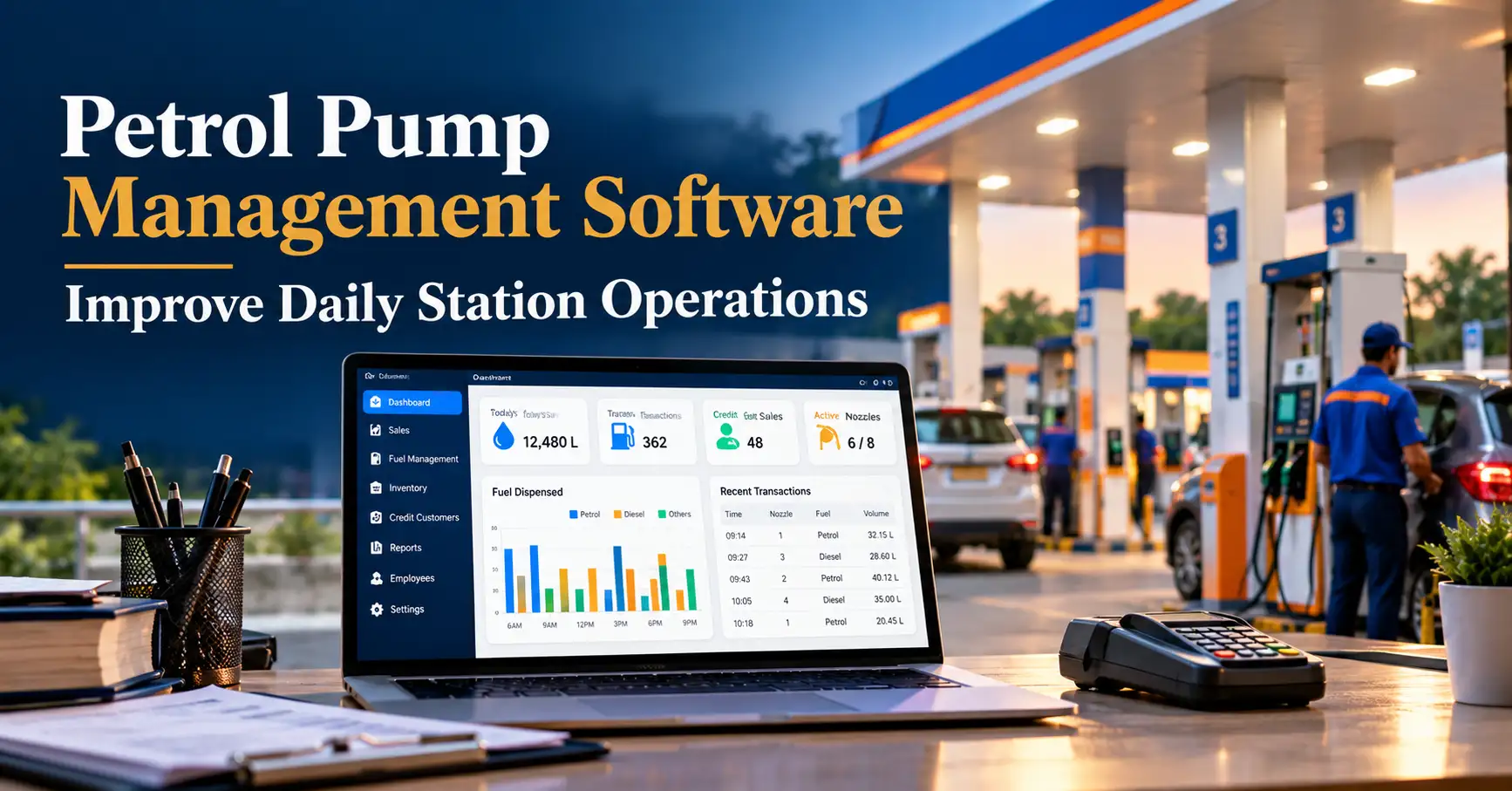

What Is Petrol Pump Management Software?
How Does Software Improve Petrol Station Operations?
What Problems Can Petrol Pump Software Help Address?
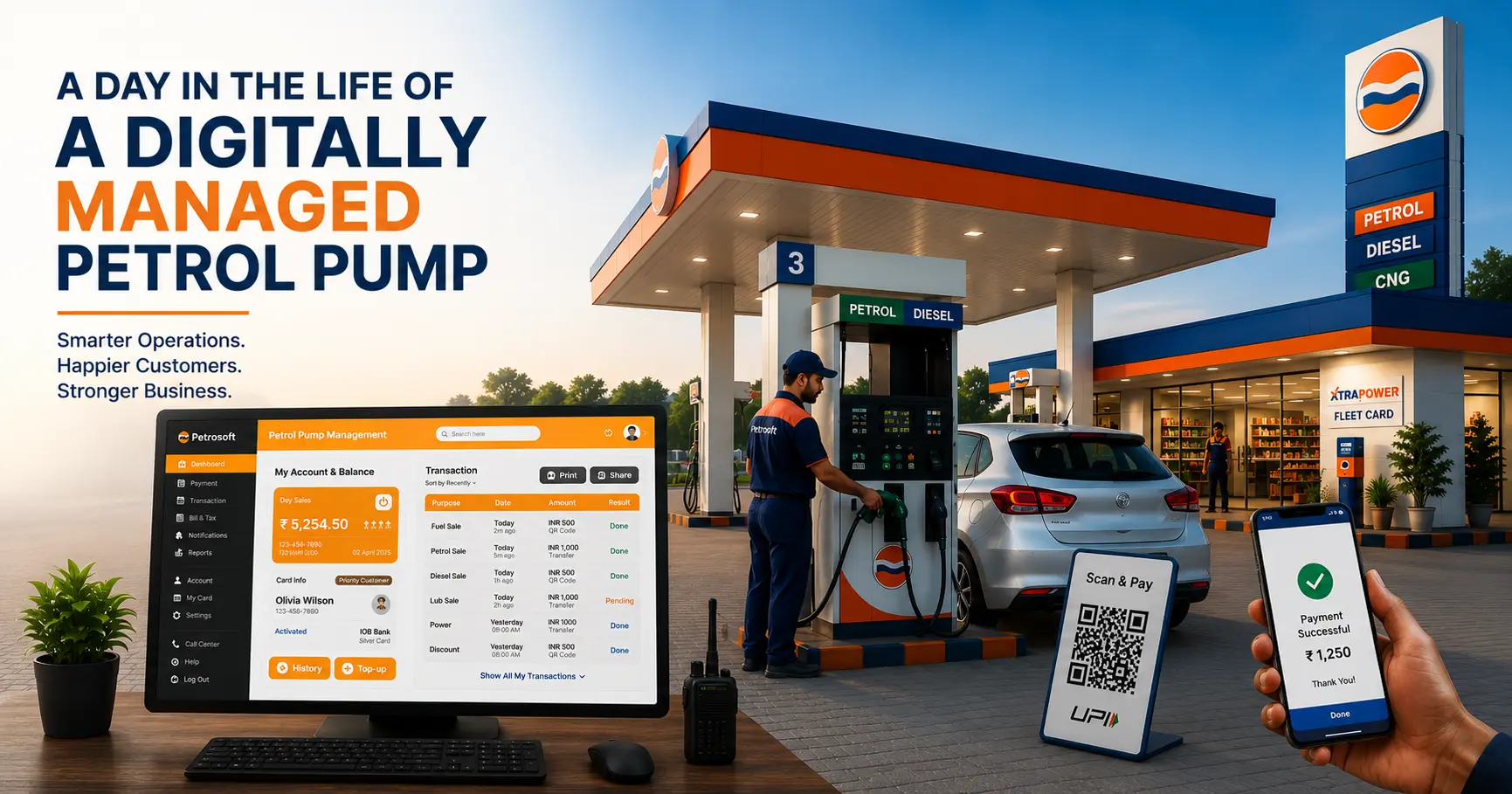
How Does a Typical Day Look with a Digital Management System?
What Are the Benefits of Using Petrol Pump Management Software?
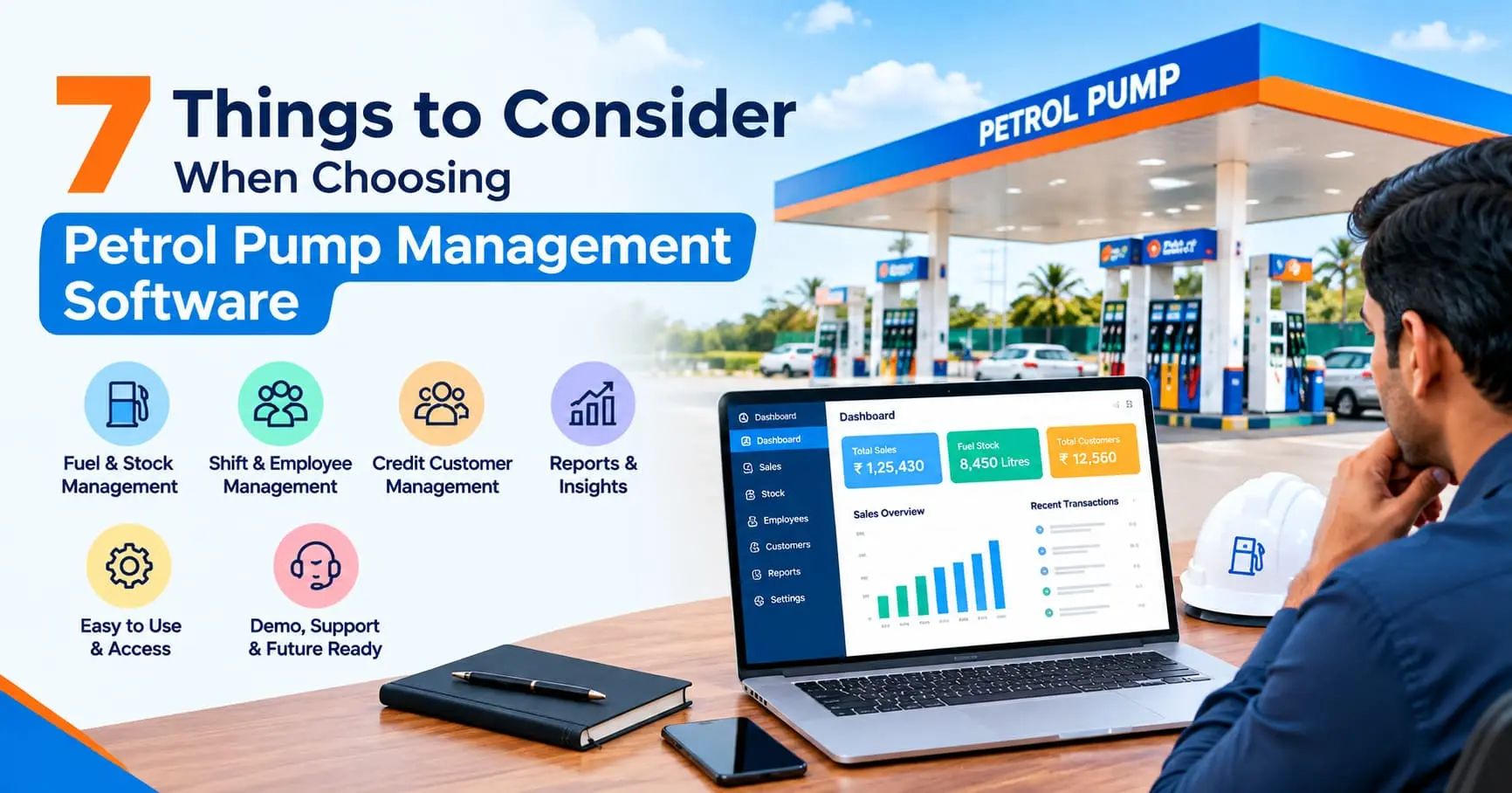
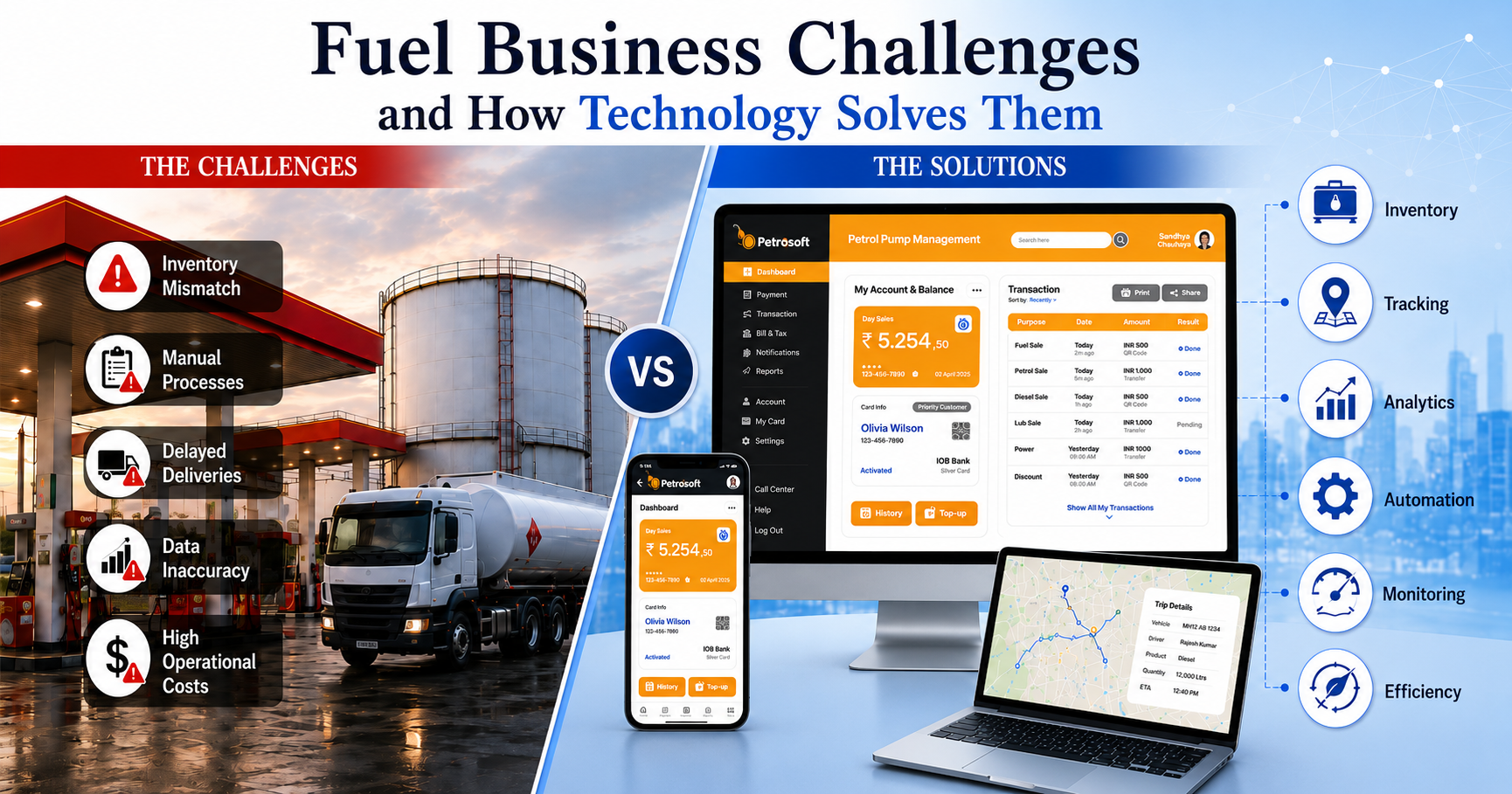
Running a petrol station involves several activities every day, from recording fuel sales and monitoring stock to managing shifts, payments, credit customers, billing, and business reports. When these activities are handled through separate registers or manual calculations, it can become difficult to maintain accurate records and identify operational issues quickly.
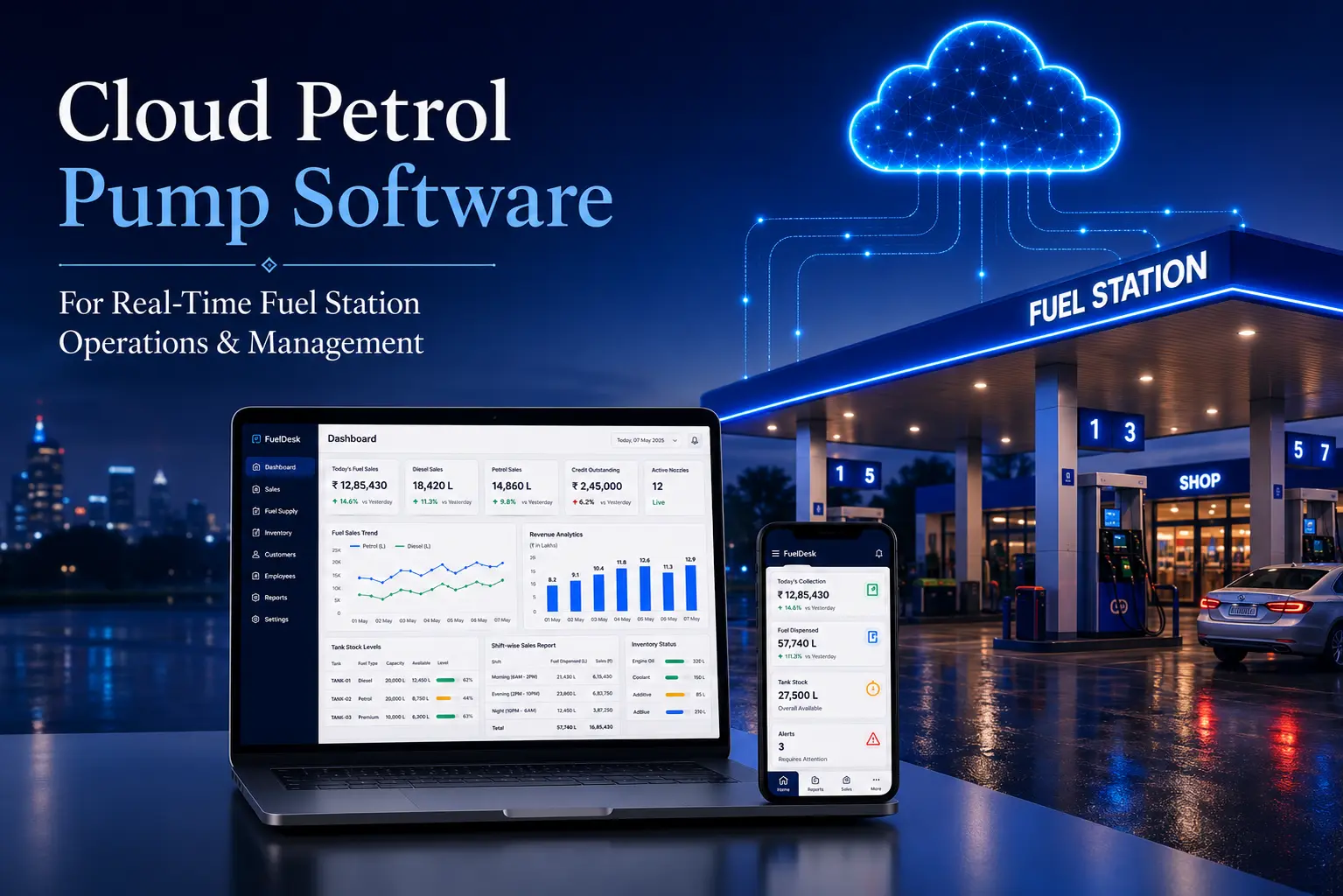
Petrol pump management software helps bring these day-to-day activities into one organized system, making it easier to track fuel sales, inventory, billing, shifts, customer accounts, and reports.
For petrol station owners and managers, the real benefit is not simply moving from paper to software. It is having better visibility into daily operations and the information needed to make timely business decisions.
Petrol pump management software is a digital platform that helps you oversee your petrol station’s daily operations. Depending on the type of this software, it can offer you assistance in various areas:
Station managers can now conveniently track their operations without the need for separate record-keeping for every activity, allowing them to manage their operations more effectively with access to interconnected digital information.
A petrol station has several connected operational activities. A typical day may involve:
There is a close connection between all these functions. For instance, fuel sales have an impact on stock levels, shift transactions have an impact on collections, and both activities influence final reports. When all the data is collected separately, it might take more time to link all these activities.
The most important benefit is that all operation processes can be monitored and analyzed through an interconnected electronic workflow.
1. Fuel Sales and Billing Become Easier to Track
Fuel transactions happen every minute during the day. Recording them manually causes more work for employees and increases the chance of errors.
A computerized system can manage sales and billing so that it becomes easier for directors to analyze the transactions.
This can help with:
The result is a clearer record of daily transactions without depending entirely on separate manual registers.
2. Fuel Stock Becomes Easier to Monitor
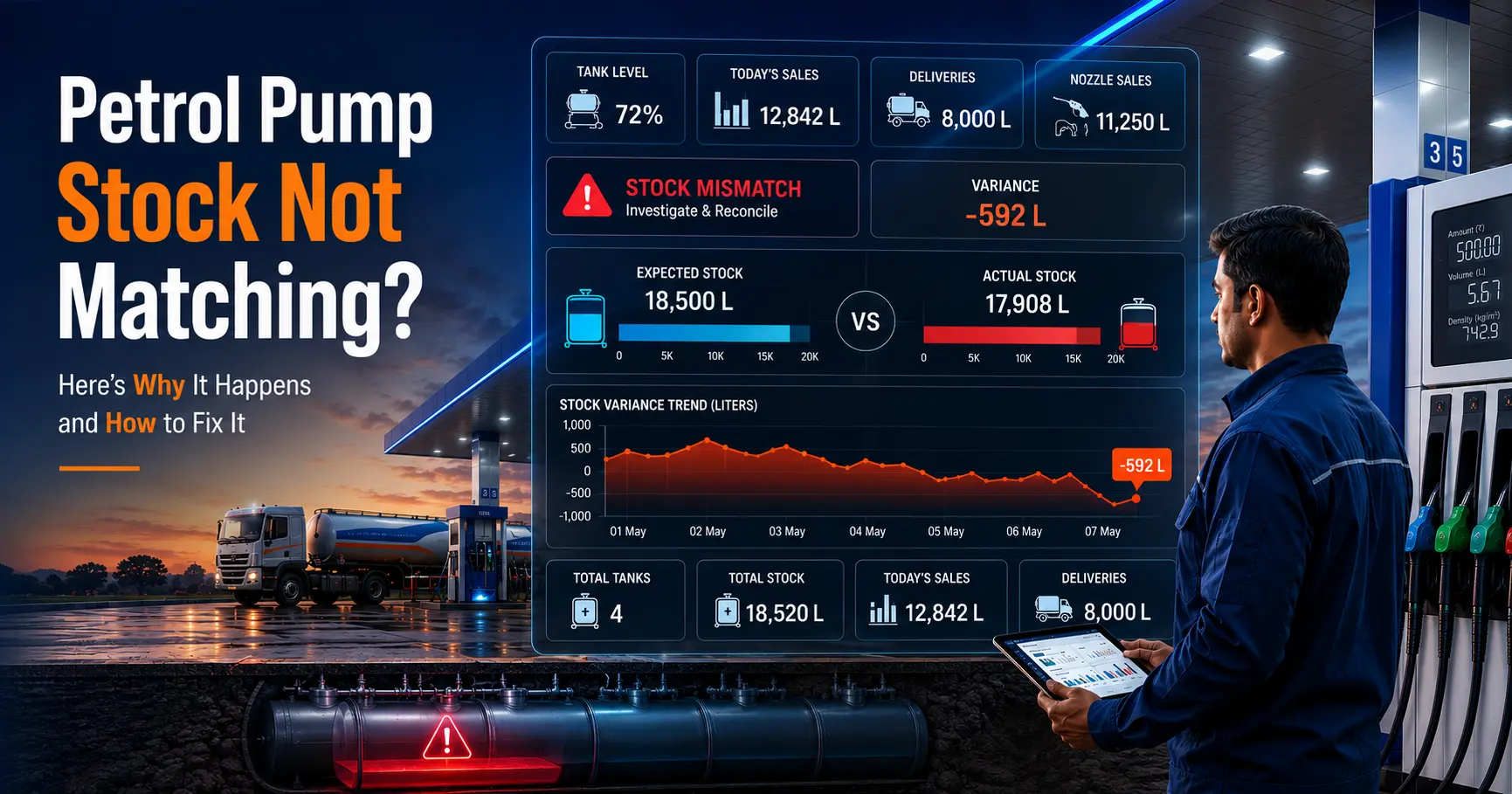
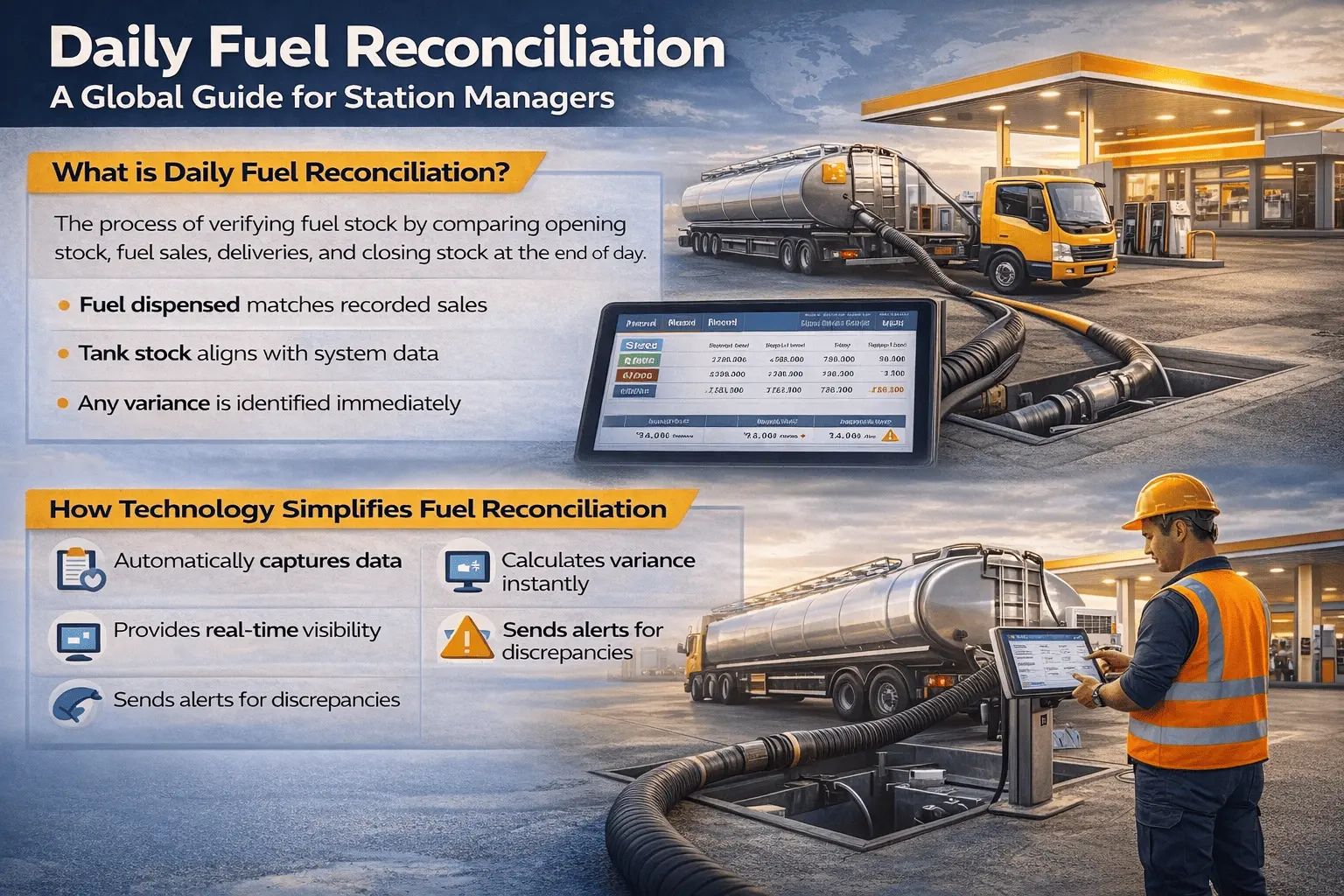
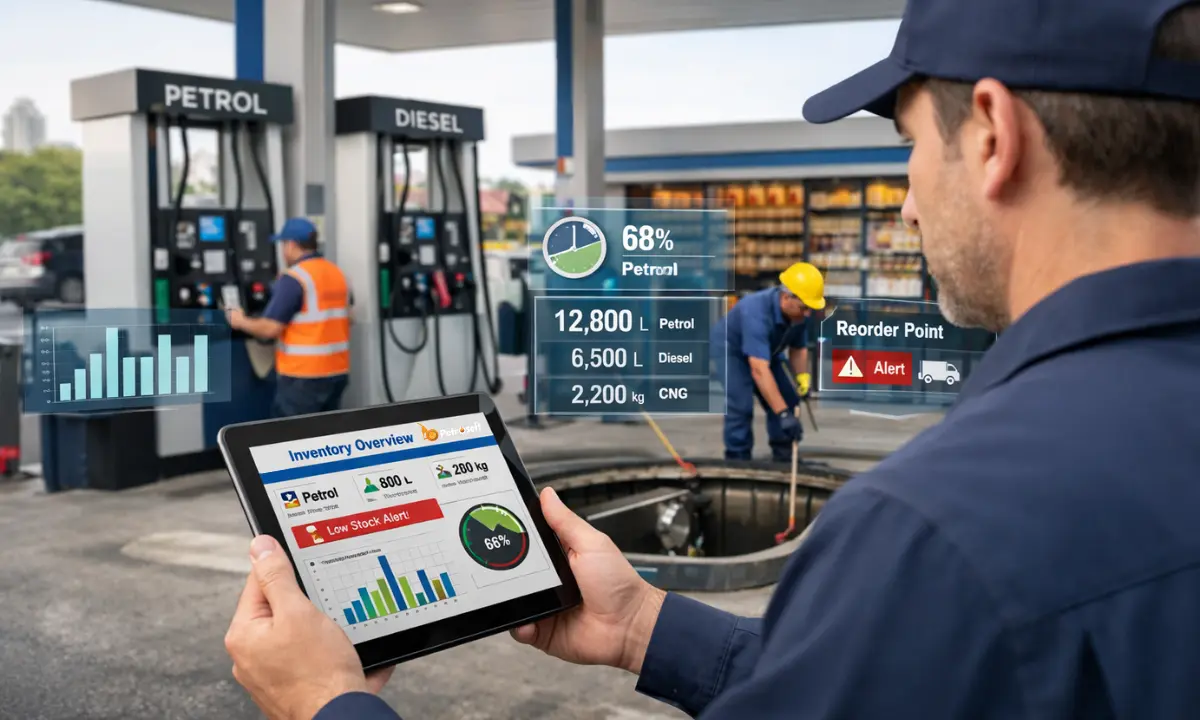
Managing fuel inventory is one of the key components of stationery management. Managers should know the amount of fuel received, sold, and also check whether the recorded stock is equal to the actual stock.
A digital system can organize information related to:
This makes it easier to review fuel movement and investigate differences when they occur.
3. Shift Operations Can Be Organized More Clearly
Many petrol stations operate across multiple employee shifts. At every shift change, sales, readings, collections, and other information need to be reviewed.
A structured system can organize these records by shift, helping managers check:
This provides a more consistent process for reviewing each shift.
4. Payment Reconciliation Can Be More Systematic
Petrol stations may receive payments through cash, cards, digital payment methods, and credit accounts.
When these records are maintained separately, reconciliation can become time-consuming.
Digital transaction records allow managers to compare sales and payment information more systematically and identify differences that require attention.
This is particularly useful during shift closing and end-of-day reconciliation.
5. Credit Customer Records Stay Organized
Credit sales can create additional administrative work when customer transactions are maintained manually.
A centralized system can help maintain information such as:
This gives station owners and staff a clearer view of customer accounts and pending amounts.
6. Daily Reports Can Be Generated Faster
Managers need accurate reports to understand how the station is performing.
Instead of collecting information from different registers and preparing every report manually, a software system can organize operational information into reports.
Depending on the system, these may include:
The benefit is faster access to organized business information.
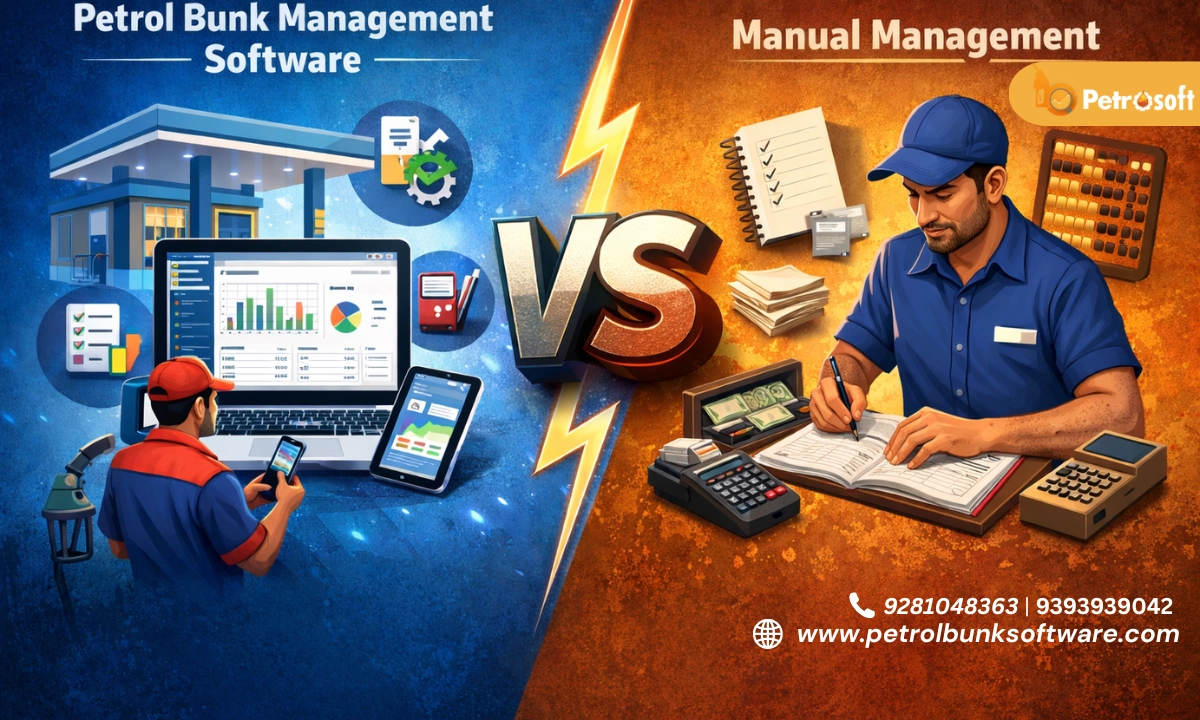
Manual processes can work for basic operations, but they may become difficult to maintain as transaction volumes, employees, or outlets increase.
| Common Operational Challenge | How a Digital System Can Help |
|---|---|
| Manual sales entries | Maintains digital transaction records |
| Difficult stock calculations | Organizes fuel stock and movement information |
| Time-consuming shift closing | Provides shift-wise sales and collection information |
| Separate payment records | Brings transaction information together |
| Manual credit tracking | Maintains customer account history |
| Preparing reports manually | Provides organized business reports |
| Monitoring multiple activities | Centralizes operational information |
The objective is not to eliminate staff involvement. It is to reduce repetitive manual work and give staff a more structured way to handle daily activities.
The right system should match the actual workflow of the fuel station rather than simply offering a long list of features.
Before choosing a solution, check whether it supports the areas your business needs.
Fuel Sales and Billing
The system should make it easy to record fuel transactions and maintain billing information.
Inventory and Stock Management
Look for functionality that helps monitor fuel receipts, sales, stock movement, readings, and variations.
Shift Management
Shift-wise sales, collections, readings, and employee information should be easy to review.
Credit Management
If your station handles credit customers, check whether the system can maintain customer accounts, transactions, payments, and outstanding amounts.
Reporting
Reports should help owners and managers understand business activity without requiring extensive manual calculations.
Employee Management
If multiple employees and shifts are involved, employee-related operational records should be easy to maintain.
Multi-Station Visibility
For businesses operating more than one outlet, centralized information can make it easier to monitor different locations.
A connected workflow can look like this:
Opening
Review opening stock and start the day's operations.
Fuel Sales
Record fuel transactions and billing throughout the day.
Shift Operations
Track shift-wise sales, readings, collections, and employee activity.
Stock Monitoring
Review fuel movement and compare recorded information with physical readings.
Payment & Account Review
Check cash, digital payments, credit transactions, and other collections.
Daily Closing
Review sales, stock, payments, expenses, and other operational information.
Reports
Use daily and management reports to review the station's performance.
This approach gives managers a clearer view of the day's activities without depending entirely on disconnected records.
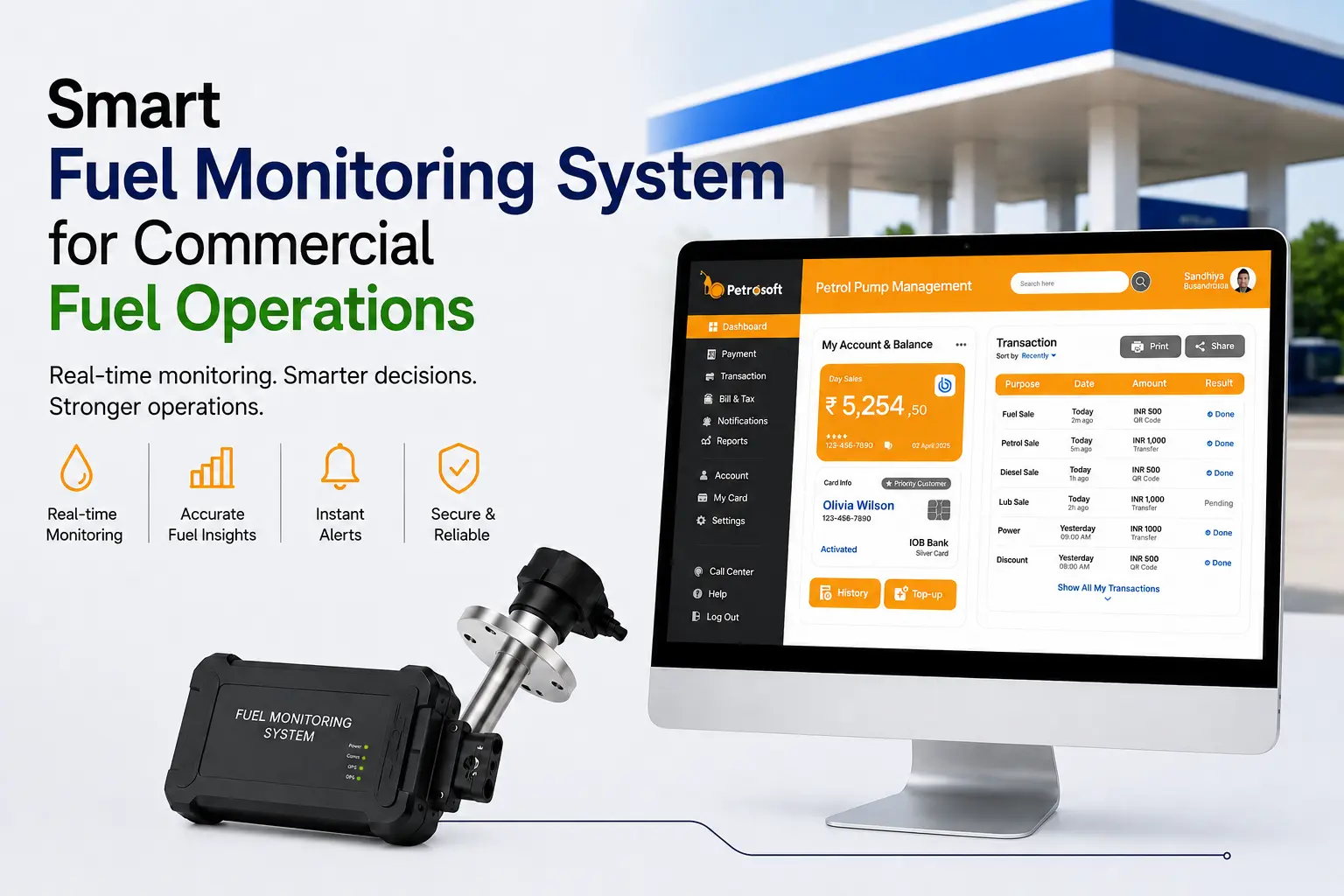
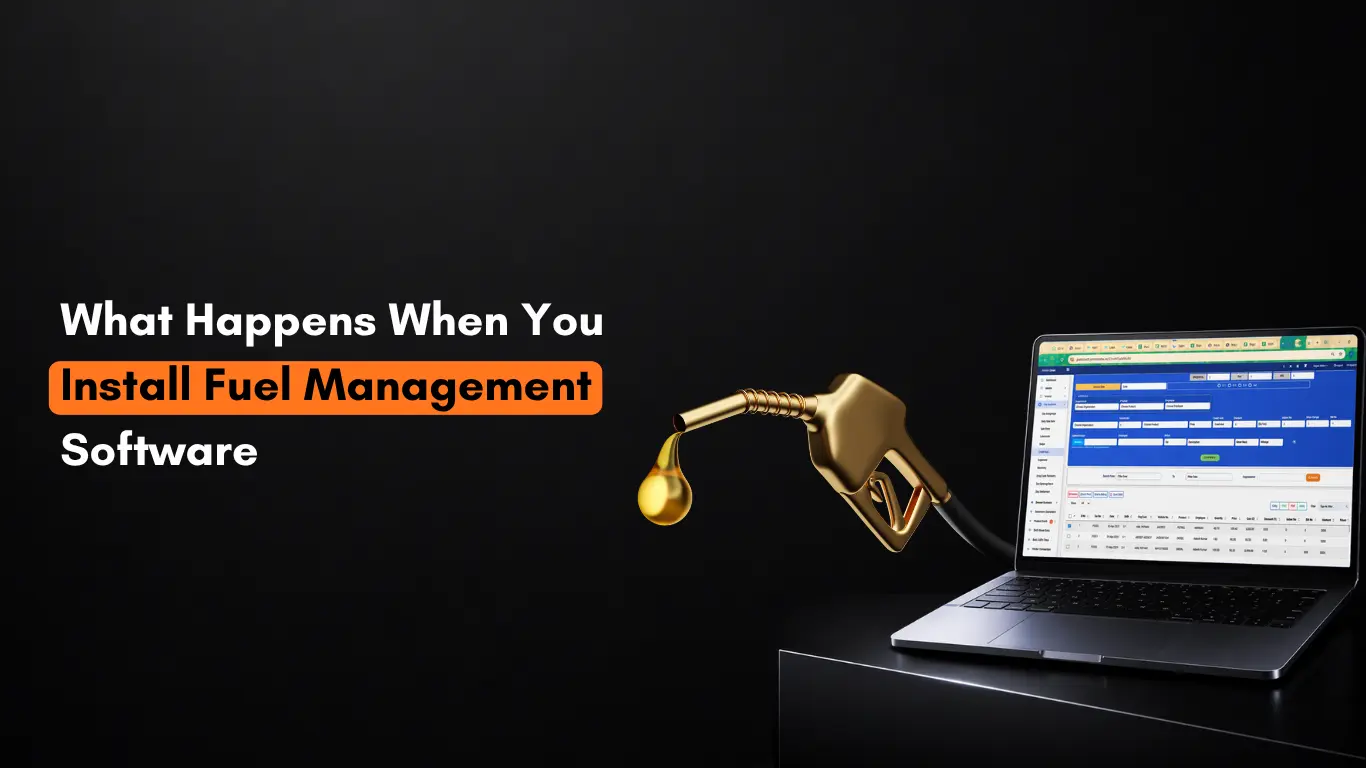
Petrosoft is a petrol pump management software solution designed to bring key fuel station operations into one connected system.
Depending on the business setup and selected modules, Petrosoft supports areas such as:
The advantage of having these activities within one system is that owners and managers can review operational information in a more structured way instead of relying on multiple disconnected records.
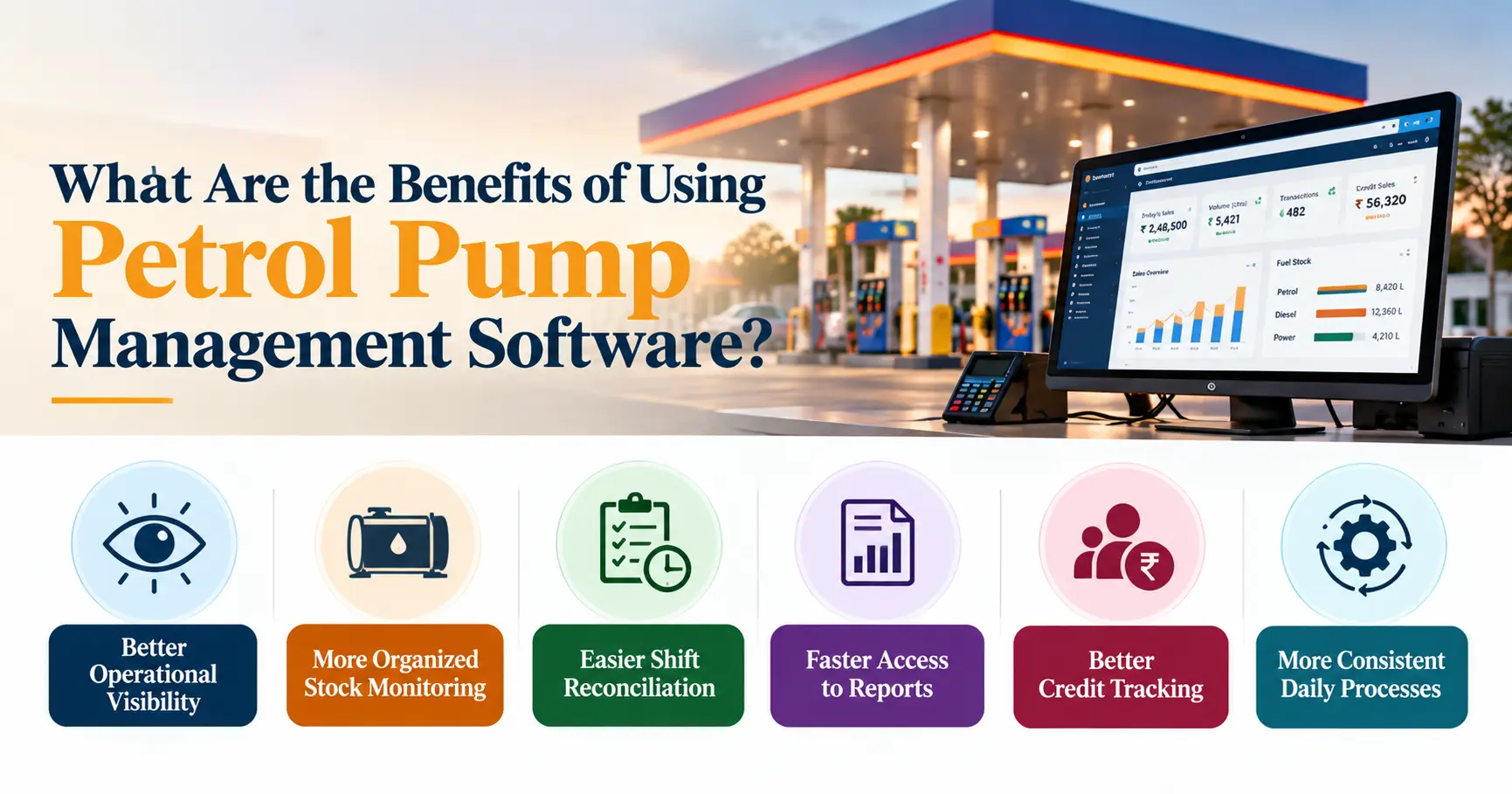
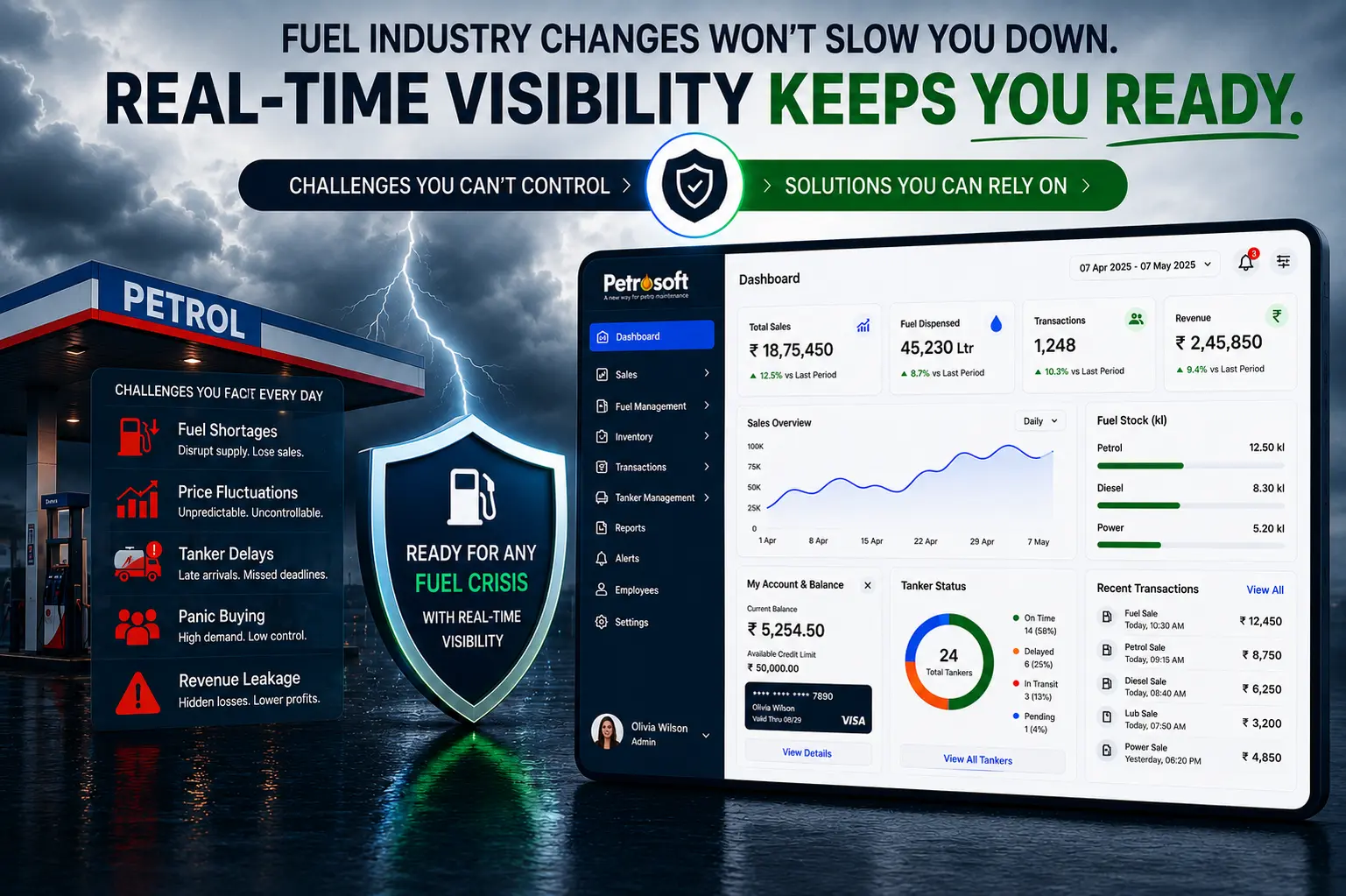
A well-configured system can help petrol stations improve operational visibility, reduce repetitive manual work, and organize business information.
Key benefits include:
Better Operational Visibility
Owners and managers can access organized information about sales, stock, transactions, and reports.
More Organized Stock Monitoring
Fuel receipts, sales, readings, and stock information can be reviewed together.
Easier Shift Reconciliation
Shift-wise information helps staff and managers review sales and collections more systematically.
Faster Access to Reports
Organized digital records make it easier to access daily and management reports.
Better Credit Tracking
Customer transactions and outstanding amounts can be maintained in a structured format.
More Consistent Daily Processes
A standardized digital workflow can help staff follow the same process across shifts and operational activities.
Yes, A single petrol station can also benefit from a structured digital system.
Even one outlet may handle fuel sales, inventory, billing, employees, shifts, credit customers, payments, expenses, and daily reporting.
The important factor is not the number of outlets. It is whether the software matches the station's operational requirements and can handle its transaction volume and workflow.
For growing businesses, using a structured system can also make it easier to maintain consistent processes as operations expand.
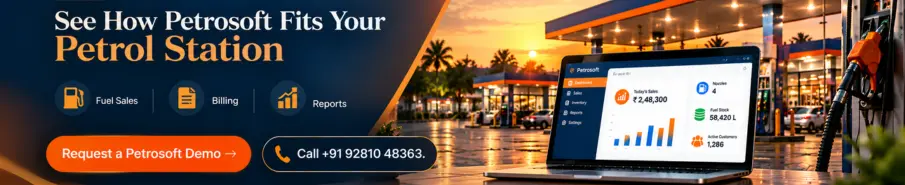
Petrosoft brings fuel sales, billing, inventory, shifts, credit customers, expenses, and reports into one platform built for petrol pump operations.
Whether you operate one station or multiple outlets, see how Petrosoft can fit your daily workflow.
Call +91 92810 48363.
Final Thoughts
Managing a petrol station requires coordination across sales, stock, shifts, payments, and reporting. The right software can connect these activities, reduce repetitive manual work, and provide clearer operational visibility.
Petrosoft helps petrol station owners build more organized daily operations and a stronger foundation for business growth.
Software
 Software
 Software
 Software
 Software
 Software
 Software
 Software
 Software
 Software
 Software
 Software
 Software
 Software
 Software
 Software
 Software
 Software
 Software
 Software
 Software
 Software
 Software
 Software
 Software
 Software
 Software
 Software
 Software
 Software
 Software
 Software
 Software
 Software
 Software
 Software
 Software
 Petrosoft
 Software
Petrosoft
 Software
Petrosoft
 Software
Petrosoft
 Software
Petrosoft
 Software
Petrosoft
 Performance
Petrosoft
 Performance
Petrosoft
 Performance
Petrosoft
 Performance
Petrosoft
 Performance
Petrosoft
 Performance
Petrosoft
 Mobile App
Petrosoft
 Software
Petrosoft
 Software
Petrosoft
 Software
Petrosoft
 Software
Petrosoft
 Software
Petrosoft
 Software
Petrosoft
 Software
Petrosoft
 Software
Petrosoft
 Software
Petrosoft
 Sales
Sales
Petrosoft
 Software
Petrosoft
 Technology
Petrosoft
 Feedback
Petrosoft
 Marketing
Petrosoft
 Revolution
Petrosoft
 Software
Petrosoft
 Tips
Tips
Petrosoft
 Case Studies
Petrosoft
 Trends
Petrosoft
 Application
Petrosoft
 Application
Petrosoft
 Application
Petrosoft
 Operations
Petrosoft
 Operations
Petrosoft
 Sales
Sales
Petrosoft
 Sales
Sales
Petrosoft
 Application
Petrosoft