


Introduction
Running a petrol pump requires accurate stock management every day. However, many petrol pump owners and managers face a common problem the physical fuel stock doesn't match their inventory records. Even a small stock mismatch can make it difficult to identify whether the issue is caused by operational mistakes, incorrect stock entries, equipment-related problems, or other day-to-day activities.
If these stock differences occur regularly and are not investigated, they can affect inventory accuracy, business profitability, and overall operational efficiency. The good news is that most stock mismatches have practical solutions. By identifying the root cause early and following the right inventory management practices, petrol pumps can significantly reduce recurring stock variations.
In this article, you'll learn 8 common reasons why petrol pump stock doesn't match, practical solutions to resolve them, and best practices to improve stock accuracy and inventory management.
Why Does Petrol Pump Stock Never Match?
Petrol pump stock mismatches usually occur because of operational, technical, or recording-related issues rather than a single major problem. Incorrect dip readings, inaccurate decantation records, delayed stock reconciliation, nozzle calibration issues, fuel evaporation, and manual data entry errors are some of the most common causes. Following standardized inventory procedures and monitoring stock regularly can significantly reduce these discrepancies.
Key Takeaways
- Petrol pump stock mismatches are usually caused by multiple operational factors.
- Small daily errors can accumulate into significant inventory differences.
- Accurate dip readings and timely stock reconciliation improve inventory accuracy.
- Regular equipment maintenance helps prevent unnecessary stock variations.
- Investigating recurring discrepancies early reduces financial losses.
- Standardized operational processes improve accountability across every shift.
What Is a Petrol Pump Stock Mismatch?
A petrol pump stock mismatch occurs when the actual quantity of fuel available in the underground storage tanks differs from the quantity expected according to purchase records, sales transactions, and previous stock balances.
For example:
- Opening Stock: 10,000 Litres
- Fuel Received: 5,000 Litres
- Fuel Sold: 6,200 Litres
Expected Closing Stock: 8,800 Litres
However, after measuring the underground tank, the actual stock is only 8,730 Litres.
This means there is a stock variation of 70 litres.
A mismatch doesn't always indicate fuel theft. In many cases, it results from operational errors, environmental conditions, equipment calibration, or delayed verification. The key is identifying the root cause before the variation grows into a larger business problem.
Common Stock Mismatch Causes vs Their Business Impact
| Common Cause | Business Impact |
|---|---|
| Incorrect dip readings | Opening and closing stock calculations become inaccurate |
| Wrong decantation entries | Fuel inventory records become unreliable |
| Nozzle calibration issues | Sales records may not match actual fuel dispensed |
| Fuel leakage | Gradual inventory loss and reduced profitability |
| Employee recording mistakes | Frequent reconciliation differences |
| Delayed stock verification | Difficult to identify when the variation actually occurred |
Why this matter: Understanding how each issue affects operations helps petrol pump owners focus on identifying the root cause rather than treating every stock mismatch as the same problem.
Signs Your Petrol Pump May Have a Stock Mismatch
Not every stock variation is immediately obvious. However, the following warning signs often indicate that your inventory requires closer attention:
- Closing stock is consistently lower than expected.
- Tank measurements don't align with daily sales records.
- The same dispensing unit frequently shows discrepancies.
- Monthly inventory losses continue to increase.
- Daily reconciliation takes longer because of unexplained differences.
- Employees struggle to explain recurring stock variations.
If these signs occur repeatedly, it's important to investigate the underlying cause rather than assuming the variation is normal.
8 Real Reasons & Practical Solutions

1. Incorrect Dip Readings
Dip measurement is one of the most critical daily activities at a petrol pump. However, inconsistent measuring techniques, damaged dip sticks, or taking readings at different times can easily create stock differences.
Even a small error during the opening or closing measurement can affect the day's inventory calculation.
Practical Solution
- Measure stock at the same scheduled time every day.
- Use properly calibrated dip charts for each storage tank
- Ensure dip sticks are clean, straight, and in good condition.
- Verify unusual readings before updating stock records.
- Train staff on standardized dip measurement procedures.
Consistent dip measurement practices help improve stock accuracy and reduce unnecessary discrepancies.
2. Incorrect Decantation Entries
Every fuel delivery must be accurately recorded before updating inventory. Incorrect quantity entries, recording the wrong product, or failing to verify the actual fuel received can immediately affect stock calculations.
These errors often remain unnoticed until stock reconciliation is performed.
Practical Solution
- • Verify tanker invoices before unloading.
- • Record the actual quantity received.
- • Cross-check delivery records with purchase invoices.
- • Follow a standardized fuel receiving procedure
Accurate decantation records are essential for maintaining reliable fuel inventory.
3. Nozzle Meter Calibration Issues
Fuel dispensing units must deliver the correct quantity of fuel to customers. If nozzle meters become inaccurate because of delayed calibration or equipment wear, recorded sales may no longer reflect the actual fuel dispensed.
This creates noticeable differences during stock reconciliation.
Practical Solution
- Follow the recommended nozzle calibration schedule.
- Conduct routine quantity verification tests.
- Maintain calibration records for every dispensing unit.
- Repair or recalibrate faulty equipment immediately.
Regular calibration improves both inventory accuracy and customer confidence.
4. Fuel Leakage from Tanks or Pipelines
Small leaks in underground storage tanks, pipelines, or dispensing equipment often develop gradually. Because these leaks are difficult to detect in their early stages, businesses may experience continuous stock shortages without an obvious explanation.
Practical Solution
- Perform regular inspections of storage tanks and fuel pipelines.
- Monitor recurring unexplained stock losses.
- Schedule preventive maintenance for fuel handling equipment.
- Address leaks immediately to prevent larger financial losses.
Preventive maintenance helps protect both fuel inventory and long-term profitability.
5. Manual Data Entry & Billing Errors
Even when fuel is dispensed correctly, stock mismatches can occur if sales transactions are recorded incorrectly. Manual billing, duplicate entries, delayed updates, incorrect quantity entries, or mistakes during shift closing can all create differences between recorded sales and actual fuel inventory.
These errors are often small and may go unnoticed during a busy workday. However, when they occur repeatedly, they gradually affect stock reconciliation and make it difficult to identify the actual cause of inventory discrepancies.
Practical Solution
To minimize manual recording errors:
- Record every fuel sale immediately.
- Verify billing entries before closing each shift.
- Cross-check sales reports with cash collections and digital payment records.
- Avoid duplicate or delayed transaction entries.
- Follow a standardized shift closing process for every employee.
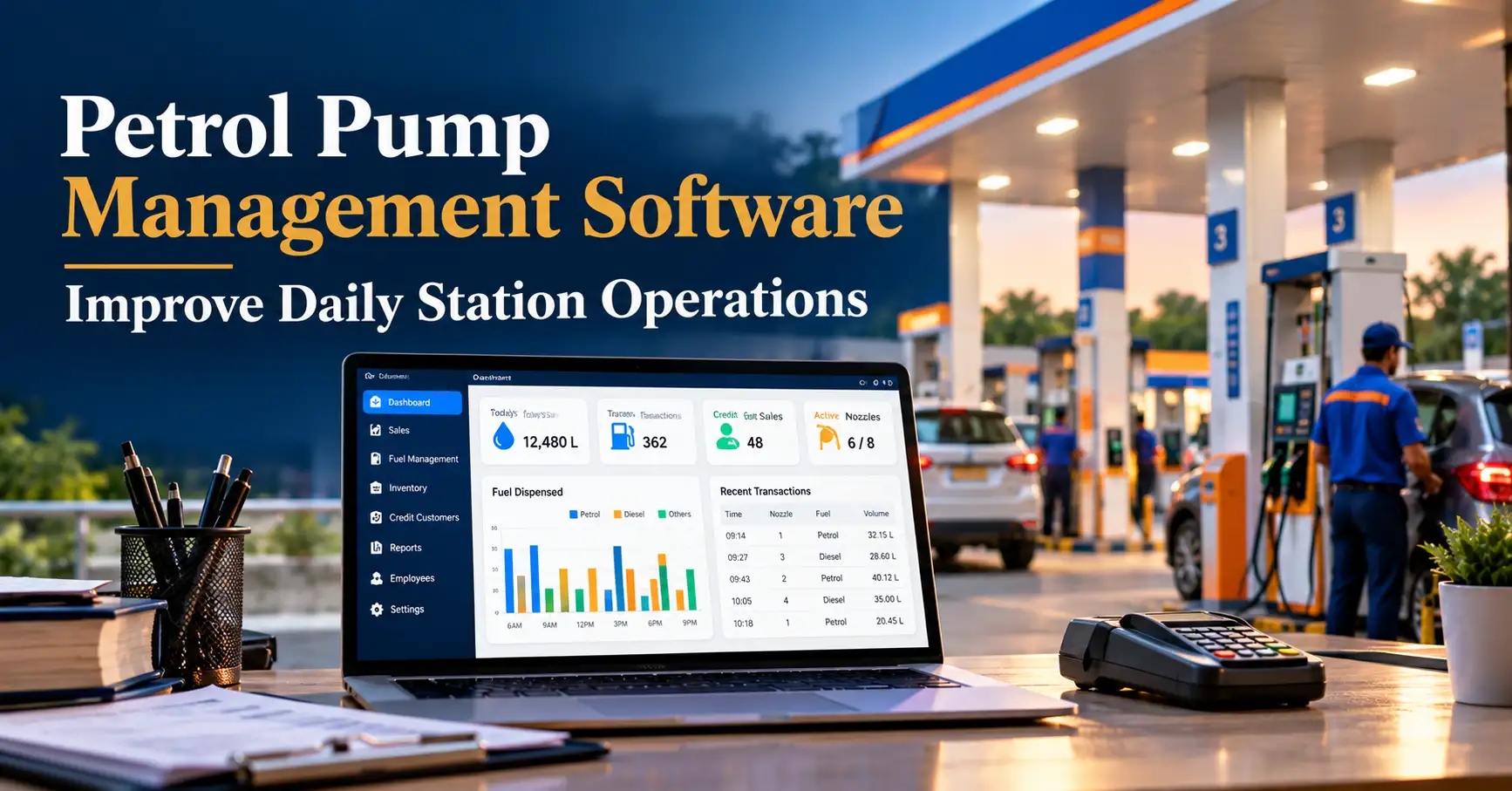
Using a centralized billing and reporting system can also reduce manual dependency. Solutions like Petrosoft Petrol Pump Management Software help organize sales records, billing data, and shift reports in one place, improving accuracy and reducing operational errors.
6. Poor Daily Stock Reconciliation & Monitoring
Many petrol pumps verify stock only at the end of the month instead of reviewing inventory daily. By the time discrepancies are discovered, tracing the exact source of the problem becomes difficult.
Without regular monitoring, small daily variations continue to accumulate, leading to larger inventory differences that require more time and effort to investigate.
Practical Solution
A disciplined reconciliation process helps detect issues before they become costly.
Best practices include:
- Compare opening stock, fuel received, sales, and closing stock every day.
- Investigate unusual stock variations immediately.
- Review variance reports regularly.
- Monitor recurring discrepancies instead of ignoring them.
- Maintain accurate records for every shift.
Daily reconciliation supported by organized reporting enables managers to identify unusual stock movements earlier and respond more effectively.
Comparison: Daily Stock Verification vs Delayed Stock Verification
| Daily Stock Verification | Delayed Stock Verification |
|---|---|
| Detects discrepancies on the same day | Problems remain unnoticed for weeks |
| Easier to identify the actual cause | Difficult to determine when the issue started |
| Reduces cumulative inventory loss | Small losses continue to increase |
| Improves employee accountability | Makes responsibility difficult to establish |
| Supports better operational decisions | Delays corrective actions |
Key Insight:
The sooner a stock variation is identified, the easier it is to determine its cause and prevent recurring losses.
7. Inconsistent Operating Procedures
Every employee should follow the same process for measuring stock, recording fuel receipts, closing shifts, and updating inventory. However, when different employees use different methods, stock records become inconsistent.
For example, one employee may verify tanker receipts before updating inventory, while another records the invoice quantity without confirmation. Over time, these inconsistent practices contribute to recurring stock mismatches.
Practical Solution
Consistency is essential for accurate inventory management.
Petrol pumps should:
- Create Standard Operating Procedures (SOPs).
- Train all employees on the same workflow.
- Follow a uniform shift closing process.
- Review operational practices regularly.
- Document inventory procedures clearly.
Standardized operations reduce human error and improve overall inventory accuracy.
8. Fuel Theft or Unauthorized Dispensing
Although not every stock variation is caused by theft, unauthorized fuel dispensing can result in unexplained inventory shortages. Weak supervision, inadequate monitoring, or poor accountability may allow these incidents to go unnoticed.
Regular monitoring helps identify unusual fuel movement before losses become significant.
Practical Solution
To reduce the risk of unauthorized fuel dispensing:
- Monitor nozzle-wise fuel sales regularly.
- Compare physical stock with billing reports.
- Conduct periodic operational audits.
- Strengthen employee accountability.
- Investigate recurring shortages immediately.
Using detailed inventory reports and operational dashboards available in Petrosoft Petrol Pump Management Software can help businesses monitor fuel movement more effectively and identify unusual inventory patterns before they affect profitability.
Real-World Scenario
Imagine a petrol pump that receives 10,000 litres of diesel in the morning. Throughout the day, fuel sales continue as expected, and there are no customer complaints.
However, during the evening stock verification, the physical tank measurement shows a shortage of 65 litres.
Instead of assuming fuel theft immediately, the manager investigates the day's operations and discovers:
- The morning dip reading was recorded incorrectly.
- One fuel delivery quantity was entered without verification.
- A billing entry was accidentally duplicated.
- Daily stock reconciliation was completed without reviewing the variance.
Each mistake was small on its own, but together they created a noticeable stock mismatch.
This example shows why identifying the root cause systematically is more effective than making assumptions based on the final stock difference alone.
Comparison: Common Symptoms vs Possible Root Causes
| What You Notice | Possible Root Cause |
|---|---|
| Closing stock is lower than expected | Fuel leakage or measurement error |
| Tank stock doesn't match sales records | Incorrect dip reading or wrong fuel receipt entry |
| Stock mismatch after every shift | Manual data entry or billing mistakes |
| Inventory differences increase every month | Poor daily reconciliation |
| Sales reports don't match physical stock | Nozzle calibration issue |
| Frequent unexplained shortages | Unauthorized fuel dispensing or inconsistent operating procedures |
Understanding these warning signs helps businesses identify operational issues faster and take corrective action before inventory losses increase.
Conclusion:
Petrol pump stock mismatches can be prevented by identifying the root causes early, following standardized operating procedures, and monitoring fuel inventory consistently. Small improvements in stock verification, reconciliation, billing accuracy, and daily operations can significantly reduce inventory discrepancies and improve overall business performance. For petrol pump owners looking to simplify stock management and gain better control over daily operations, Petrosoft Petrol Pump Management Software offers a complete solution with real-time inventory tracking, billing, reporting, and reconciliation tools.
Looking to reduce recurring stock mismatches and improve operational visibility? Explore Petrosoft Petrol Pump Management Software to see how digital inventory management can support your business.