In today’s fast evolving fuel retail industry, maintaining accuracy in stock and sales is critical for profitability. Station managers often face challenges like stock mismatches, cash discrepancies, and fuel loss. Without a proper system, even small errors can lead to significant financial impact.
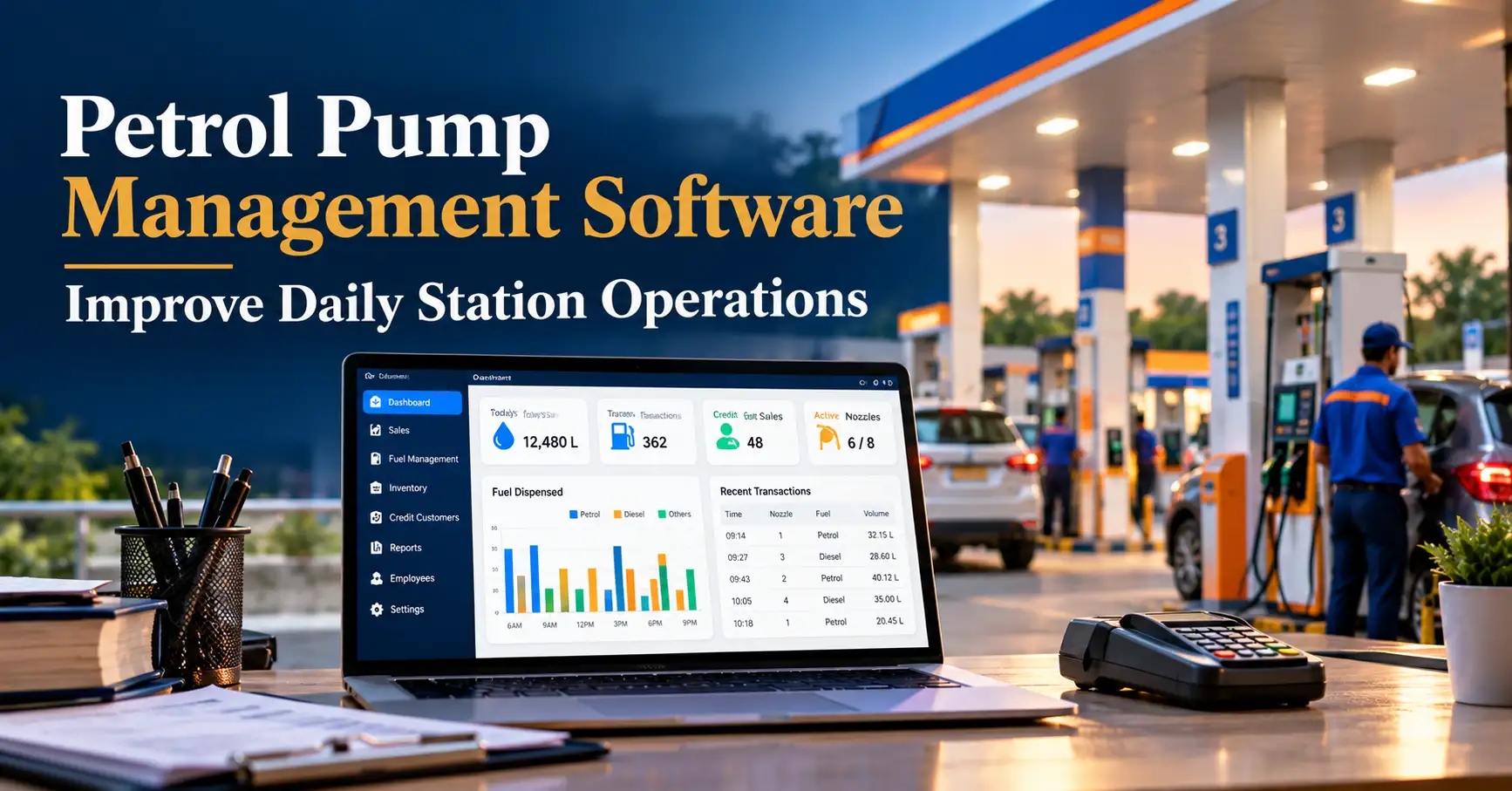
Daily fuel reconciliation is a proven method used globally to ensure that every litre of fuel is accounted for. By tracking stock movement and comparing actual vs expected values, fuel stations can reduce losses and improve operational efficiency. Modern solutions like Petrosoft make this process faster, more accurate, and easier to manage. is becoming essential for modern fuel stations.
What is Daily Fuel Reconciliation?
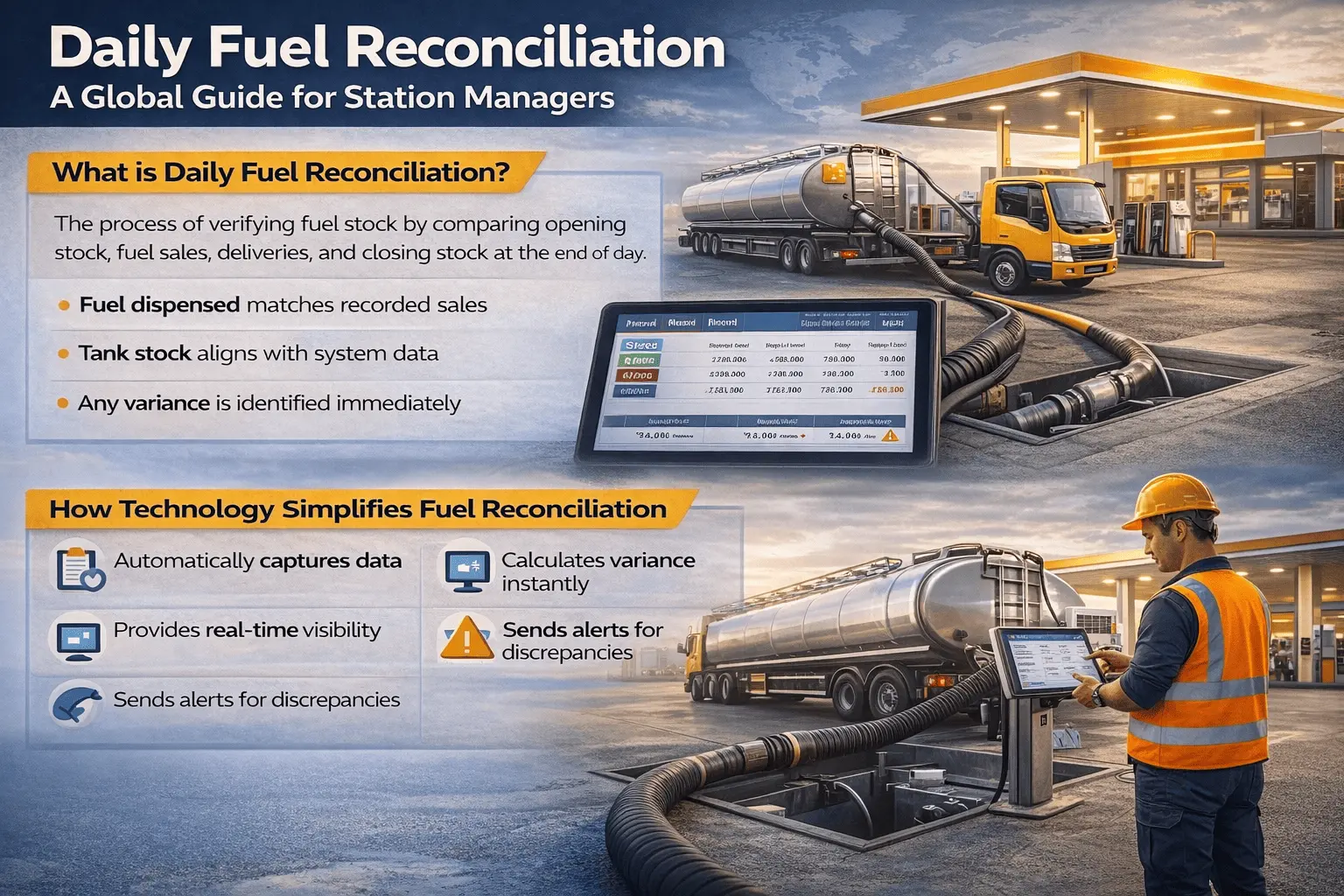
Daily fuel reconciliation is the process of verifying fuel stock by comparing opening stock, fuel sales, deliveries, and closing stock at the end of each day.
It ensures that:
- Fuel dispensed matches recorded sales
- Tank stock aligns with system data
- Any variance is identified immediately
This process helps maintain transparency and control over daily fuel operations.
Why Daily Fuel Reconciliation is Important
Daily reconciliation plays a crucial role in fuel station management:
Prevents Fuel Loss: Detects leakage, theft, or pilferage early
Ensures Accuracy: Keeps stock and sales records aligned
Improves Financial Control: Reduces revenue leakage
Supports Audits: Maintains proper documentation
Enhances Accountability: Tracks staff performance
Without daily checks, small discrepancies can accumulate into major losses.
Step by Step Fuel Reconciliation Process
A structured approach ensures accurate reconciliation:
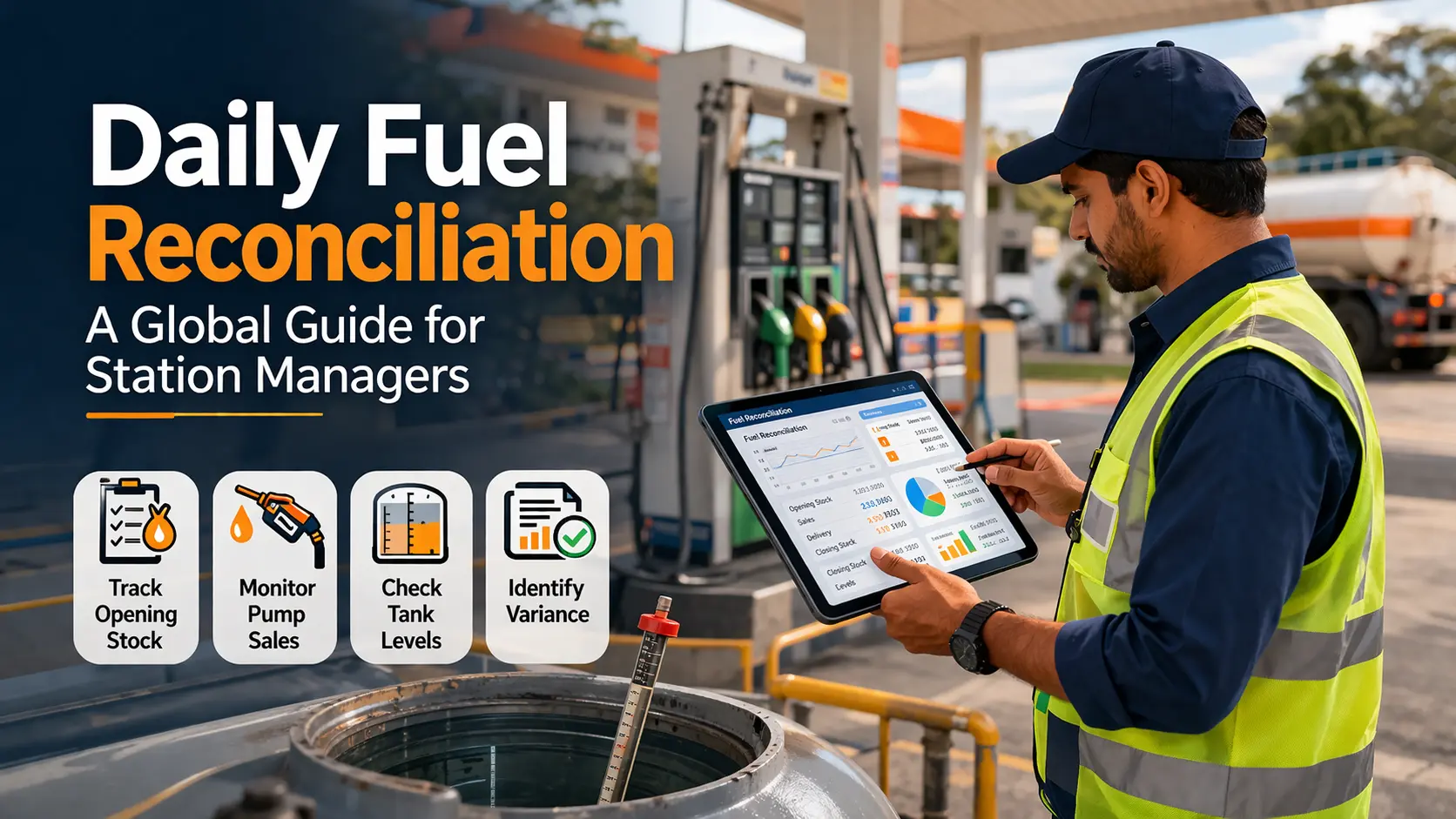
1️ Record Opening Stock
Start the day with the previous day’s closing stock.
2️Add Fuel Deliveries
Include any fuel received during the day.
3️ Track Sales Data
Collect pump-wise sales readings or POS reports.
4️ Measure Physical Stock
Use dip measurement or ATG system to check tank levels.
5️ Calculate Expected Stock
Opening Stock + Deliveries Sales
6️ Identify Variance
Compare expected stock with actual stock to find differences.
Common Challenges in Fuel Reconciliation:
Despite its importance, many stations face difficulties:
- Manual data entry errors
- Inaccurate dip readings
- Delayed reporting
- Lack of real-time visibility
- Employee manipulation or negligence
These issues make reconciliation time-consuming and less reliable.
Global Best Practices for Accurate Reconciliation
Fuel stations worldwide follow these best practices:
- Perform reconciliation daily without fail
- Use automated systems instead of manual logs
- Set acceptable variance limits
- Maintain proper audit trails
- Train staff regularly
Adopting these practices ensures consistency and accuracy across operations.
How Technology Simplifies Fuel Reconciliation
Modern fuel management software helps streamline the entire process by:
- Automatically capturing sales and stock data
- Providing real time visibility
- Calculating variance instantly
- Generating detailed reports
- Sending alerts for discrepancies
This reduces manual effort and improves decision making for station managers.
Key Benefits of Daily Fuel Reconciliation
Better Control Over Fuel Inventory
Maintain accurate stock levels daily with real-time tracking and reconciliation. Avoid shortages and overstocking with complete inventory visibility. Reduced Losses and Theft
Identify fuel discrepancies instantly and prevent leakage or pilferage. Improve accountability and reduce revenue loss across operations.
Improved Operational Efficiency
Streamline daily fuel operations with structured reconciliation processes.
Save time by reducing manual work and improving workflow efficiency.
Faster and Accurate Reporting
Generate error free daily reports with updated stock and sales data.
Make quicker decisions with reliable and real time insights.
Increased Profitability
Minimize losses and optimize operations to boost overall margins.
Improve financial performance with better control and accuracy.
This reduces manual effort and improves decision making for station managers.
How Petrosoft Helps Station Managers
Petrosoft offers a centralized platform that simplifies daily fuel reconciliation:
- Real-time tracking of stock and sales
- Automated reconciliation reports
- Instant alerts for fuel variance
- Easy monitoring across multiple outlets
With Petrosoft, station managers can focus more on operations and less on manual calculations.
Conclusion
Daily fuel reconciliation is not just a routine task it is a critical practice for maintaining control, accuracy, and profitability in fuel stations. In a competitive and data-driven industry, leaning on manual methods can lead to costly errors.
By adopting structured processes and leveraging modern solutions like Petrosoft, station managers can ensure transparency, reduce losses, and run their operations more efficiently. In 2026 and beyond, daily reconciliation will remain a key pillar of successful fuel retail management.