
Why Does Sales Visibility Break Down Across Multiple Stations?
How Does Centralized Stock Tracking Compare to Manual Checks?
Why Do Credit Customer Records Need to Be Unified Across Outlets?
What Changes in Staff Accountability with Multi-Outlet Software?
How Does Petrosoft Support Dealers Running Multiple Outlets?
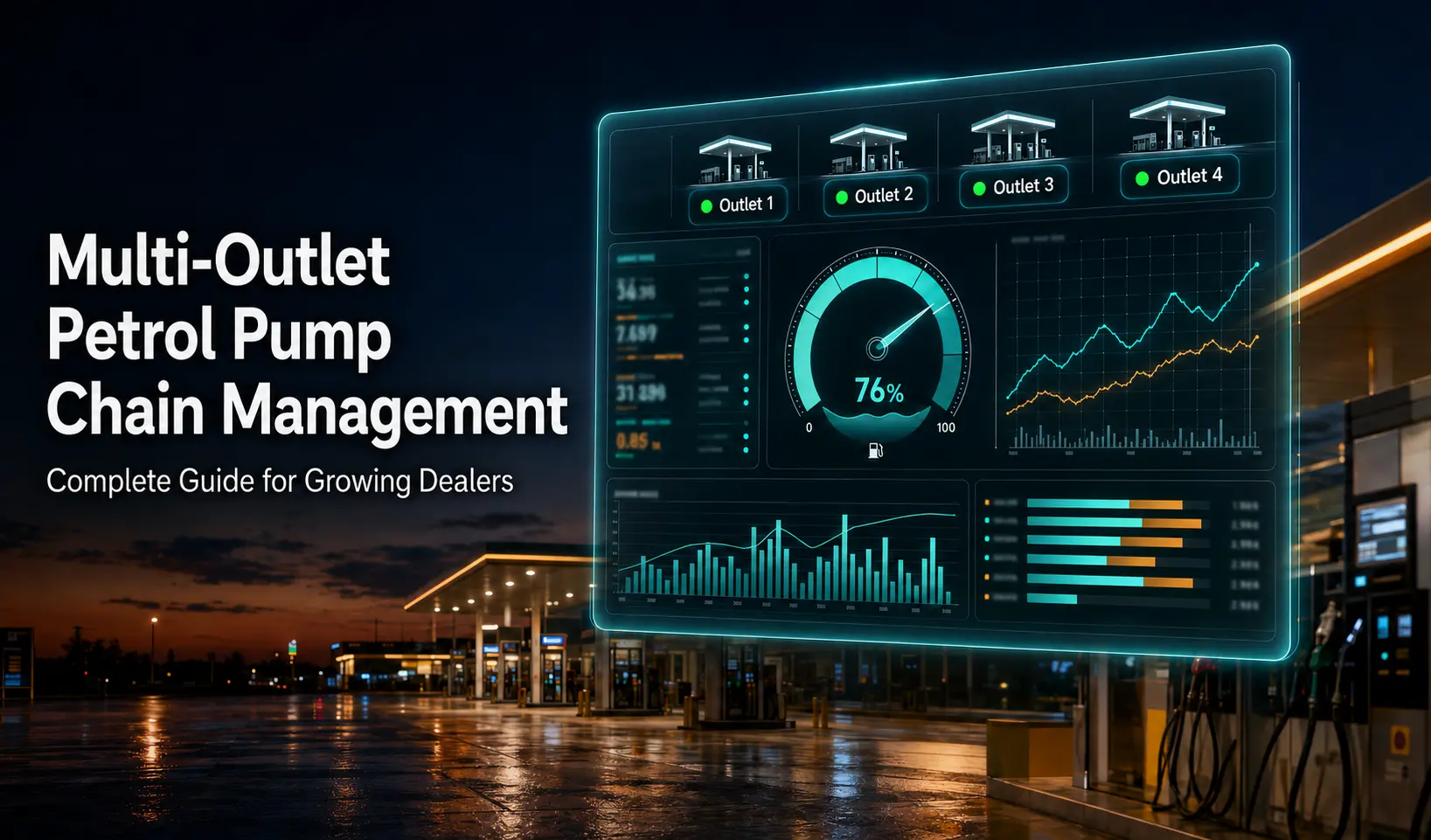
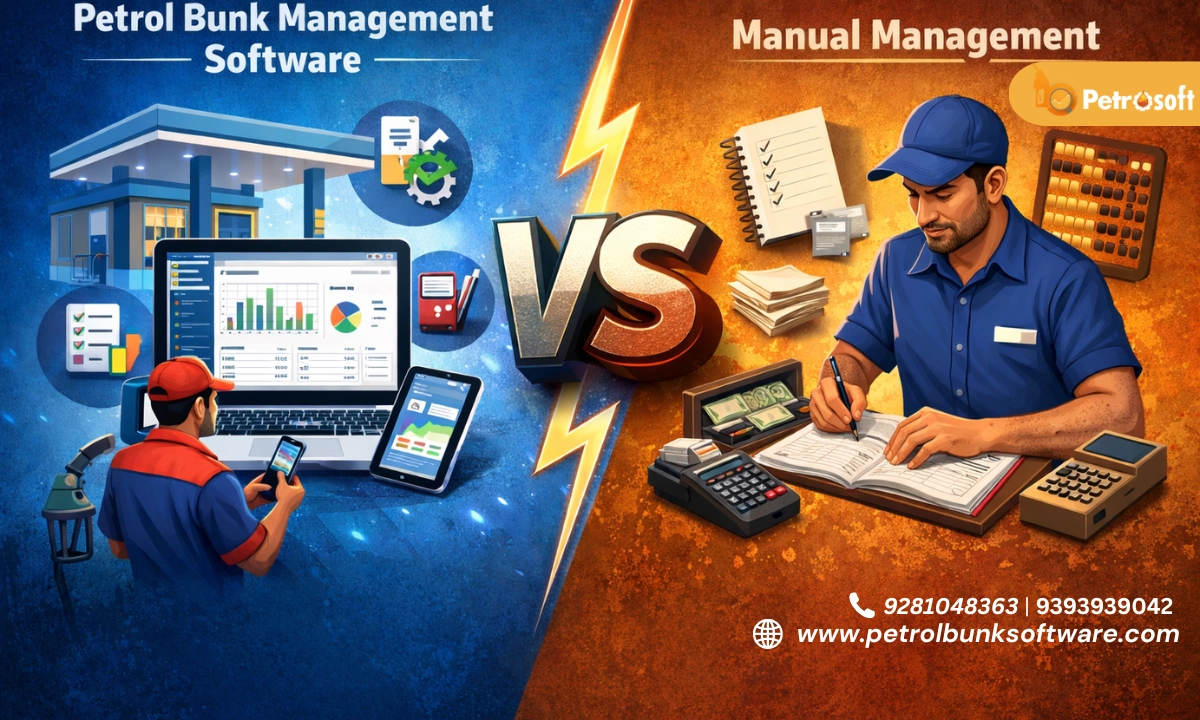
Multi outlet petrol pump software is a centralized system that connects billing, fuel stock, credit accounts, and staff records across every station a dealer operates, replacing separate manual reports from each outlet with one live dashboard. For dealers expanding beyond a single station, this comparison shows exactly what changes.
Before going deeper, here is the core difference at a glance the factors that matter most once a dealer moves from one station to several.
| Factor | Manual, Station-by-Station Management | Multi Outlet Petrol Pump Software |
|---|---|---|
| Sales visibility | Each station reports separately, often by phone | Combined and station-wise sales visible in real time |
| Stock tracking | Fuel stock checked manually at each outlet | Central inventory view across all stations |
| Credit customer records | Maintained separately per station | Unified credit ledger accessible from any outlet |
| Pricing and rate updates | Updated manually, station by station | Pushed once, applied instantly across all outlets |
| Staff accountability | Hard to track once staff spread across sites | Role-based access, per station, from one setup |
| Monthly reporting | Compiled manually from multiple sources | Auto-generated consolidated report |
This table is the shape of the entire decision. Everything below explains why each row matters, and what a dealer actually gains by switching.
Sales visibility breaks down because each station's daily numbers typically arrive through a phone call or a message sent at closing time a process that depends entirely on someone remembering to report it accurately.
With multi outlet petrol pump software, this changes immediately. Every sale recorded at any station updates the same dashboard, so a dealer sees combined revenue and station-wise performance without waiting for anyone to call in. This alone often surfaces problems a sudden dip at one outlet, an unusual pattern at another days earlier than manual reporting ever would.
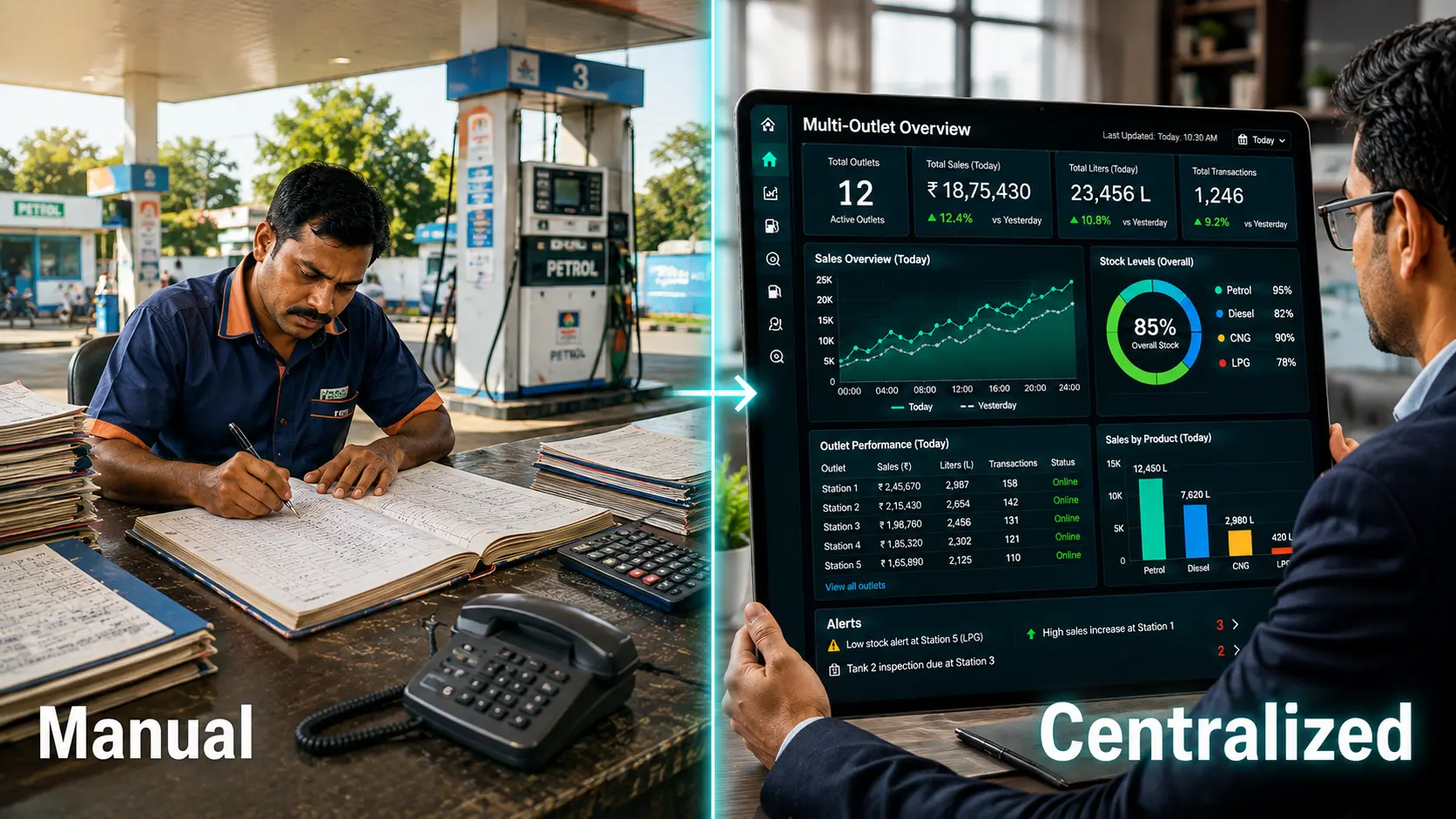
Centralized stock tracking compares favourably to manual checks because it removes the delay between a shortage happening and someone noticing it. Manual stock checks depend on physical verification at each station, usually once a day at best.
A multi outlet petrol pump software system instead shows live fuel levels across every station on one screen. If one outlet is running low while another has surplus, the dealer sees it immediately not after a customer complaint or a missed delivery window. This single shift, tracking stock centrally instead of station-by-station, is often the first-place dealers notice measurable savings.
Credit customer records need to be unified because customers, especially fleet operators and regular commercial accounts, often use more than one station belonging to the same dealer. Managing their credit separately at each outlet creates duplicate records, unclear outstanding balances, and disputes that are hard to resolve.
With a unified ledger inside multi outlet petrol pump software, a customer's credit history is visible no matter which station they visit. Outstanding balances stay accurate, recovery follow-ups are consistent, and staff at any outlet can see the same information the dealer sees.
Centralized pricing saves significant time because fuel rates change frequently, and updating each station manually one terminal at a time leaves room for delay and inconsistency, especially across several outlets.
Multi outlet petrol pump software pushes a rate change once, and it applies across every station instantly. This matters more than it first appears: even a short delay in updating one outlet's pricing can mean lost margin or customer disputes over rate mismatches between stations under the same brand.
Staff accountability changes because role-based access replaces the informal trust that manual, station-by-station management depends on. Without a shared system, a dealer has limited visibility into what happens at a station they aren't physically present at.
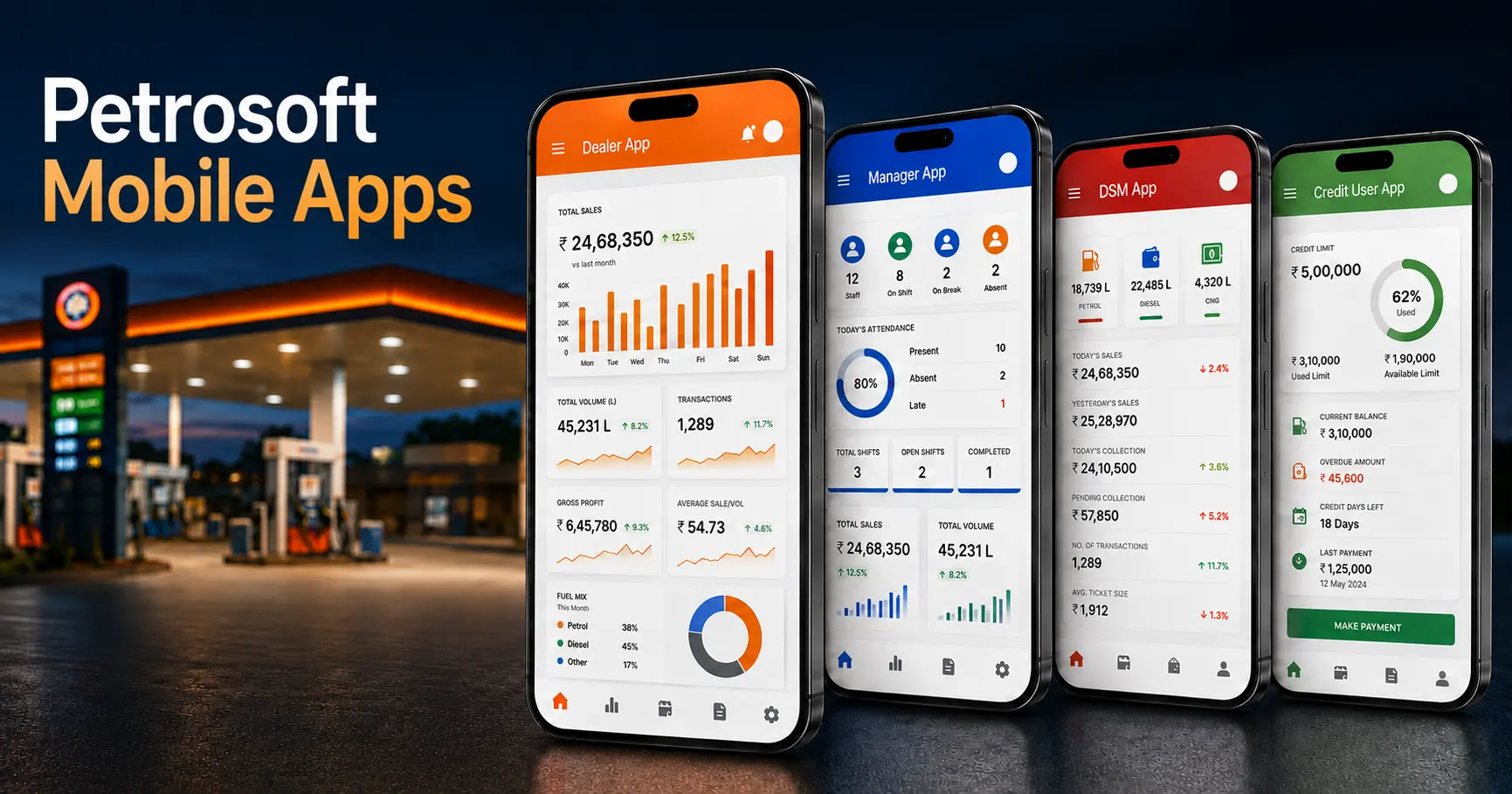
Petrosoft's approach to this through its dedicated Dealer, Manager, and Salesman apps gives each role exactly the access level appropriate to their responsibility, while the dealer retains full visibility across every outlet from a single login. This is one of the clearest differences between manual and software-driven multi-outlet operations.
Petrosoft supports dealers running multiple outlets by connecting sales, stock, credit accounts, and staff activity from every station into one cloud dashboard, so growth in outlet count doesn't mean a proportional growth in management effort.
With Petrosoft, dealers managing several petrol pumps can:
As fuel retail networks in India continue to expand, dealers moving from one station to several are finding that multi outlet petrol pump software isn't an optional upgrade it's the difference between scaling profitably and scaling into confusion.
A dealer should move to multi outlet petrol pump software as soon as a second station opens not after inconsistencies in pricing, stock, or credit accounts start costing money.
The clearest signals it's time to switch:
If more than one of these sounds familiar, the switch to centralized software typically costs less than the losses that come from managing each outlet in isolation.
Running more than one petrol pump shouldn't mean multiplying the effort of running one. Petrosoft's centralized approach replaces scattered, station-by-station reporting with one connected view so sales, stock, credit accounts, and staff performance stay visible across every outlet, not just the one nearest to the dealer.
 Software
 Software
 Software
 Software
 Software
 Software
 Software
Software
 Software
 Software
 Software
 Software
 Software
 Software
 Software
 Software
 Software
 Software
 Software
 Software
 Software
 Software
 Software
 Software
 Software
 Software
 Software
 Software
 Software
 Software
 Software
 Software
 Software
 Software
 Petrosoft
 Software
Petrosoft
 Software
Petrosoft
 Software
Petrosoft
 Software
Petrosoft
 Software
Petrosoft
 Performance
Petrosoft
 Performance
Petrosoft
 Performance
Petrosoft
 Performance
Petrosoft
 Performance
Petrosoft
 Performance
Petrosoft
 Mobile App
Petrosoft
 Software
Petrosoft
 Software
Petrosoft
 Software
Petrosoft
 Software
Petrosoft
 Software
Petrosoft
 Software
Petrosoft
 Software
Petrosoft
 Software
Petrosoft
 Software
Petrosoft
 Sales
Sales
Petrosoft
 Software
Petrosoft
 Technology
Petrosoft
 Feedback
Petrosoft
 Marketing
Petrosoft
 Revolution
Petrosoft
 Software
Petrosoft
 Tips
Tips
Petrosoft
 Case Studies
Petrosoft
 Trends
Petrosoft
 Application
Petrosoft
 Application
Petrosoft
 Application
Petrosoft
 Operations
Petrosoft
 Operations
Petrosoft
 Sales
Sales
Petrosoft
 Sales
Sales
Petrosoft
 Application
Petrosoft