Role of Fuel Bowser in Modern Fuel Management Software Systems
An Fuel bowser are considered to be the most important equipment in industries that require the delivery of fuel to be mobile, flexible, and uninterrupted. Where equipment uptime directly reflects productivity, manual fuel handling often leads to losses, limited visibility, and increased operational costs. The scenario of rising fuel prices coupled with more stringent compliance worldwide has made it imperative for organizations to adopt digital oversight. The integration of mobile fuelling operations with advanced fuel management software gives organizations the ability to control, accuracy, and efficiency throughout their fuel ecosystem.
What Is a Fuel Bowser?
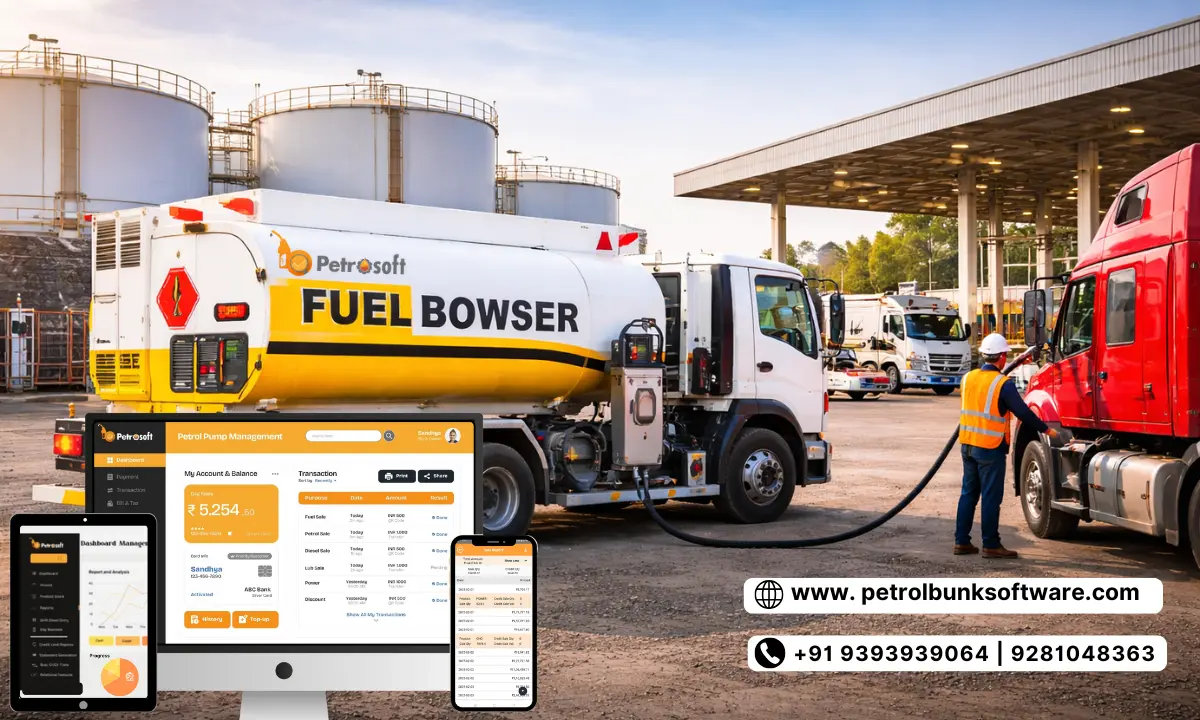
A fuel bowser is a movable unit of fuel storage and dispensing which is used for the direct supplying of petrol, diesel, or other fuels to vehicles, generators, and heavy machinery. Such units find their application in places like construction sites, mining areas, industrial plants, aviation operations, and remote locations where fixed fuel stations are impractical. Their mobility guarantees uninterrupted operations without relying on the permanent fuelling infrastructure.
Limitations of Traditional Fuel Management
While mobile fuelling offers flexibility, traditional manual management introduces several operational challenges:
- Limited visibility into fuel usage.
- Increased risk of theft, leakage, and misuse.
- Inaccurate or delayed record-keeping.
- Difficulty managing multiple units across locations.
- Lack of real time insights for decision-making.
These limitations make it difficult for businesses to control costs and maintain accountability.
Digital Fuel Management and Operational Control
When a fuel bowser is connected to modern fuel management software, every fuelling activity becomes traceable and measurable. Automated data capture replaces manual logs, ensuring accurate records of fuel volume, time, and usage location. Real-time dashboards provide instant visibility, while predictive analytics support better planning and informed operational decisions across sites.
The Role of Fuel Bowser in Digital Fuel Management
When a bowser is connected to fuel management software, every dispensing activity becomes visible in real time. Operators and managers gain instant insights into fuel levels, usage patterns, and refuelling frequency.
Each transaction is digitally recorded, eliminating paperwork and human error. This ensures accurate tracking of fuel volume, time, and location, enabling data-driven operational decisions.
With features such as user authentication, digital authorization, and audit trails, the system significantly reduces unauthorized access and misuse of mobile fuelling assets.
Advanced analytics help businesses forecast fuel requirements based on consumption trends. This proactive approach minimizes downtime, prevents shortages, and improves operational planning.
A fuel bowser that connects to a centralized dashboard gives organizations the capability to manage various locations and territories through one platform, thereby guaranteeing uniformity and control at large scale.
- Smart Monitoring and Visibility
- Automated Data Capture
- Security and Loss Prevention
- Predictive Inventory Planning
- Centralized Control Across Locations
Safety Standards and Guidelines
Safety should always be the prime concern in mobile fuel operations. Adhering to Safety Standards and Guidelines safeguards the environment, protects the workers, and keeps the company in line with the regulations. The latest technologies offer safety through such measures as controlled dispensing, user authentication, audit trails, and automated alerts. The combination of standard operating procedures and digital monitoring significantly minimizes the occurrences of spills, unauthorized access, and operational hazards while contributing to the global safety and compliance requirements.
Integration with Modern Software Ecosystems
Our solution when integrated into a modern software ecosystem becomes one with the existing fuel network made up of mobile units, fixed stations, and enterprise systems. Cloud-based platforms allow centralized monitoring, mobile access, and automated reporting; thus, fuel management will be consistent everywhere in the organization, scalability, and compliance ensured.
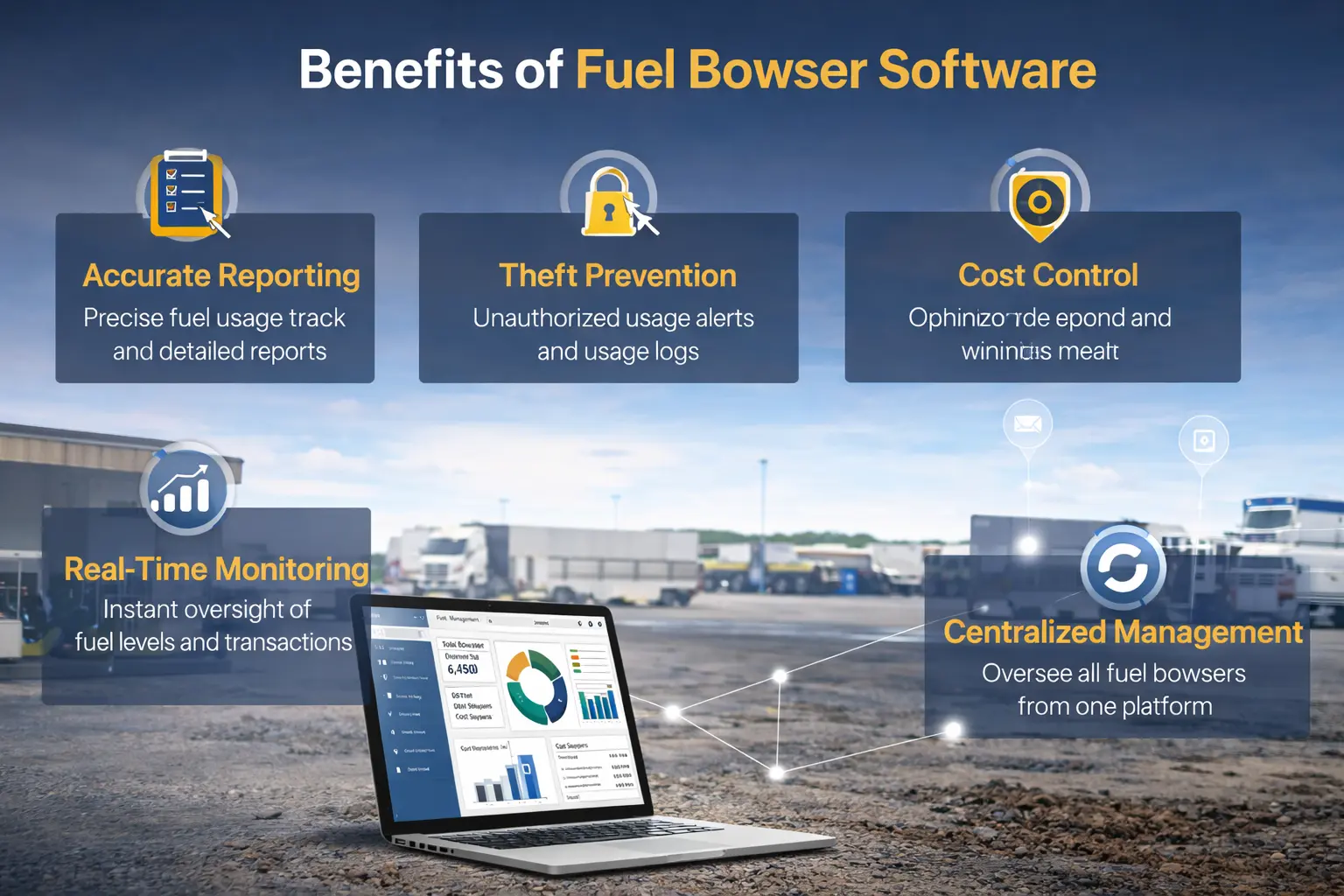
Key Benefits of Software-Enabled Fuel Bowser Systems
- Accurate fuel accountability and reporting
- Reduced losses and operational risks
- Real-time analytics for better decisions
- Improved cost control and budgeting
- Scalable fuel management for global operations
Industries Adopting Smart Fuelling Solutions
Across various sectors like construction, mining, oil & gas, transportation, agriculture, and also in aviation, defense, and emergency services industries, mobile fuelling solutions powered by software have been and are being deployed very extensively. The mentioned industries are reaping the benefits of improved transparency, and better operational efficiency through controlled consumption as well.
The Future of Mobile Fuel Operations
It’s the era of automated, connected, and intelligent fuelling in the future of mobile fuel operations. The usage of smart technologies like IoT sensors, GPS tracking, cloud analytics, and AI-powered forecasting is changing the very nature of handling in modern fuel ecosystems. Besides, companies that opt for these innovations can take the lead over their competitors by becoming more efficient, eco-friendly, and getting data-driven control.
Conclusion
A mobile fuel delivery system still heavily relies on a Fuel bowser however, its complementing modern fuel management software is where the full power of the duo is realized. The transition to digital brings along transparency, safety, and control over operations that were not present in the case of the old methods. For those companies that are multi-site or multi-sector, the use of software driven fuel management is not only a good but also a smart, future ready way of handling fuel costs and performance enhancement.