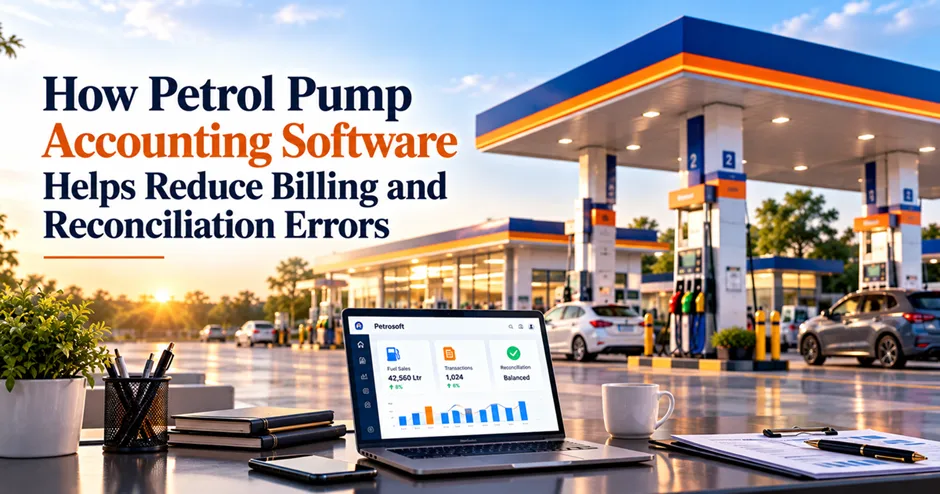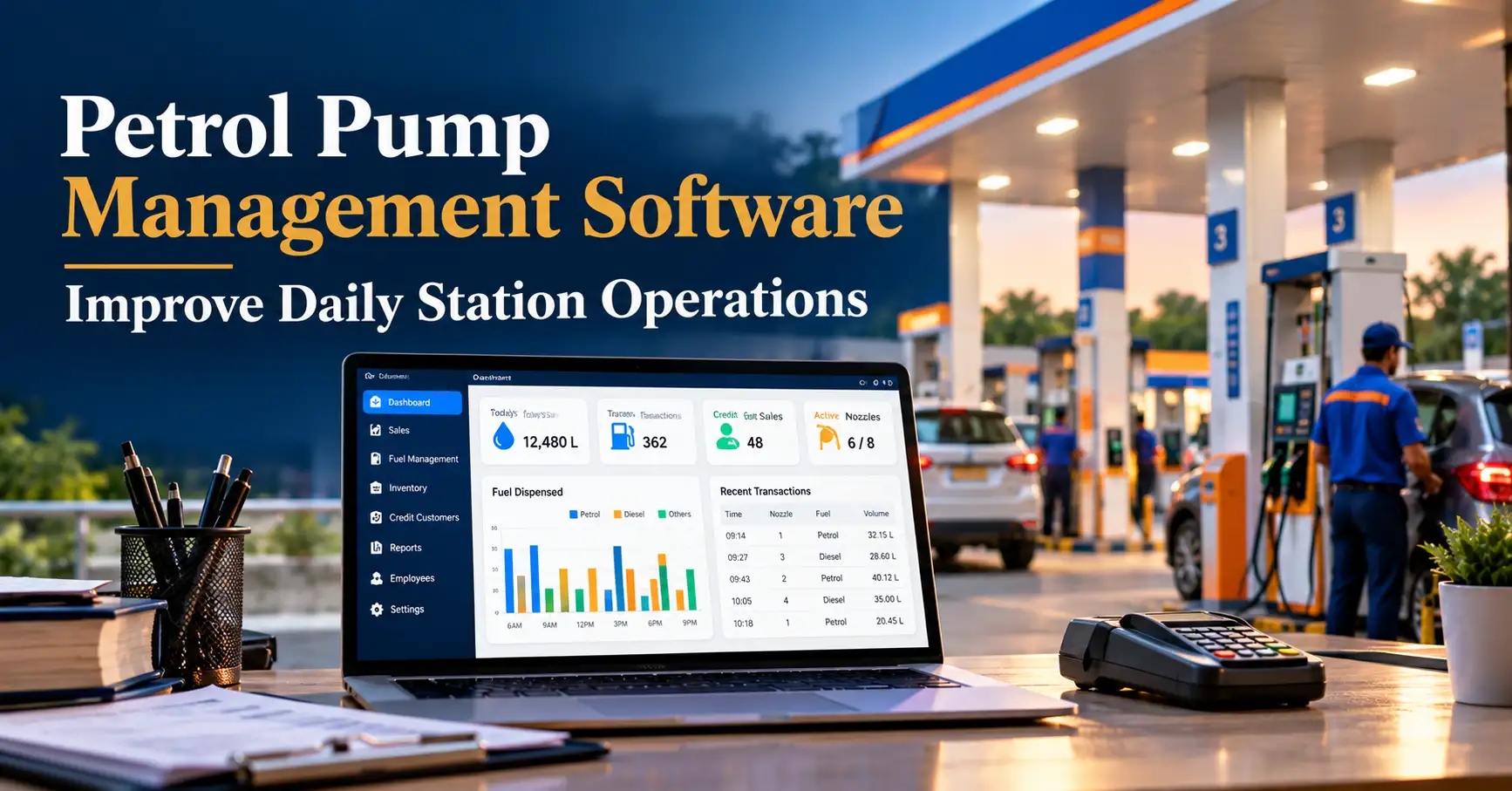

Fuel demand across India climbed sharply through the middle of 2026, and petrol pump owners are feeling it directly longer queues, faster tank turnover, and a lot more billing activity to keep track of. If your outlet has felt busier over the past couple of months, the numbers back that up. The real question isn't whether sales are rising it's whether your pump's day-to-day operations can keep pace with them.
This article looks at why fuel demand has increased, what that means operationally for a petrol pump, the problems higher transaction volumes tend to expose, and how dealers can manage the shift without adding stress to their staff or losing visibility over their business.
Platforms like Petrosoft are built to help dealers manage exactly this kind of transaction growth without adding pressure on staff.
Petrol and Diesel Sales in India Are Increasing: What Is Driving the Demand?
According to provisional data from the Petroleum Planning and Analysis Cell (PPAC), petrol consumption rose close to 7.9% year-on-year in August 2026, while diesel consumption grew by roughly 6.5% over the same period. Sales data from the major public-sector oil marketing companies painted an even sharper picture for the month, with petrol volumes up over 9% and diesel up
over 10% compared to a year earlier the second straight month of double-digit diesel growth after a similarly strong July.
A few factors are behind this surge.
Erratic Monsoon Conditions
The 2026 monsoon arrived late and behaved unevenly across several regions. That unpredictability pushed farmers to rely more heavily on diesel-powered irrigation pumps during the peak sowing window, while patchy rainfall also affected road conditions and travel patterns both of which fed into higher fuel offtake.
Higher Road and Vehicle Movement
With festive-season travel picking up and daily commuting patterns normalising further, personal and commercial vehicle movement has increased steadily through the year, translating directly into more petrol and diesel sold at the pump.
Growing Vehicle Sales and Economic Activity
India's auto industry posted strong year-on-year growth in August 2026, with several major manufacturers reporting double-digit gains in passenger vehicle sales and even sharper growth in commercial vehicles. More vehicles on the road, combined with steady GDP momentum, naturally means more recurring fuel demand at the pump level.
Agricultural and Commercial Diesel Demand
Diesel remains the backbone of India's freight, agriculture, and construction sectors. Irrigation needs during an erratic monsoon, alongside ongoing logistics and commercial vehicle activity, kept diesel demand elevated even as some manufacturing indicators showed signs of cooling.
Taken together, these trends point to one conclusion: fuel demand growth in 2026 isn't a short-lived spike. It's a sustained pattern that petrol pump owners need to plan around.
What Does Higher Fuel Sales Mean for Petrol Pump Owners?
A national sales increase doesn't stay a national statistic for long it shows up at the nozzle, at the till, and in every shift-end reconciliation.
More Customer Transactions
Every additional litre sold usually means another transaction to record, another bill to generate, and another entry that has to match against stock and payment records at the end of the day.
Faster Fuel Stock Movement
Tanks empty faster when demand rises. Dealers need to track opening stock, sales volume, and closing stock more frequently to avoid running dry during peak hours or over-ordering during a lull.
Greater Pressure on Staff
Salesmen, cashiers, and shift managers absorb the extra workload directly. More customers per hour means less time for each transaction to be checked, verified, and recorded accurately.
More Reconciliation Work
Cash, UPI, cards, and credit sales all need to be tallied against actual fuel dispensed. As transaction volume rises, so does the time and the room for error in getting this reconciliation right every single day.
Higher Risk of Operational Errors
Manual processes that worked fine at moderate volumes start to strain under higher transaction loads. Missed entries, mismatched totals, and delayed reporting become more likely exactly when accuracy matters most.
What Problems Can Petrol Pumps Face When Fuel Sales Increase?
As transaction volumes climb, a handful of recurring operational problems tend to surface across manually run outlets:
- Billing delays — longer queues at the till as staff struggle to keep up with manual entry
- Fuel stock mismatches — gaps between register-recorded stock and actual tank readings
- Nozzle-wise sales tracking issues — difficulty identifying which nozzle or dispenser is underperforming or over-reporting
- Cash, UPI, and card reconciliation problems — multiple payment modes that are hard to tally manually at scale
- Manual report preparation— hours spent compiling daily sales data from registers or spreadsheets
- Difficulty monitoring multiple shifts — limited visibility into how each shift is performing in real time
- Increased chances of billing errors — small mistakes that compound quickly across hundreds of daily transactions
None of these problems are new but they become far more visible, and far more costly, once transaction volume increases.
How Can Petrol Pump Dealers Manage Higher Transaction Volumes?
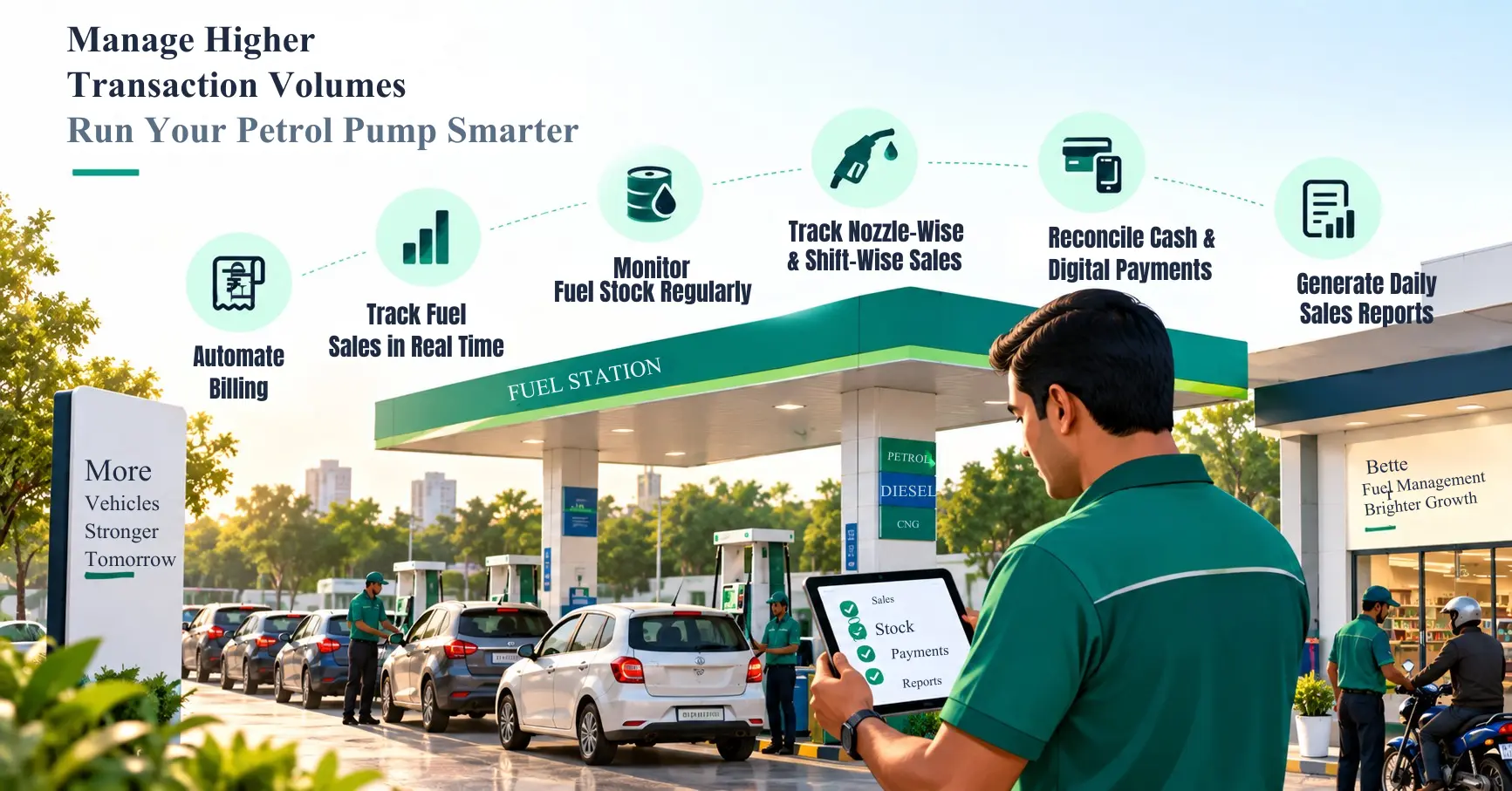
The good news is that each of the problems above has a direct operational fix.
Automate Petrol Pump Billing
Digital billing removes manual entry from the equation, recording each transaction instantly and accurately even during peak-hour rushes.
Petrosoft digital billing module records each sale instantly against fuel dispensed, even during peak-hour rushes.
Track Fuel Sales in Real Time
Live visibility into sales as they happen lets owners and managers spot unusual patterns immediately, rather than discovering issues at day's end.
Monitor Fuel Stock Regularly
Automated tracking of opening stock, sales, and closing stock with real-time variance alerts keeps dealers ahead of shortages and discrepancies alike.
Track Nozzle-Wise and Shift-Wise Sales
Breaking sales data down by nozzle and by shift makes it far easier to identify underperformance, irregularities, or training gaps among specific staff or equipment. With Petrosoft Manager and Dealer apps, this breakdown is available on the go, so owners don't need to wait for a shift to end to spot an issue.
Reconcile Cash and Digital Payments Daily
Centralising cash, UPI, card, and credit sales into one reconciliation view turns a multi-hour manual task into a same-day, accurate close-out.
Generate Daily Sales Reports Automatically
Automated reporting replaces register-based, end-of-day report writing giving owners consistent, error-free numbers without the manual effort.
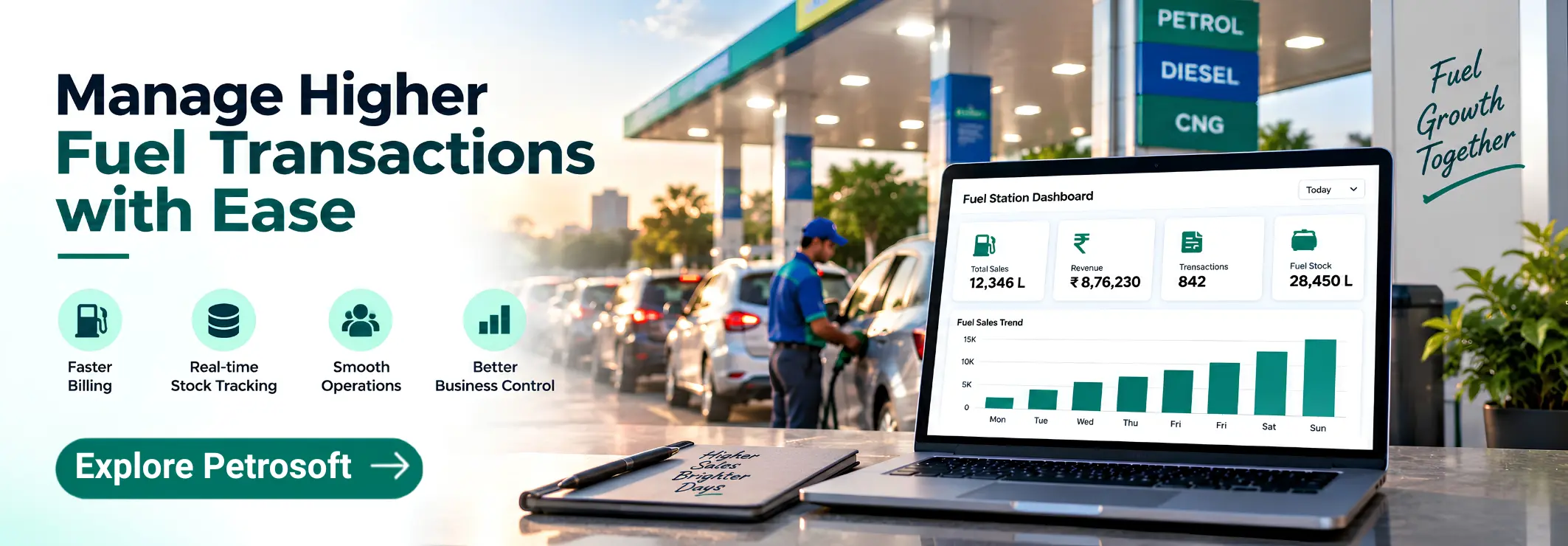
How Petrol Pump Software Helps Dealers Handle Higher Sales
Rising fuel demand changes what a petrol pump actually needs from its systems day to day. Here's how the two maps to each other:
| Operational Requirement | How Software Helps |
|---|---|
| More transactions | Faster digital billing |
| Higher fuel movement | Real-time stock tracking |
| Multiple nozzles | Nozzle-wise sales monitoring |
| Multiple shifts | Shift-wise reporting |
| Cash + UPI + Card | Payment reconciliation |
| More employees | Staff/shift monitoring |
| Higher reporting workload | Automated reports |
| Multiple outlets | Centralized visibility |
This is where a platform like Petrosoft fits in not as a generic add-on, but as infrastructure built to absorb exactly this kind of transaction growth without adding operational strain on staff or owners.
Manual Petrol Pump Management vs Software-Based Management
This is the shift Petrosoft dealers typically notice within the first few weeks of switching from manual registers daily reconciliation that used to take hours comes down to minutes.
| Activity | Manual Management | Software-Based Management |
|---|---|---|
| Billing | Manual entry | Digital billing |
| Fuel stock | Register/spreadsheet | Digital stock tracking |
| Sales tracking | Manual reports | Real-time reports |
| Nozzle monitoring | Manual checking | Digital tracking |
| Payment reconciliation | Time-consuming | Centralized |
| Daily reports | Manual preparation | Automated |
| Error detection | Difficult | Easier to identify |
| Business visibility | Delayed | Real-time |
As transaction volumes rise, the gap between these two columns widens what was a minor inconvenience at lower sales volumes becomes a real operational risk at higher ones.
7 Ways Petrol Pump Dealers Can Handle Higher Fuel Transactions
- Automate fuel billing
- Monitor fuel stock in real time
- Track nozzle-wise sales
- Monitor shift-wise performance
- Reconcile payments every day
- Generate automated sales reports
- Use centralized petrol pump management software
Conclusion
Rising fuel demand is a good problem to have but only if your operations can keep up with it. As transaction volume increases, operational complexity increases right along with it, and manual, register-based management starts to show its limits fast.
If your petrol pump is handling increasing fuel sales and daily transactions, a centralized petrol pump management system can help you monitor billing, fuel stock, payments, staff activity, and business reports from one platform.