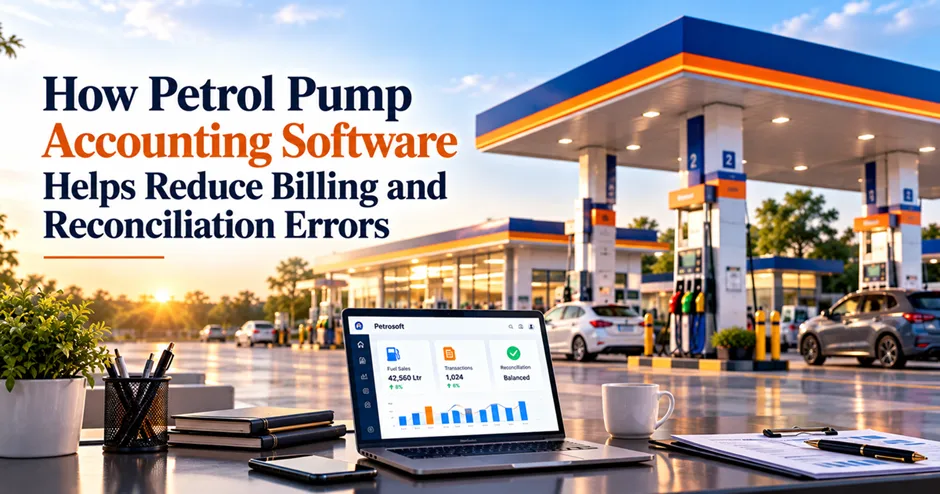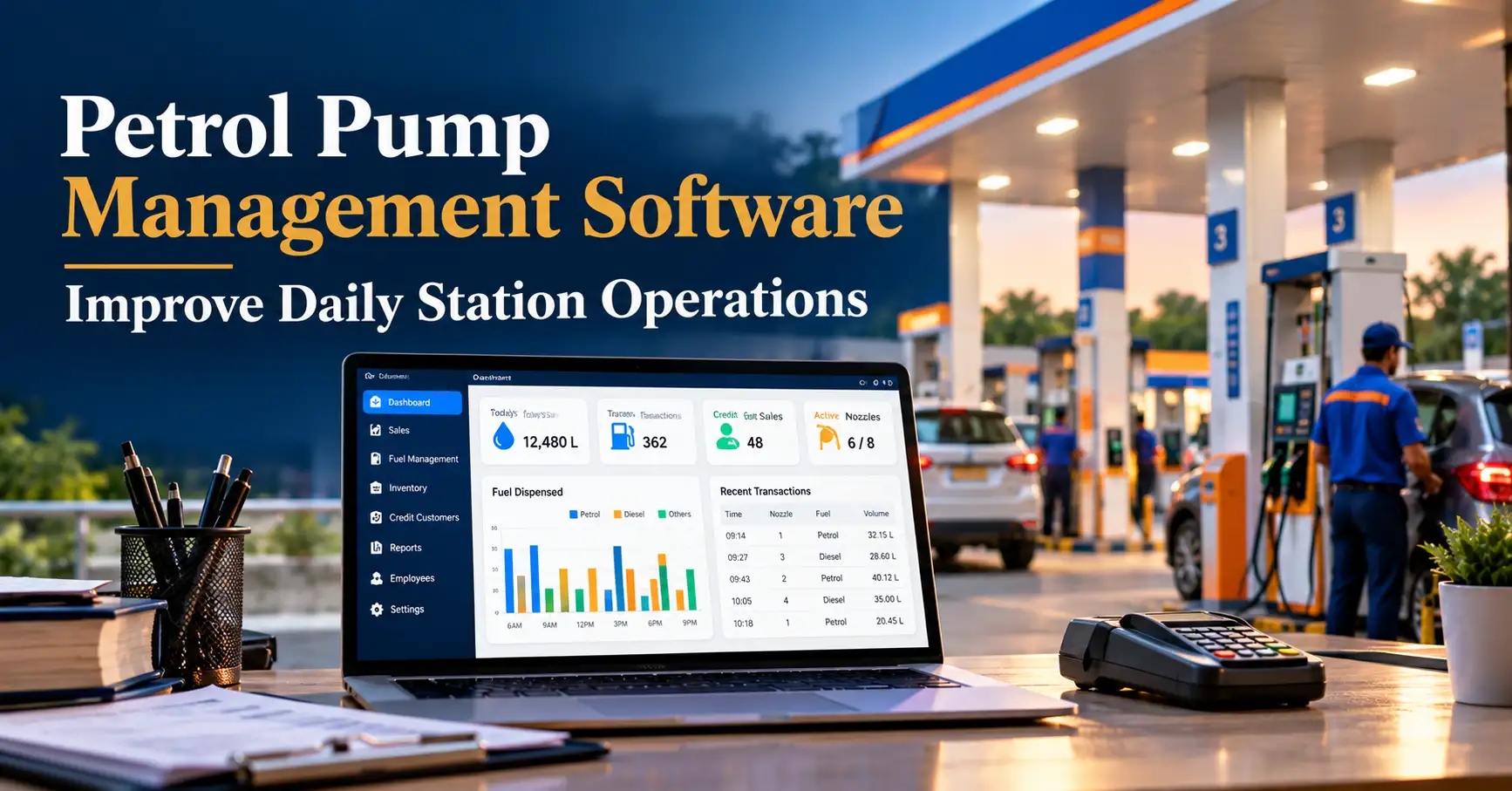
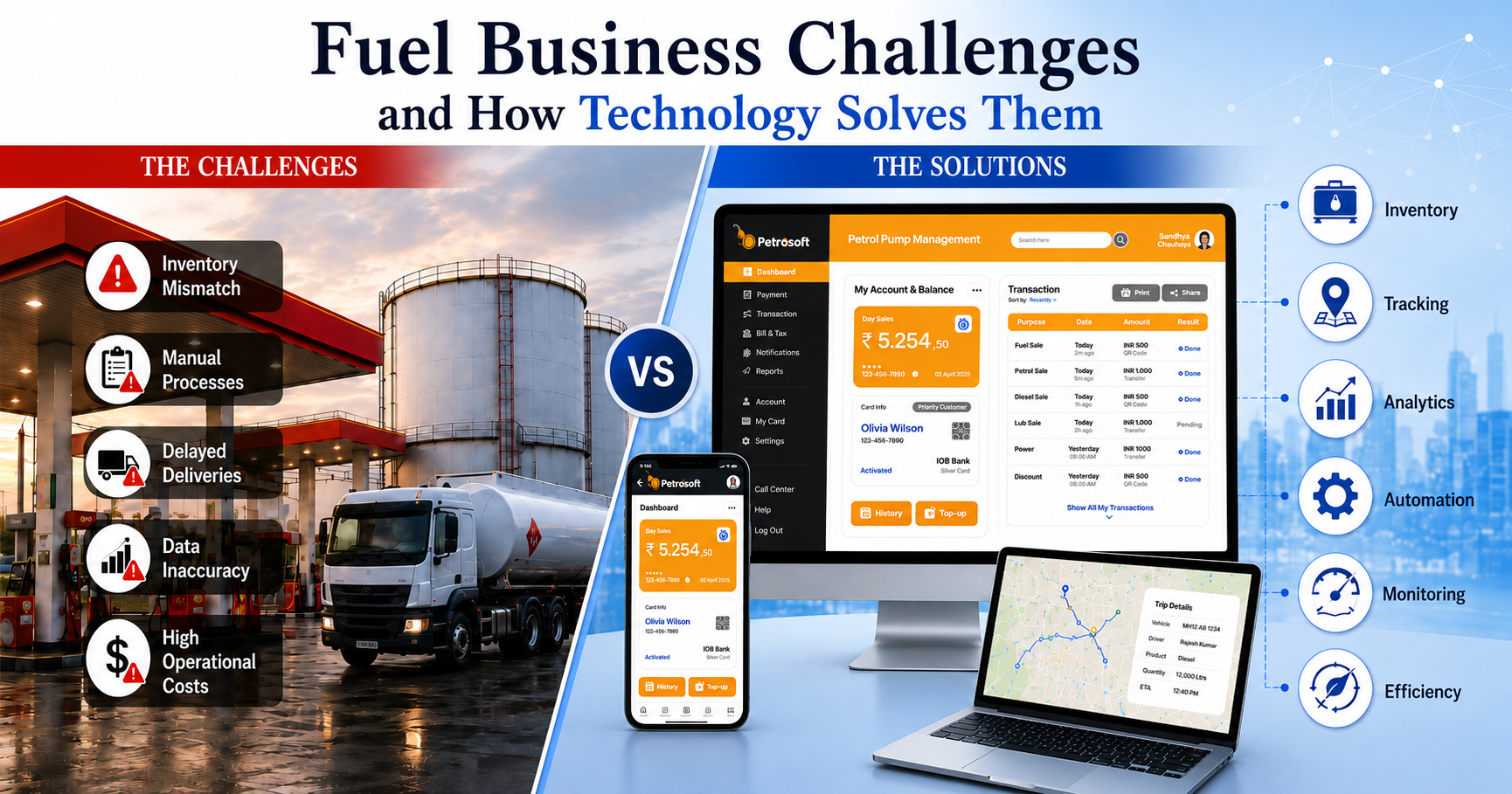
The global fuel industry plays a critical role in powering transportation, logistics, manufacturing, agriculture, and countless other sectors. From independent fuel stations to large retail fuel chains, businesses across the world face increasing operational pressures as customer expectations, compliance requirements, and market competition continue to grow.
Managing fuel inventory, preventing losses, ensuring regulatory compliance, and maintaining operational efficiency have become more challenging than ever. Traditional manual processes that once worked effectively are now creating inefficiencies, increasing costs, and limiting business growth.
To remain competitive, fuel retailers and distributors are rapidly adopting digital technologies. Modern fuel management software provides real time visibility, automation, and data driven insights that help businesses reduce losses, improve efficiency, and make smarter decisions.
In this article, we explore the top challenges fuel businesses face worldwide and how technology is helping solve them.
Fuel Business Operations: Traditional vs Technology-Driven Management
| Area | Traditional Operations | Technology-Driven Operations |
|---|---|---|
| Inventory Tracking | Manual records | Real-time monitoring |
| Billing | Paper-based processes | Automated billing |
| Compliance | Manual documentation | Digital compliance reporting |
| Fuel Monitoring | Periodic checks | Continuous monitoring |
| Reporting | Time-consuming reports | Instant dashboards |
| Multi-Station Management | Separate systems | Centralized control |
1. Fuel Inventory Management Challenges
Common Problems
Fuel inventory management remains one of the biggest challenges for fuel businesses globally. Even minor inventory inaccuracies can result in significant financial losses over time.
Common inventory related issues include:
- Inaccurate stock records
- Manual inventory tracking errors
- Unexpected fuel shortages
- Overstocking and working capital blockage
- Delayed stock visibility
Modern fuel management software provides:
Real-time inventory monitoring
Automated stock reconciliation
Tank-level tracking systems
Low-stock alerts and notifications
Benefits- Improved stock accuracy
- Reduced inventory losses
- Better purchasing decisions
- Continuous fuel availability
2. Fuel Theft and Pilferage
Why It Matters
Fuel theft continues to be a major concern worldwide. Revenue losses often occur due to unauthorized dispensing, fuel siphoning, or internal fraud.
Common Sources of Fuel Loss| Risk Area | Impact |
|---|---|
| Fuel siphoning | Direct inventory loss |
| Unauthorized dispensing | Revenue leakage |
| Employee fraud | Financial discrepancies |
| Manual tracking gaps | Difficult investigations |
Modern systems help detect and prevent theft through:
- Automated fuel tracking
- Variance monitoring
- Digital audit trails
- CCTV integration
- Dispensing activity logs
Businesses gain greater accountability, transparency, and control over fuel movement.
3. Rising Operational Costs
The Challenge
Fuel businesses worldwide are experiencing increased operating expenses due to:
- Labour costs
- Utility expenses
- Equipment maintenance
- Transportation costs
- Administrative overhead
Digital automation significantly reduces operational inefficiencies through:
- Workforce optimization
- Automated workflows
- Predictive maintenance tools
- Operational analytics
- Lower operating expenses
- Improved productivity
- Better resource utilization
- Higher profitability
4. Billing and Financial Management Errors
Common Financial Challenges
Many fuel stations still rely on manual processes that increase the risk of:
- Billing errors
- Revenue discrepancies
- Delayed reporting
- Cash handling risks
Fuel management software simplifies financial operations through:
- • Automated billing systems
- • Digital payment integration
- • Financial dashboards
- • Automated reporting
- Accurate transactions
- Faster reconciliation
- Reduced human error
- Better financial visibility
5. Regulatory Compliance and Reporting
Growing Compliance Requirements
Fuel businesses must comply with numerous regulations covering:
- Environmental standards
- Tax regulations
- Safety requirements
- Audit procedures
Maintaining compliance manually often consumes significant time and resources.
How Technology HelpsModern platforms support compliance through:
- Digital record management
- Automated compliance reports
- Secure document storage
- Audit-ready reporting
Businesses remain prepared for inspections and reduce compliance risks.
6. Managing Multiple Fuel Stations
Expansion Brings Complexity
As fuel businesses grow, managing multiple locations becomes increasingly difficult.
Common Challenges- Lack of centralized visibility
- Operational inconsistencies
- Delayed reporting
- Communication gaps
Cloud-based fuel management platforms provide:
- Centralized dashboards
- Multi-location monitoring
- Unified reporting
- Real-time operational visibility
Managers can oversee multiple stations from a single platform regardless of location.
7. Equipment Maintenance and Downtime
The Cost of Equipment Failure
Fuel pumps, storage tanks, and monitoring systems are critical business assets. Unexpected failures can result in:
- Service interruptions
- Lost sales
- Customer dissatisfaction
- Expensive emergency repairs
Advanced maintenance management tools offer:
- Preventive maintenance scheduling
- Equipment performance monitoring
- Automated maintenance alerts
- Service history tracking
- Reduced downtime
- Lower repair costs
- Extended equipment lifespan
- Improved operational reliability
8. Customer Expectations and Competition
The Modern Customer Experience
Today's customers expect:
- Fast service
- Multiple payment options
- Digital convenience
- Loyalty rewards
At the same time, fuel businesses face increasing competition.
How Technology HelpsModern fuel station software enables:
- Faster billing processes
- Contactless payments
- Customer loyalty programs
- Improved service efficiency
Enhanced customer satisfaction and stronger customer retention.
9. Data Management and Business Visibility
The Data Challenge
Many fuel businesses struggle with fragmented information spread across multiple systems.
This often leads to:
- Delayed decision-making
- Lack of visibility
- Manual report generation
- Missed growth opportunities
Business intelligence tools provide:
- Real-time dashboards
- Automated reports
- Performance tracking
- Advanced analytics
Decision-makers gain instant access to actionable business insights.
10. Sustainability and Environmental Concerns
Increasing Environmental Responsibilities
Governments and regulatory bodies are placing greater emphasis on:
- Emission reduction
- Fuel efficiency
- Environmental compliance
- Sustainability reporting
Modern fuel management platforms help by providing:
- Fuel usage monitoring
- Waste reduction analytics
- Environmental reporting tools
- Resource optimization systems
Businesses can improve sustainability while maintaining profitability.
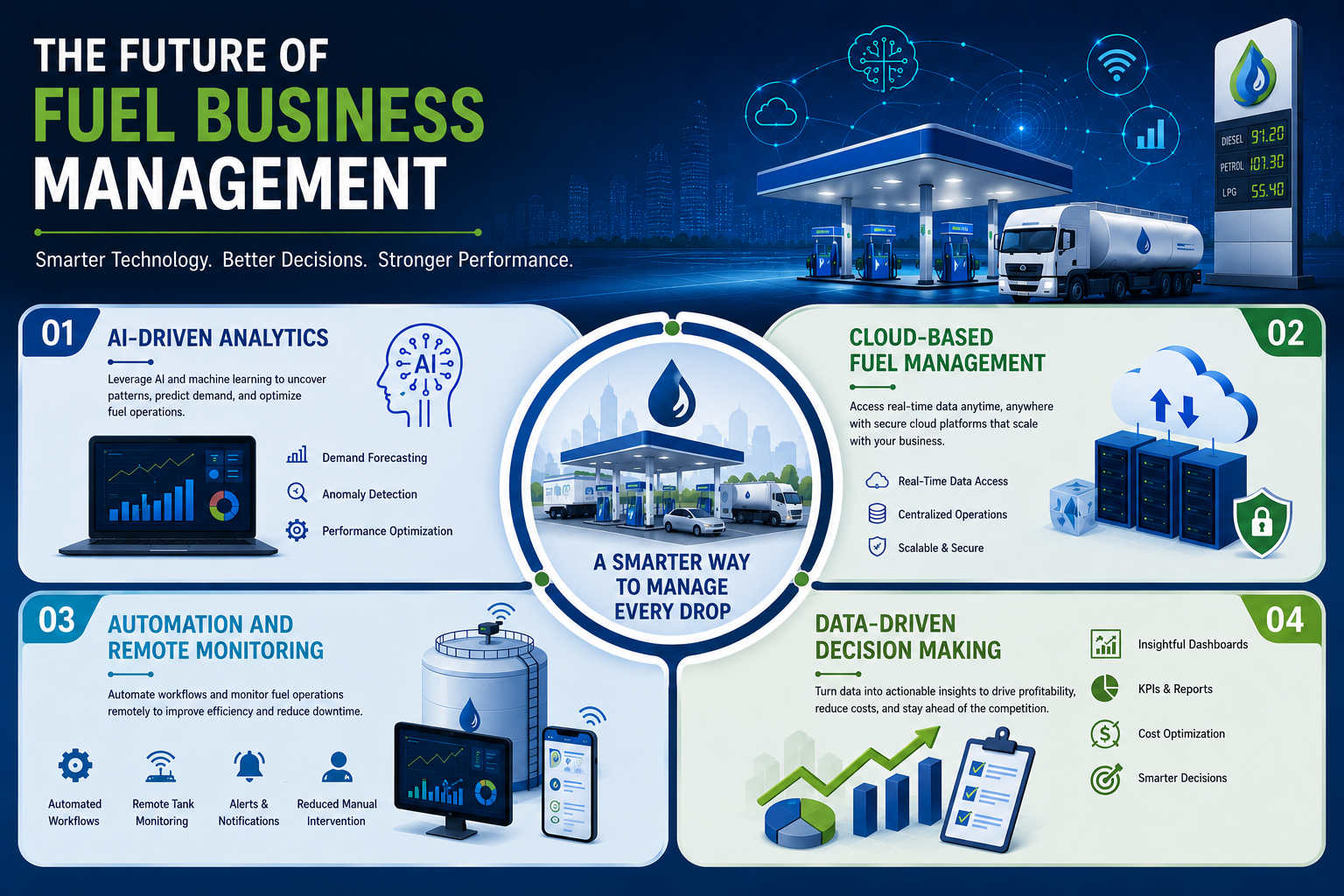
The Future of Fuel Business Management
The fuel industry is undergoing rapid digital transformation.
Several technologies are shaping the future of fuel operations:
AI-Driven AnalyticsArtificial Intelligence can identify patterns, forecast demand, and improve operational planning.
Cloud-Based Fuel ManagementCloud platforms provide access to real-time business data from anywhere.
Automation and Remote MonitoringBusinesses can monitor fuel inventory, sales, and equipment performance without being physically present.
Data-Driven Decision MakingAdvanced analytics help fuel retailers make faster and more informed decisions.
Organizations that adopt these technologies early will be better positioned to compete in an increasingly complex market.
Key Benefits of Fuel Management Software
| Business Challenge | Technology Benefit |
|---|---|
| Inventory Losses | Real-time monitoring |
| Fuel Theft | Variance tracking & audit trails |
| Billing Errors | Automated billing |
| Compliance Risks | Digital reporting |
| Multi-Station Management | Centralized dashboards |
| Equipment Downtime | Predictive maintenance |
| Customer Retention | Loyalty programs |
| Poor Visibility | Business intelligence dashboards |
Conclusion
Fuel businesses across the world face numerous operational challenges, including inventory management issues, fuel theft, rising costs, compliance requirements, equipment downtime, and increasing customer expectations.
Technology is no longer optional for fuel retailers seeking long-term success. Modern fuel management software helps businesses improve efficiency, reduce losses, streamline operations, maintain compliance, and gain complete visibility into their performance.
As the fuel industry continues to evolve, organizations that embrace digital transformation will be better equipped to improve profitability, enhance customer satisfaction, and achieve sustainable growth.
Ready to Modernize Your Fuel Business?
Looking to streamline your fuel business operations?
Petrosoft helps fuel stations and fuel retailers manage inventory, billing, monitoring, reporting, compliance, and overall business performance from a single integrated platform.
Contact Petrosoft today to discover how smarter fuel management can improve efficiency, reduce losses, and drive business growth.
Operational Impact